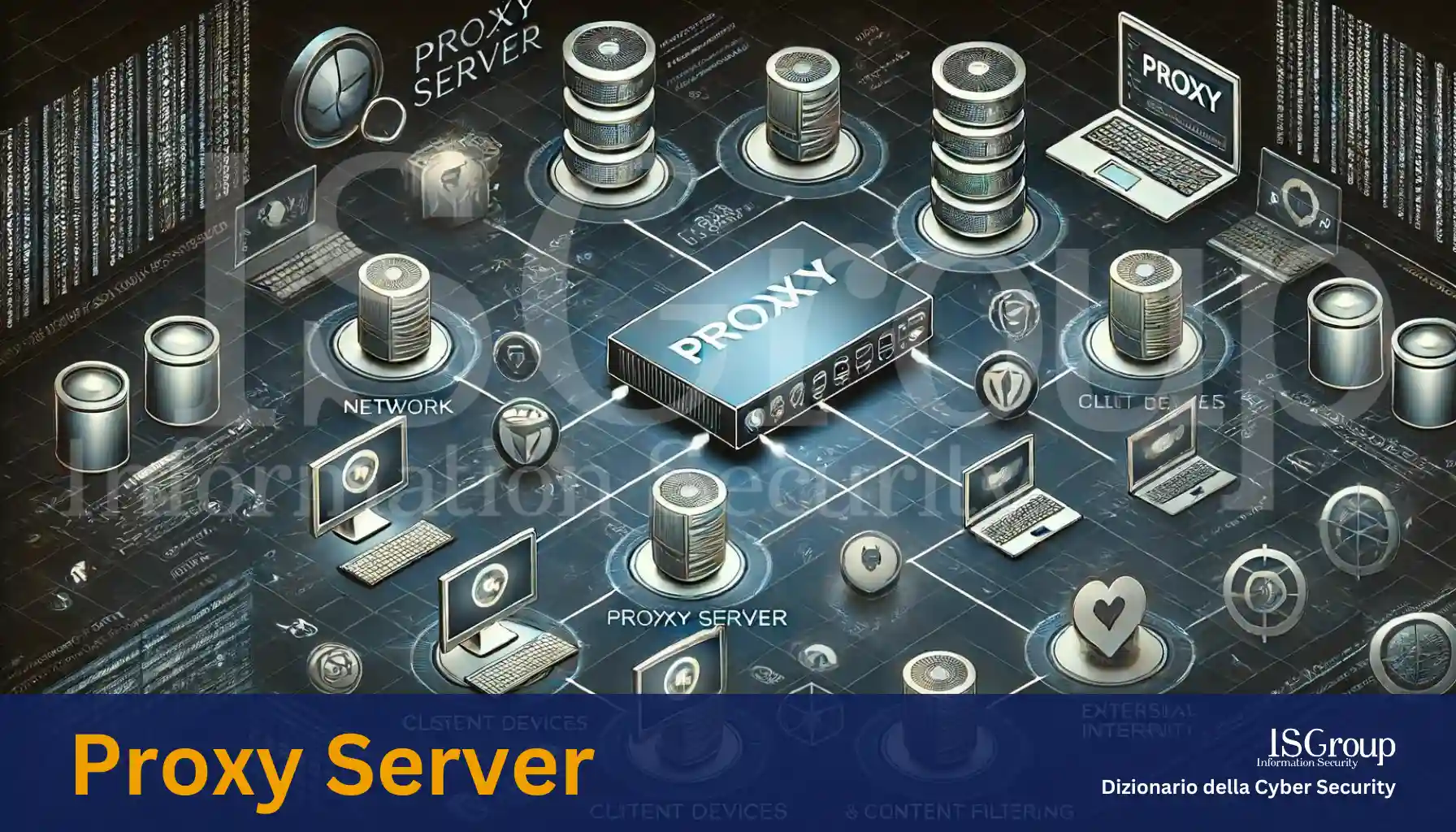
A proxy server is a server that acts as an intermediary between a workstation user and the Internet, allowing a company to ensure security, administrative control, and caching services. This type of server is often associated or integrated with a gateway server, which separates the corporate network from the external network, and a firewall server, which protects the corporate network from external intrusions.
How it Works
When a user sends a request to access a resource on the Internet, this request is first sent to the proxy server. The proxy server, in turn, forwards the request to the final destination. Once the response is obtained from the remote server, the proxy server returns it to the user. This intermediation process offers various advantages:
- Security: The proxy server can filter malicious content and prevent access to dangerous sites. Additionally, it masks the company’s internal IP addresses, reducing the risk of direct attacks.
- Administrative Control: Network administrators can configure the proxy server to monitor and control Internet access. For example, they can restrict access to certain resources during specific hours of the day or completely block unauthorized sites.
- Caching: The proxy server can locally store copies of frequently requested resources. This process, known as caching, reduces latency and network workload, improving access speed for users.
Types of Proxy Servers
There are several types of proxy servers, each with specific characteristics:
- HTTP Proxy: Primarily used for web traffic, it can cache web pages to improve performance and filter unwanted content.
- FTP Proxy: Handles file transfer requests, improving security and the management of downloaded and uploaded data.
- SOCKS Proxy: Can handle any type of network traffic and is often used for applications that are not HTTP-based, such as online games or streaming applications.
Advantages and Disadvantages
Advantages:
- Increased security: Protects the internal network from unauthorized access and attacks.
- Network resource optimization: Reduces bandwidth usage thanks to caching.
- Advanced access control: Allows monitoring and limiting Internet access.
Disadvantages:
- Implementation costs: May require significant investment in hardware and software.
- Potential slowdown: If not configured correctly, it can introduce latency into communications.
- Maintenance and management: Requires resources for the ongoing management and updating of the system.
In summary, a proxy server is a powerful tool for improving security, efficiency, and network resource management in a company. However, it requires careful implementation and management to avoid potential issues and fully leverage its benefits.
Want to give your company the highest level of cyber security? ISGroup SRL is here to help with cyber security solutions tailored to your business.
Would you like us to take care of everything for you? Our Virtual CISO and vulnerability management services are a perfect fit for your organization.
Already know what you need? Explore our services:
- Vulnerability Assessment
- Network Penetration Testing
- Web Application Penetration Testing
- Mobile Application Security Testing
- Ethical Hacking
- Training
And much more. Protect your company with the best cybersecurity experts!