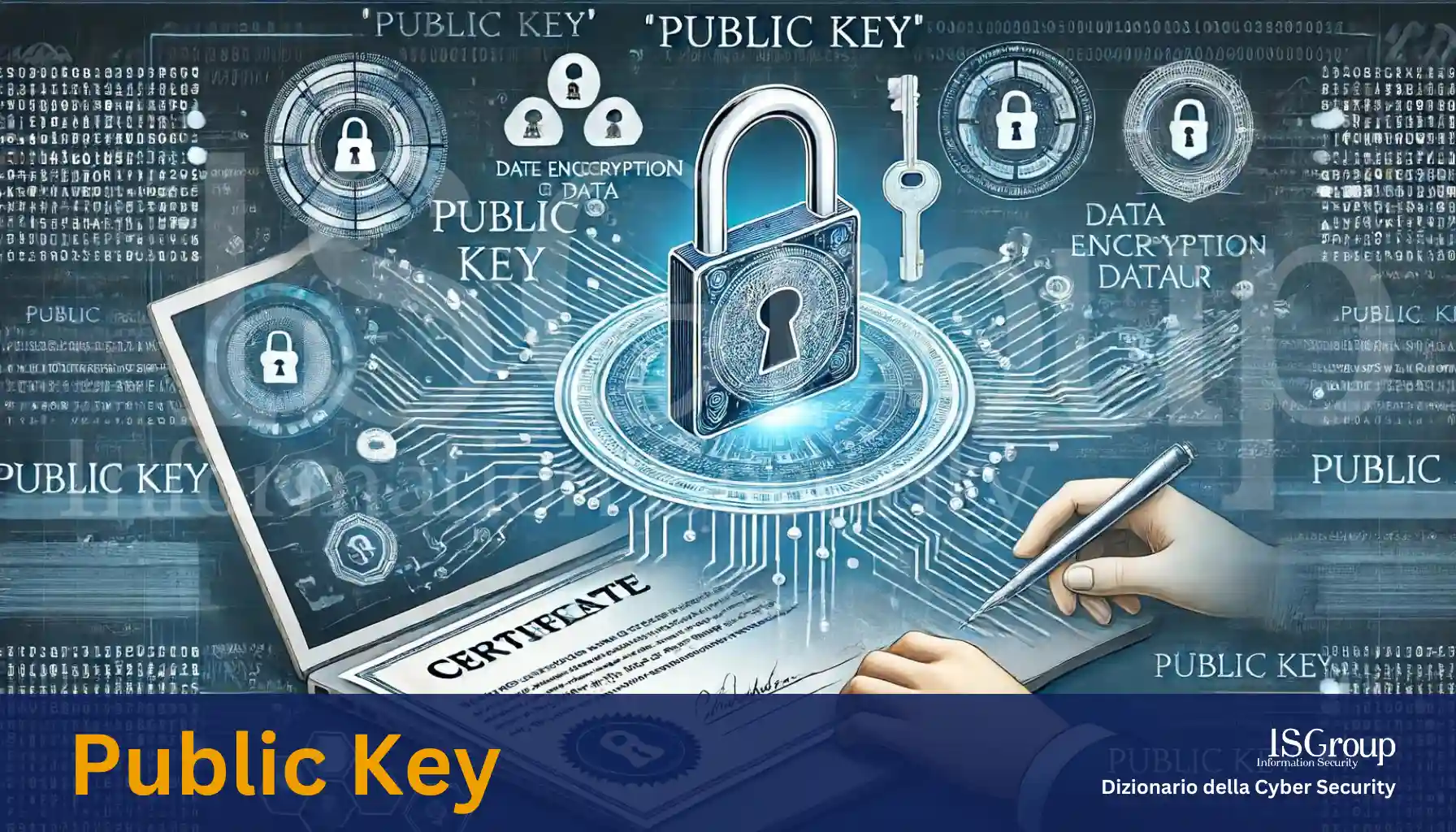
The “Public Key” is the publicly disclosed component of a cryptographic key pair used in asymmetric cryptography. Asymmetric cryptography, also known as public-key cryptography, is an encryption method that uses two distinct but mathematically related keys: a public key and a private key.
How It Works
In an asymmetric encryption system, the public key is available to anyone who wants to send an encrypted message to the owner of the public key. The encrypted message can only be decrypted with the corresponding private key, which is kept secret by the owner. This mechanism ensures that only the intended recipient, in possession of the private key, can read the content of the message.
Main Uses
Message Encryption
When a person wants to send a secure message, they use the recipient’s public key to encrypt the message. Only the recipient, with their private key, can decrypt and read the message. This method is widely used in secure Internet communications, such as in encrypted emails.
Authentication
Public keys are also used to verify the authenticity of a message or document. The sender can digitally sign a document with their private key. Anyone can then use the sender’s public key to verify that the digital signature is authentic and that the document has not been altered.
Key Distribution
The public key can be distributed through various means, including digital certificates issued by certificate authorities (CAs), which guarantee the association between the public key and the owner’s identity. This process is fundamental for building a web of trust in digital communication.
Advantages of Asymmetric Cryptography
- Security: Asymmetric cryptography offers a high level of security, as the private key never needs to be shared or transmitted.
- Scalability: It is scalable and suitable for a wide variety of applications, from protecting online communications to signing documents.
- Identity Verification: It facilitates identity verification and authentication in many digital systems.
Conclusion
The public key is a fundamental element of asymmetric cryptography, which allows for encrypting messages and authenticating communications in a secure and efficient manner. Its proper distribution and use are essential to ensuring information security in today’s digital world.
Want to give your company the highest level of cyber security? ISGroup SRL is here to help with cyber security solutions tailored to your business.
Would you like us to take care of everything for you? Our Virtual CISO and vulnerability management services are a perfect fit for your organization.
Already know what you need? Explore our services:
- Vulnerability Assessment
- Network Penetration Testing
- Web Application Penetration Testing
- Mobile Application Security Testing
- Ethical Hacking
- Training
And much more. Protect your company with the best cybersecurity experts!