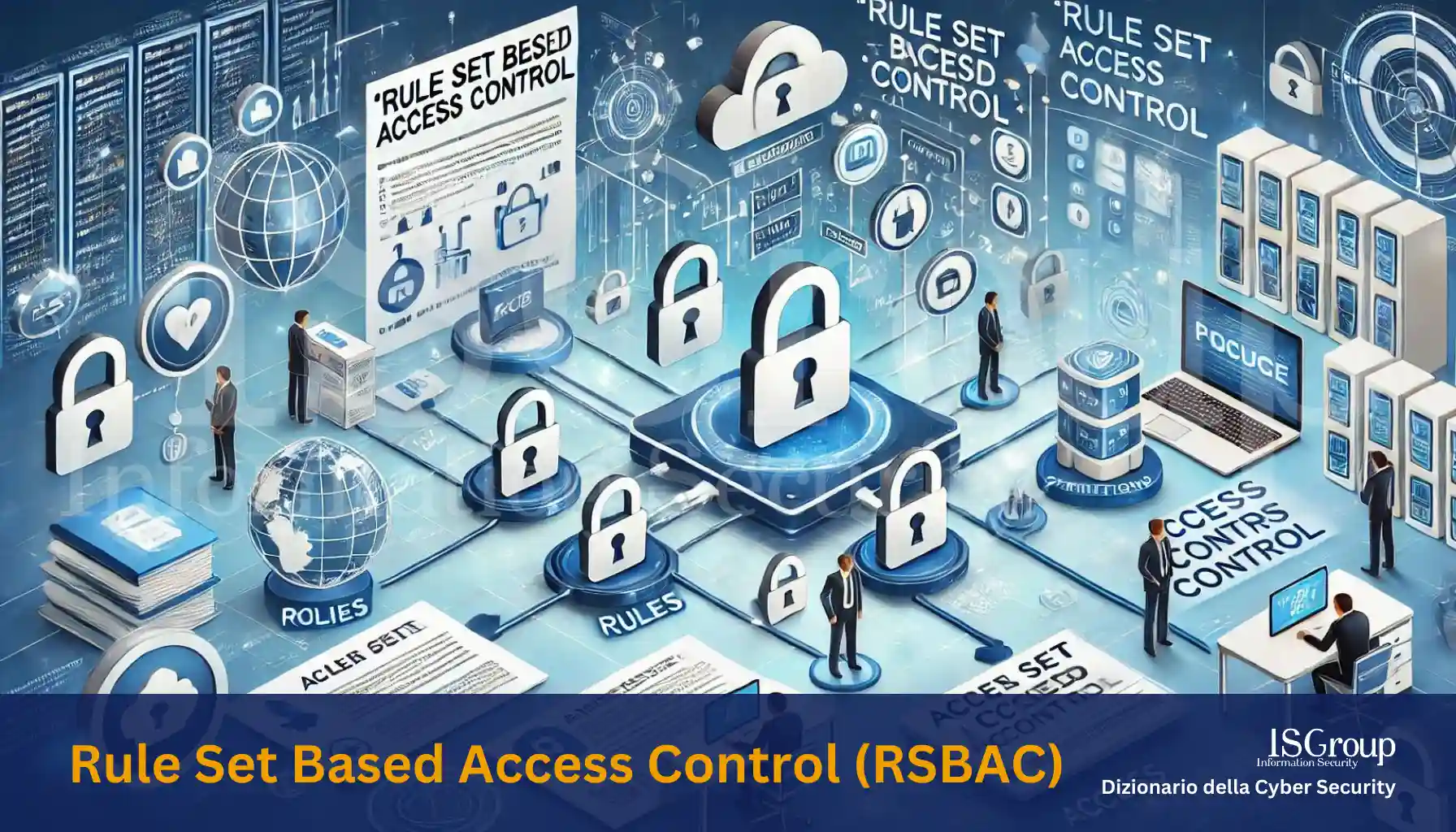
Rule Set Based Access Control (RSBAC) is an access control system that relies on sets of rules to determine the actions that specific entities can perform on certain objects. This approach ensures detailed and flexible control, allowing for the definition of precise security policies based on specific criteria.
How it works
RSBAC works by applying predefined rules that establish the permitted actions for an entity (such as users or processes) on an object (such as files, directories, or system resources). These rules are configured by the system administrator and can be based on various criteria, including:
- Entity type: distinguishing between users, processes, and services.
- Object type: such as files, directories, or devices.
- Permitted actions: such as read, write, execute, or modify.
Advantages
- Flexibility: The ability to define specific rules for different scenarios and access types makes RSBAC very versatile.
- Security: With RSBAC, administrators can implement granular security policies that reduce the risk of unauthorized access.
- Detailed control: Rules can be customized to fit the specific needs of the organization, ensuring precise control over who can do what.
Application examples
- Corporate systems: Implementing security policies that restrict access to sensitive data only to authorized users.
- Multi-user environments: Ensuring that different users have different access levels based on their role and needs.
- Operating systems: Many operating systems, such as Linux, can integrate RSBAC modules to strengthen system security.
Conclusion
RSBAC represents a powerful and flexible approach to access control, allowing system administrators to define detailed and tailored security policies. This system not only improves overall security but also offers granular control that can be adapted to the specific needs of any organization or environment.
Keywords
- Entity: A user, process, or service that requests access to an object.
- Object: A resource such as a file, directory, or device on which access control is desired.
- Rules: Sets of criteria that determine the actions permitted for specific entities on certain objects.
- Security policies: Guidelines and rules defined to protect system resources.
Want to give your company the highest level of cyber security? ISGroup SRL is here to help with cyber security solutions tailored to your business.
Would you like us to take care of everything for you? Our Virtual CISO and vulnerability management services are a perfect fit for your organization.
Already know what you need? Explore our services:
- Vulnerability Assessment
- Network Penetration Testing
- Web Application Penetration Testing
- Mobile Application Security Testing
- Ethical Hacking
- Training
And much more. Protect your company with the best cybersecurity experts!