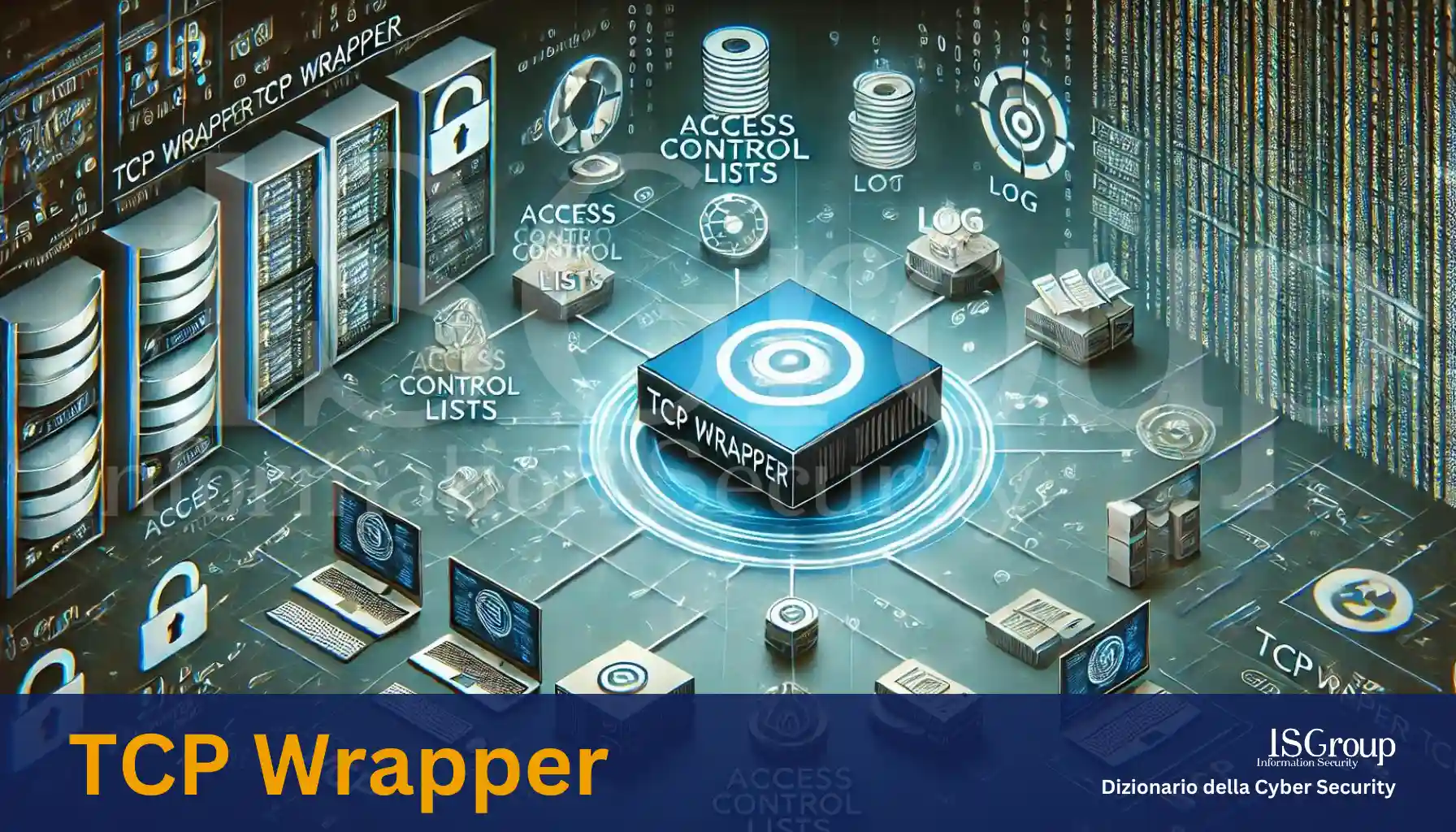
TCP Wrapper is a software package used to restrict access to specific network services based on the connection source. This simple yet effective tool allows for monitoring and controlling incoming network traffic, thereby improving the security of computer networks.
How it Works
TCP Wrapper operates as an intermediary layer between network services and incoming connections. When a client attempts to access a network service on a server protected by TCP Wrapper, the connection request is first intercepted by the wrapper. This allows for the application of access control rules based on various criteria, such as the source IP address of the connection.
Configuration
TCP Wrapper configuration is primarily based on two configuration files: hosts.allow and hosts.deny. These files define the rules for allowing or denying access to various network services.
- hosts.allow: This file contains the rules that specify which connections are authorized. Each rule can define a specific service and one or more connection sources that are authorized to access it.
- hosts.deny: This file lists the rules that determine which connections should be blocked. The rules are similar to those in the
hosts.allowfile, but with the intent of denying access.
Configuration Example
A configuration example could be as follows:
- hosts.allow:makefileCopy code
sshd: 192.168.1.0/24 httpd: ALLIn this case, the SSH service (sshd) is accessible only from machines on the 192.168.1.0/24 network, while the HTTP service (httpd) is accessible from any source. - hosts.deny:sqlCopy code
ALL: ALLThis rule denies access to all services from any source, unless specifically permitted in thehosts.allowfile.
Advantages
Using TCP Wrapper offers several advantages, including:
- Granular control: It allows you to define precise rules for who can access which services.
- Simplicity: Configuration is relatively straightforward and does not require additional hardware or software.
- Monitoring: It facilitates the monitoring of incoming network traffic by logging both successful and failed access attempts.
Limitations
Despite its numerous advantages, TCP Wrapper has some limitations:
- Limited protocol support: It works primarily with services that use the TCP protocol.
- IP address-based security: Access rules are based on IP addresses, which can be spoofed.
Conclusion
TCP Wrapper is a useful tool for improving network security through the control and monitoring of incoming network traffic. Although it has some limitations, its simplicity and effectiveness make it an interesting solution for many cybersecurity scenarios.
Want to give your company the highest level of cyber security? ISGroup SRL is here to help with cyber security solutions tailored to your business.
Would you like us to take care of everything for you? Our Virtual CISO and vulnerability management services are a perfect fit for your organization.
Already know what you need? Explore our services:
- Vulnerability Assessment
- Network Penetration Testing
- Web Application Penetration Testing
- Mobile Application Security Testing
- Ethical Hacking
- Training
And much more. Protect your company with the best cybersecurity experts!