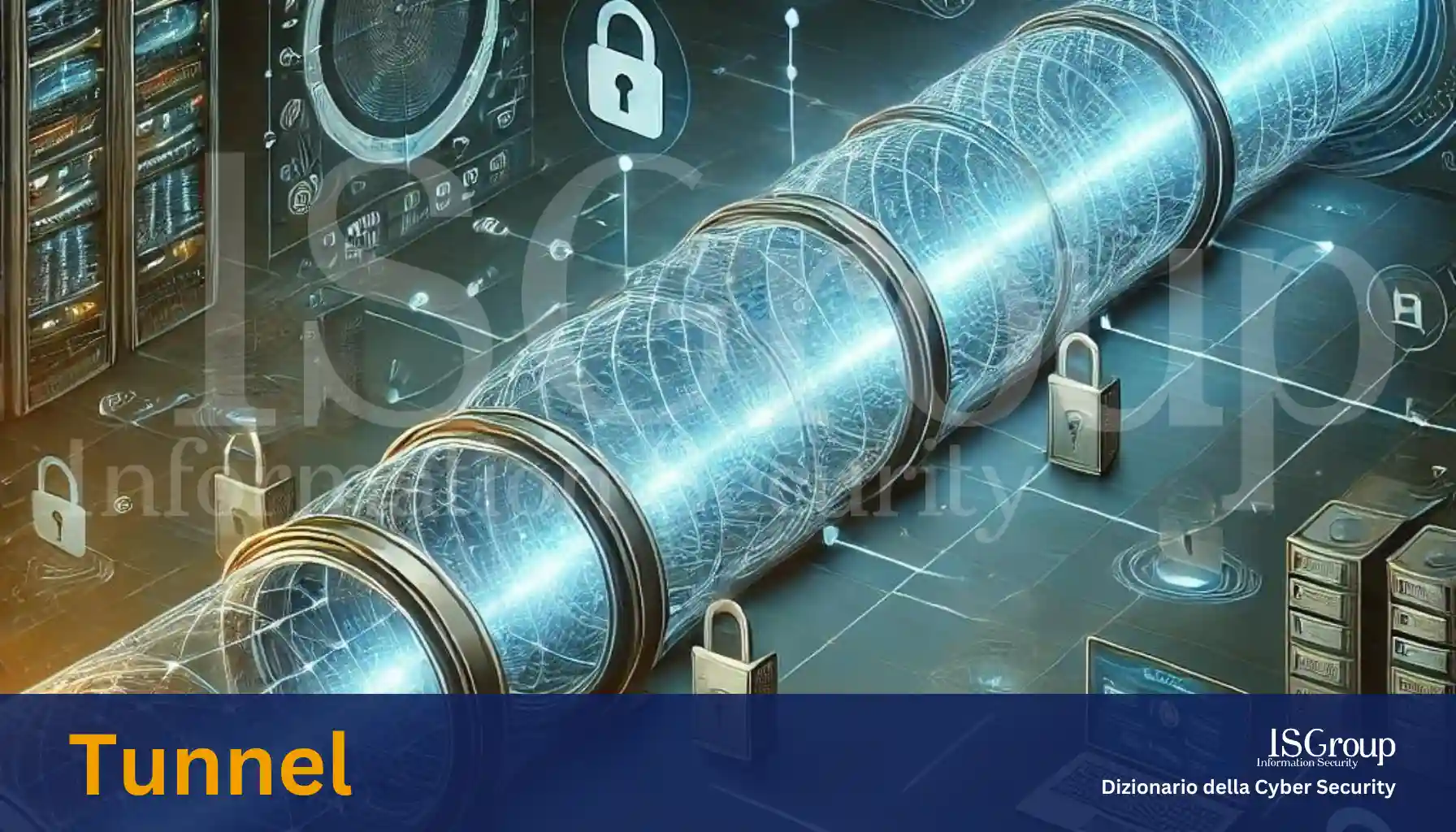
A tunnel is a communication channel created in a computer network by encapsulating data packets of one communication protocol within (or over) a second protocol. This second protocol would normally be transported over, or at the same level as, the first. Most of the time, a tunnel is a point-to-point logical link, i.e., an OSI model layer 2 connection, created by encapsulating the layer 2 protocol in a transport protocol (such as TCP), in a network or internetworking protocol (such as IP), or in another link-layer protocol.
How it works
The tunneling process allows data to be moved between computers that use a protocol not supported by the network connecting them. This is done by encapsulating the original protocol’s data within the packets of another protocol that the network supports. In this way, the tunnel creates a sort of virtual “corridor” through which data can travel securely and efficiently, bypassing the limitations of the intermediate network’s protocols.
Applications
- VPN (Virtual Private Network): Tunnels are widely used in virtual private networks to create secure connections between remote networks. By encapsulating data in a secure protocol (such as IPsec), VPNs can transmit information securely over public networks like the Internet.
- Transport of Unsupported Protocols: In environments where some protocols are not supported by all sections of the network, tunneling allows these unsupported protocols to be transported by encapsulating them in compatible protocols.
- Remote Access: By using tunnels, remote users can access internal network resources as if they were physically present on the same local network, improving flexibility and productivity.
Advantages
- Security: Data encapsulation can include encryption, which protects information during transfer.
- Compatibility: It allows communication between systems with different protocols.
- Efficiency: It optimizes data transport across heterogeneous networks.
Disadvantages
- Overhead: Encapsulation adds extra data to packets, increasing the overall volume of transmitted data.
- Latency: It can introduce transmission delays due to the encapsulation and decapsulation process.
- Configuration: It may require complex configurations and careful management.
Conclusion
Tunneling represents a fundamental technology in the field of computer networking, enabling secure and compatible communication between heterogeneous systems. Thanks to its ability to encapsulate protocols, it offers effective solutions for numerous applications, from VPNs to remote access, while presenting some challenges in terms of overhead and latency.
Want to give your company the highest level of cyber security? ISGroup SRL is here to help with cyber security solutions tailored to your business.
Would you like us to take care of everything for you? Our Virtual CISO and vulnerability management services are a perfect fit for your organization.
Already know what you need? Explore our services:
- Vulnerability Assessment
- Network Penetration Testing
- Web Application Penetration Testing
- Mobile Application Security Testing
- Ethical Hacking
- Training
And much more. Protect your company with the best cybersecurity experts!