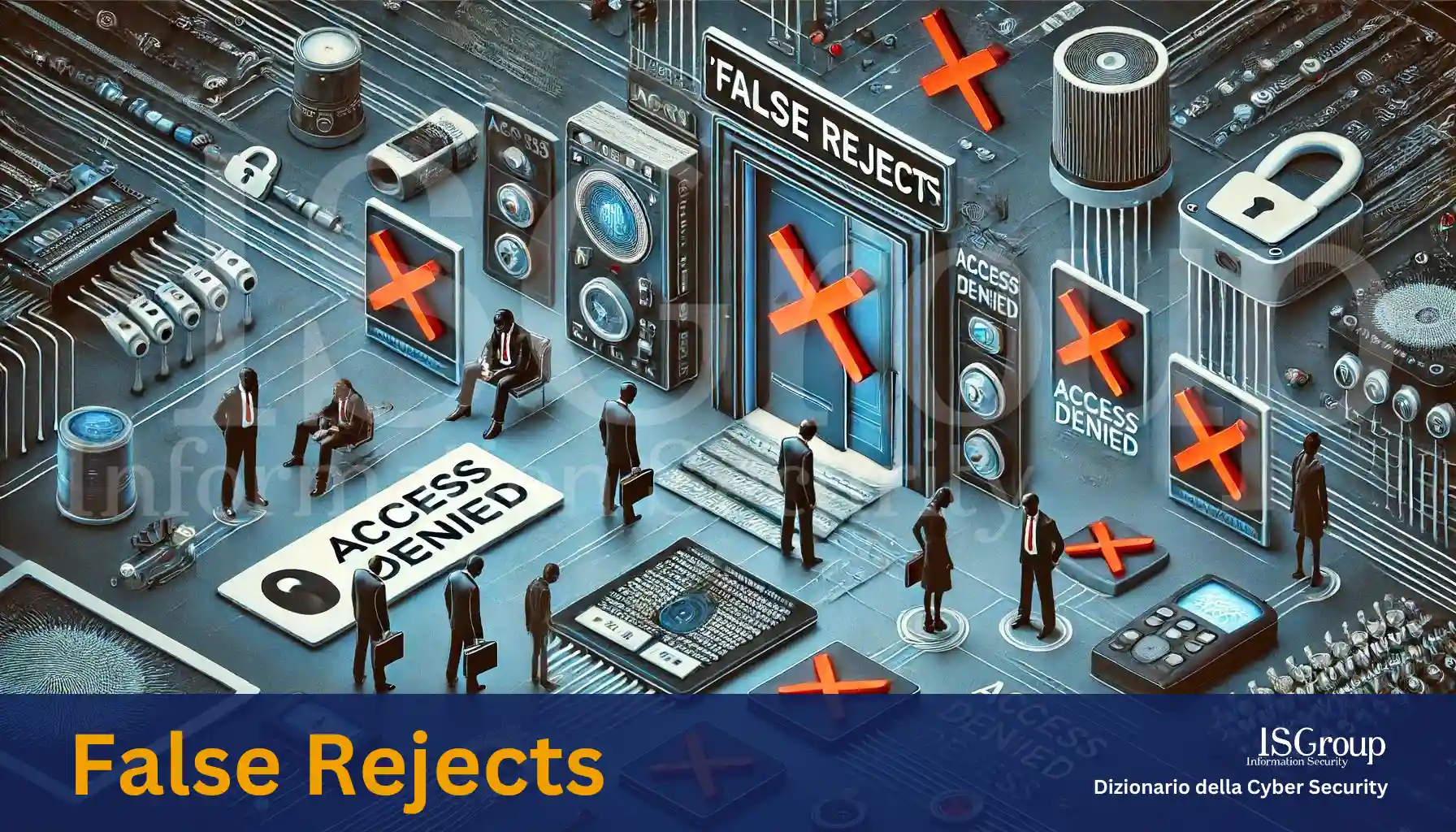
“False Rejects” represent a common problem in authentication systems, where a legitimate user is erroneously identified as unauthorized. This phenomenon occurs when the authentication system fails to recognize a valid user, causing access to be denied even if the user has provided the correct credentials.
Causes of False Rejects
False rejects can be caused by several factors, including:
- Technical Issues: Hardware or software malfunctions can negatively affect the authentication system’s capabilities. For example, a faulty biometric sensor might not read fingerprints correctly.
- Human Error: The user might make mistakes while entering credentials, such as mistyping a password or failing to correctly place a finger on a sensor.
- Environmental Conditions: Variations in environmental conditions, such as humidity or temperature, can alter the reading of biometric data, leading to false rejects.
- Wear and Tear: Natural wear of authentication devices, such as the degradation of a magnetic card reader, can reduce the system’s accuracy.
Impact of False Rejects
False rejects can have several negative impacts, including:
- User Frustration: Legitimate users may feel frustrated or stressed when they are unable to access necessary systems.
- Reduced Productivity: False rejects can cause work interruptions, reducing user efficiency and productivity.
- Additional Costs: Resolving authentication issues can lead to additional costs for technical support and system maintenance.
Solutions to Reduce False Rejects
To minimize the occurrence of false rejects, several strategies can be adopted:
- Regular Maintenance: Ensure that authentication devices are regularly maintained and updated to function correctly.
- Multiple Authentication Systems: Using multi-factor authentication (MFA) methods, which combine more than one verification method, can increase the overall accuracy of the system.
- User Training: Providing clear instructions to users on how to correctly use authentication devices can reduce human error.
- Technological Improvements: Implementing advanced authentication technologies, such as next-generation facial recognition or more precise biometric sensors, can help reduce false rejects.
Conclusion
False rejects represent a significant challenge for authentication systems, but with a combination of maintenance, technological improvement, and user education, it is possible to significantly reduce the incidence of these errors. An efficient authentication system must balance security with usability to ensure that legitimate users can access the systems and information they need without obstacles.
Want to give your company the highest level of cyber security? ISGroup SRL is here to help with cyber security solutions tailored to your business.
Would you like us to take care of everything for you? Our Virtual CISO and vulnerability management services are a perfect fit for your organization.
Already know what you need? Explore our services:
- Vulnerability Assessment
- Network Penetration Testing
- Web Application Penetration Testing
- Mobile Application Security Testing
- Ethical Hacking
- Training
And much more. Protect your company with the best cybersecurity experts!