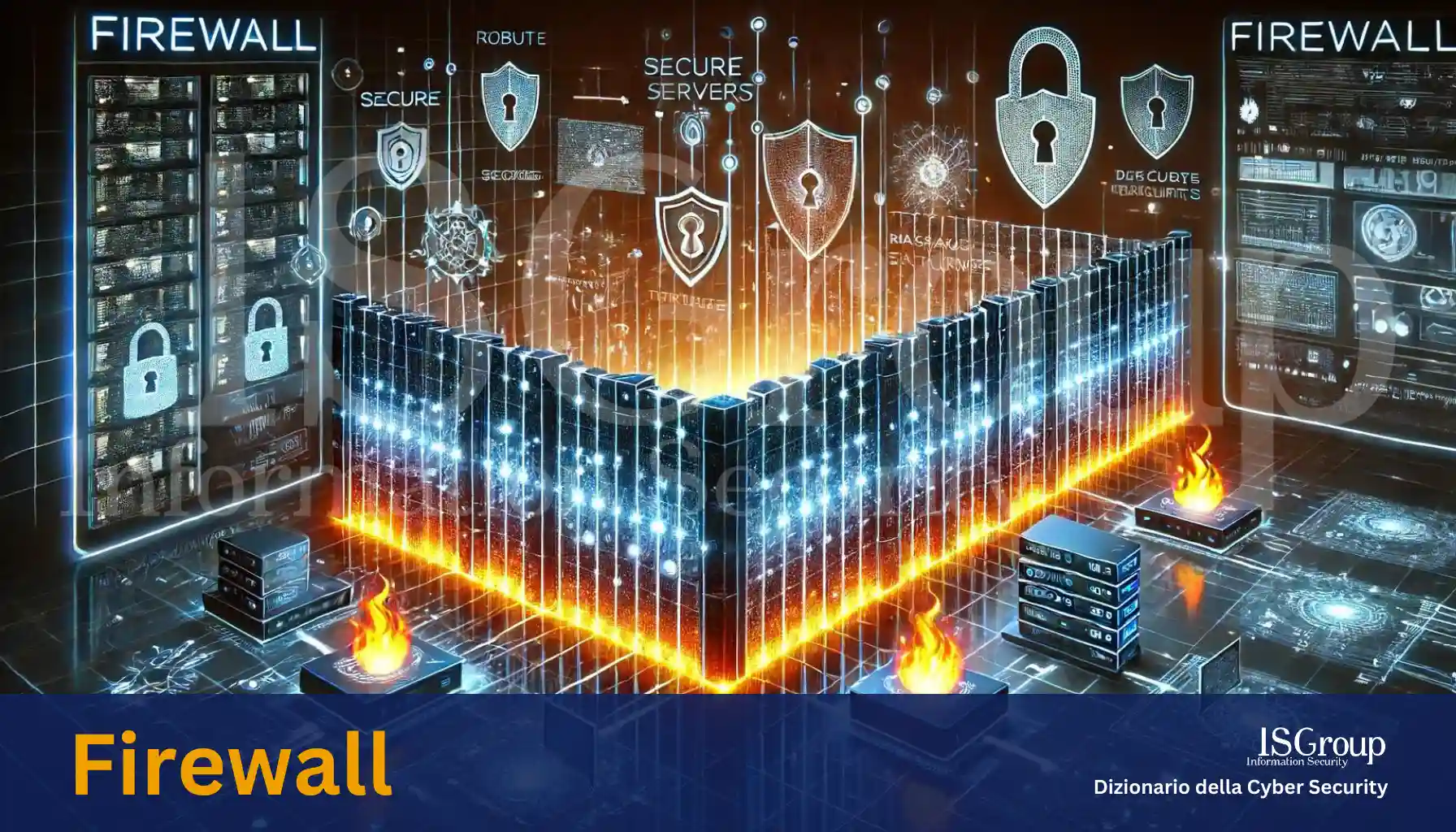
A firewall is a security barrier that can be either logical (software) or physical (hardware), designed to protect a network from unauthorized access. The primary function of a firewall is to create a discontinuity in the flow of network data, allowing only authorized traffic and blocking suspicious or unauthorized traffic. In this way, a firewall acts as a filter between the internal (protected) network and the external (potentially dangerous) one.
Types of Firewalls
Software Firewall
A software firewall is a program installed on a device (such as a computer or server) that controls and monitors incoming and outgoing network traffic. It is easily updatable and configurable, making it a flexible choice for many organizations and private users.
Hardware Firewall
A hardware firewall, on the other hand, is a physical device located between the internal and external network. These devices are often used in large corporate networks to manage large-scale data traffic and provide robust protection against external threats.
How a Firewall Works
The operation of a firewall is based on a set of predefined rules that determine which data packets can cross the barrier and which must be blocked. These rules can be configured based on various criteria, such as IP addresses, communication ports, protocols used, and packet content.
Packet Filtering
One of the main techniques used by firewalls is packet filtering. In this process, every data packet that crosses the firewall is analyzed against the set rules. If the packet meets the security criteria, it is allowed to pass; otherwise, it is blocked.
Proxy
Some firewalls use a proxy to mediate connections between the internal and external network. In this way, internal devices do not communicate directly with the outside, but do so through the proxy, which filters and checks the data.
Stateful Inspection
Modern firewalls often include stateful inspection, which tracks the state of active connections and allows only packets that are part of a recognized and authorized connection.
Importance of Firewalls
Firewalls are an essential component of cybersecurity. They protect networks from external attacks such as malware, hacking, and unauthorized access attempts, maintaining the integrity and confidentiality of corporate and personal data. Furthermore, they help prevent the spread of internal threats within the network by controlling traffic between different segments of the same network.
In an era where cybersecurity threats are constantly increasing, the use of well-configured firewalls is fundamental to ensuring the protection of sensitive information and the operational continuity of organizations.
Want to give your company the highest level of cyber security? ISGroup SRL is here to help with cyber security solutions tailored to your business.
Would you like us to take care of everything for you? Our Virtual CISO and vulnerability management services are a perfect fit for your organization.
Already know what you need? Explore our services:
- Vulnerability Assessment
- Network Penetration Testing
- Web Application Penetration Testing
- Mobile Application Security Testing
- Ethical Hacking
- Training
And much more. Protect your company with the best cybersecurity experts!