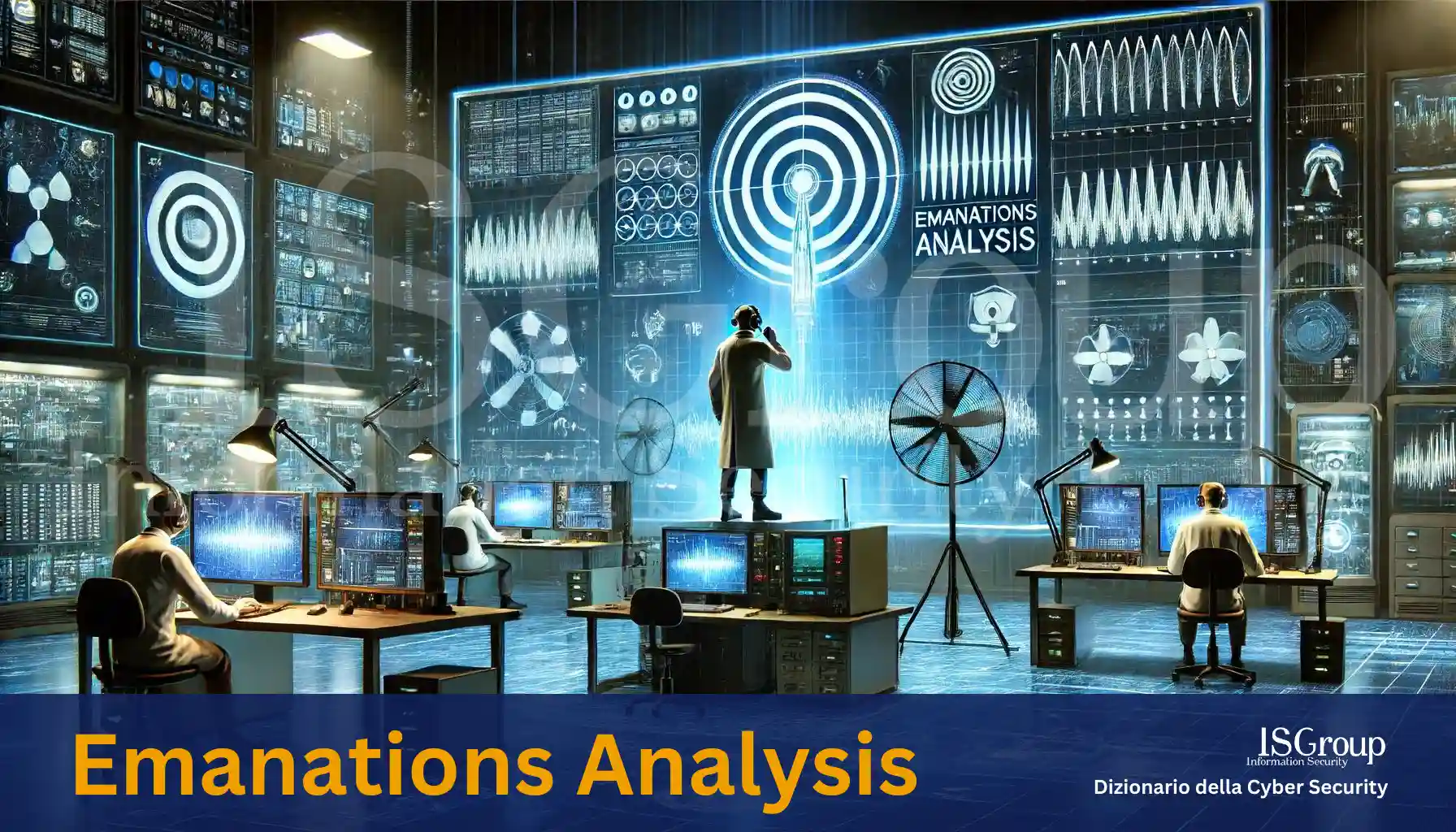
Emanations Analysis is a technique used to gain direct knowledge of communicated data by monitoring and resolving a signal emitted by a system. This signal contains data, but it was not intentionally designed to communicate such information.
Context and Usage: In the field of cybersecurity and communications, emanations analysis is crucial for understanding how data can be intercepted and used by unauthorized actors. Electronic systems, such as computers and communication devices, often emit electromagnetic signals as a result of their operation. These signals, although not intended to transmit information, can contain sensitive data that can be extracted and analyzed.
Applications:
- Cybersecurity: Identifying and mitigating risks associated with information leakage through unintentional emanations.
- Intelligence and Espionage: Using emanations analysis techniques to collect sensitive information from electronic devices without direct access.
- System Testing and Validation: Evaluating the robustness of a system against emanations-based attacks, ensuring there are no information leaks through unintentional channels.
Analysis Techniques: Emanations analysis involves various techniques to intercept and interpret emitted signals. These include:
- TEMPEST: A set of standards and techniques developed to protect sensitive information from interception via electromagnetic emanations.
- Side-Channel Attacks: Attacks that exploit indirect information, such as power consumption or electromagnetic radiation, to recover sensitive data.
Risk Mitigation: To protect against threats arising from emanations analysis, organizations can adopt measures such as:
- Electromagnetic Shielding: Using materials and technologies to block or reduce the emission of electromagnetic signals.
- Secure Design: Implementing design techniques that minimize unintentional emanations.
- Continuous Monitoring and Testing: Conducting regular checks and tests to detect any information leaks and implement corrective measures.
Conclusion: Emanations analysis represents a critical aspect of information security, requiring careful consideration and implementation of preventive measures to protect sensitive data. With the evolution of technologies and interception techniques, it is essential to stay updated on best practices to mitigate the risks associated with this threat.
This discipline continues to evolve with the advancement of technologies, making continuous research and development essential to address emerging challenges in the field of information security.
Want to give your company the highest level of cyber security? ISGroup SRL is here to help with cyber security solutions tailored to your business.
Would you like us to take care of everything for you? Our Virtual CISO and vulnerability management services are a perfect fit for your organization.
Already know what you need? Explore our services:
- Vulnerability Assessment
- Network Penetration Testing
- Web Application Penetration Testing
- Mobile Application Security Testing
- Ethical Hacking
- Training
And much more. Protect your company with the best cybersecurity experts!