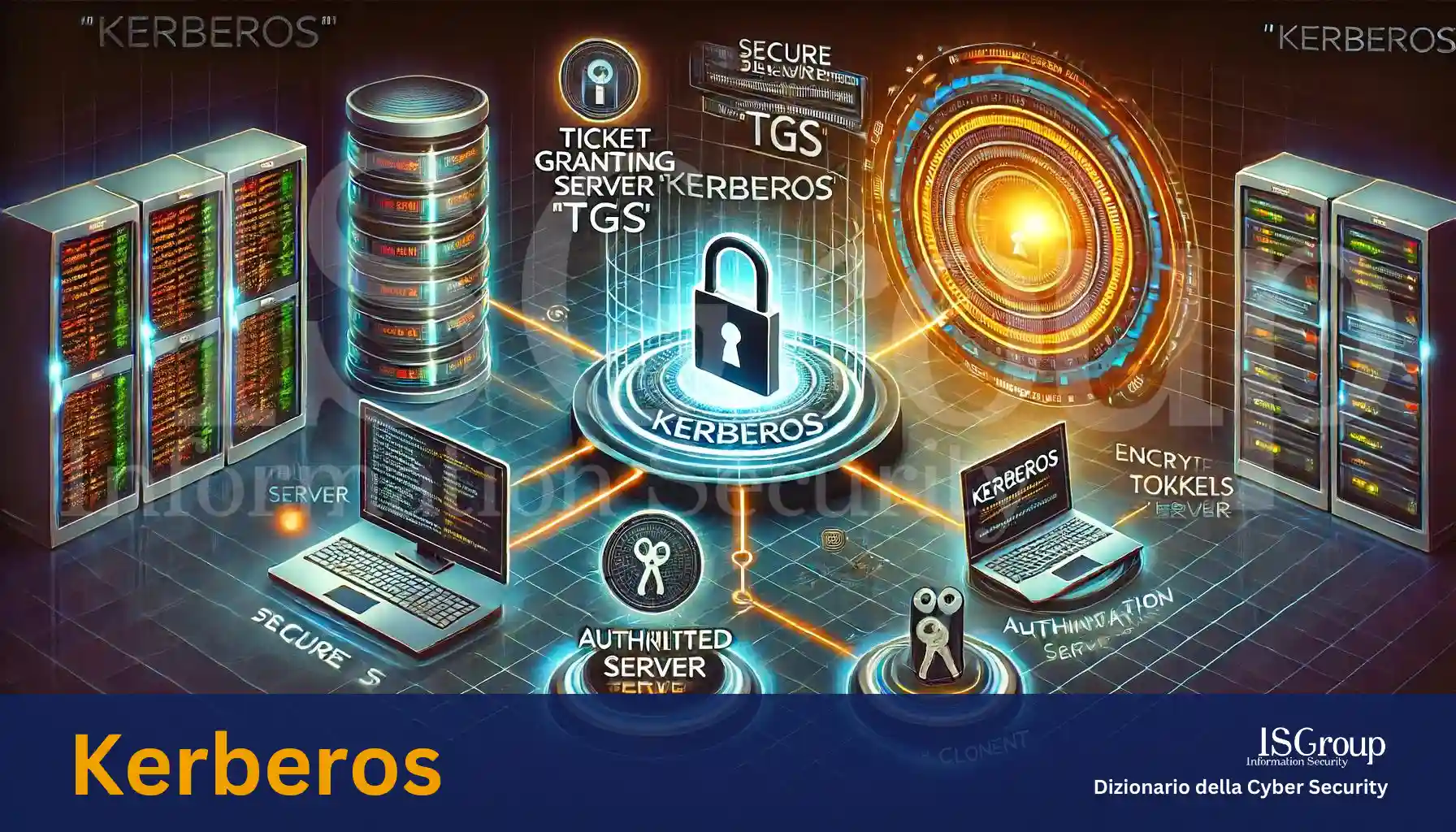
Kerberos is a system developed at the Massachusetts Institute of Technology (MIT) that relies on passwords and symmetric cryptography (DES) to implement a ticket-based authentication service and a distributed access control service in a client-server network environment.
Key Features
- Ticket-Based Authentication: Kerberos uses a ticket-based authentication mechanism to ensure that only authorized users can access network services. When a user attempts to access a service, Kerberos issues a ticket that the user must present to the service to prove their identity.
- Symmetric Cryptography (DES): To protect communications and sensitive data, Kerberos uses symmetric cryptography, specifically the DES (Data Encryption Standard) algorithm. This ensures that data transmitted between the client and the server is encrypted and therefore protected from potential eavesdropping.
- Access Control Service: In addition to authentication, Kerberos provides an access control service that ensures only users with the appropriate permissions can access specific network services or resources. This is fundamental for maintaining the security and integrity of corporate resources.
- Distributed Client-Server Environment: Kerberos is designed to operate in distributed network environments, where clients and servers may be located in different places. This makes Kerberos a scalable and flexible solution for organizations that need to manage access to resources distributed across wide-area networks.
How Kerberos Works
The operation of Kerberos can be divided into several phases:
- User Authentication: The user enters their credentials (username and password) into the Kerberos client. The client sends this information to the Kerberos Authentication Server (AS).
- Service Ticket Issuance: If the credentials are correct, the authentication server issues a Ticket Granting Ticket (TGT), which the user uses to request further service tickets.
- Access to Network Services: When the user wishes to access a specific service, they present the TGT to the Ticket Granting Server (TGS), which issues a ticket for that specific service.
- Ticket Verification: The ticket is presented to the network service, which verifies it and grants the user access.
Advantages of Kerberos
- Security: The use of tickets and encryption ensures that user credentials are not transmitted in plain text over the network.
- Scalability: Kerberos is suitable for large networks thanks to its distributed architecture.
- Reliability: Kerberos is a mature and well-tested system, used in numerous organizations around the world.
Conclusions
Kerberos represents a robust and secure solution for authentication and access control in distributed network environments. Developed by MIT, this system continues to be a popular choice for organizations that need to ensure the security of their network resources.
Want to give your company the highest level of cyber security? ISGroup SRL is here to help with cyber security solutions tailored to your business.
Would you like us to take care of everything for you? Our Virtual CISO and vulnerability management services are a perfect fit for your organization.
Already know what you need? Explore our services:
- Vulnerability Assessment
- Network Penetration Testing
- Web Application Penetration Testing
- Mobile Application Security Testing
- Ethical Hacking
- Training
And much more. Protect your company with the best cybersecurity experts!