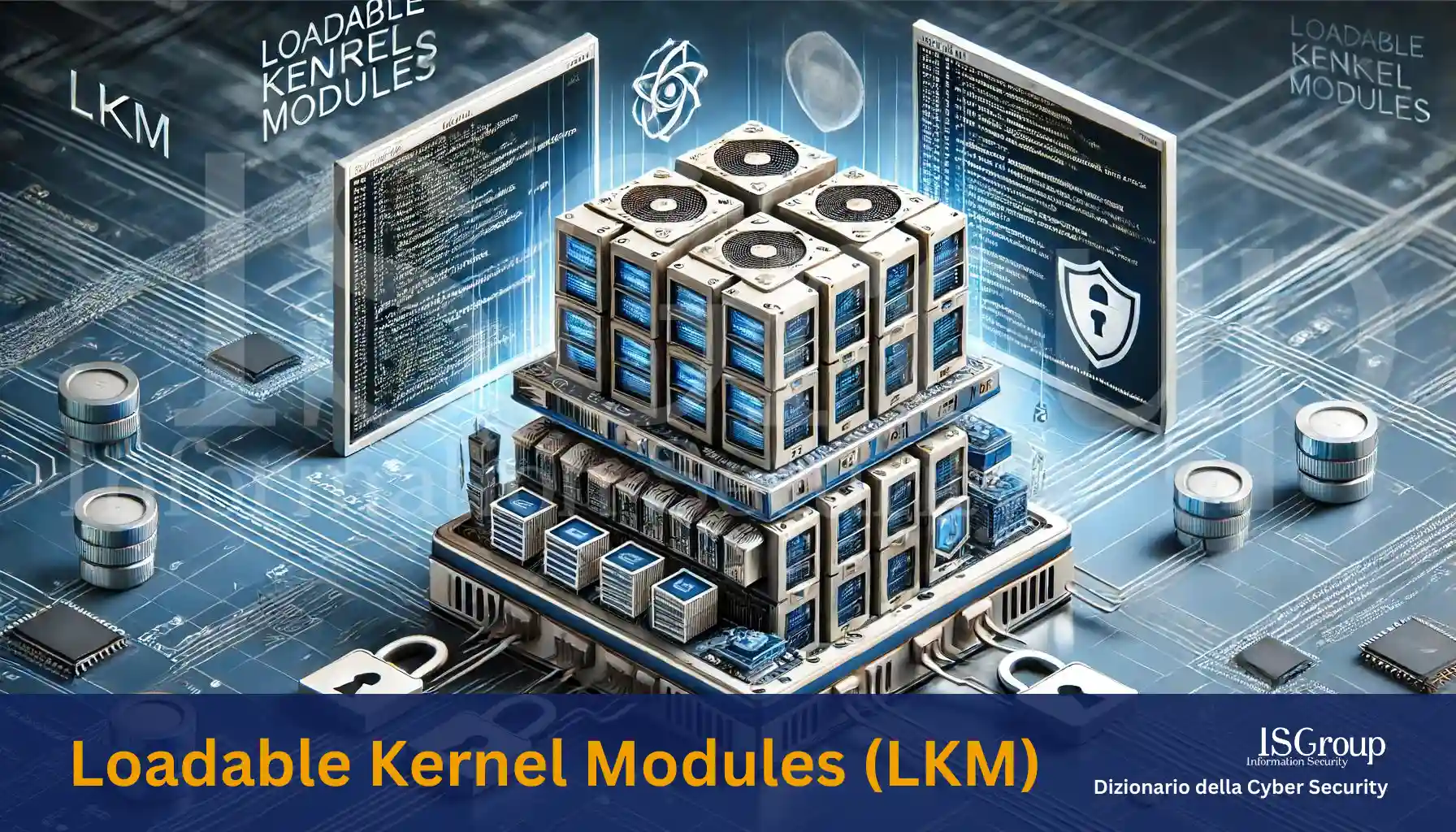
Loadable Kernel Modules, known by the acronym LKM, represent a fundamental technology in the context of Unix-like operating systems, such as Linux. LKMs allow for the addition of extra functionality directly into the system kernel while it is running, without the need to reboot the system. This feature offers remarkable flexibility and modularity, facilitating the updating and expansion of kernel capabilities without interrupting system operation.
How LKMs Work
LKMs are portions of code that can be inserted into or removed from the running kernel dynamically. They are used to add new features or improve existing ones without having to recompile the entire kernel. This process occurs via specific commands such as insmod to load a module and rmmod to remove it. Once loaded, a module can interact with the kernel and other parts of the system as if it were an integral part of the kernel itself.
Advantages of LKMs
- Flexibility: The ability to add or remove modules without rebooting the system makes LKMs extremely flexible. System administrators can introduce new drivers or security updates without having to schedule service downtime.
- Modularity: LKMs promote a modular architecture, where only the necessary features are loaded into the kernel, thereby reducing complexity and improving resource management.
- Updates and Maintenance: System maintenance becomes easier thanks to the ability to update individual modules. This reduces the risk of introducing errors into other parts of the kernel during an update.
Usage Examples
LKMs are used in various contexts to expand kernel capabilities:
- Device Drivers: Many hardware drivers are implemented as LKMs, allowing support for new devices to be added without modifying the main kernel.
- File Systems: New file systems can be added as loadable modules, allowing for experimentation or the use of specific file systems without altering the base kernel.
- Security Modules: Security extensions, such as modules for firewalls or intrusion detection systems, can be implemented as LKMs for more dynamic and responsive management.
Loading and Removing Modules
The loading and removal of kernel modules are managed through a series of commands and configuration files. The main commands are:
insmod <module_name>: Loads a module into the kernel.rmmod <module_name>: Removes a previously loaded module.lsmod: Lists all modules currently loaded in the kernel.
Security Considerations
Although LKMs offer numerous advantages, they also entail some security considerations. Loading an insecure or compromised module can put the entire system at risk, as kernel modules operate at a privileged level. Therefore, it is crucial to ensure that only verified and trusted modules are loaded into the kernel.
Conclusion
Loadable Kernel Modules represent a powerful tool for the expansion and dynamic management of kernel functionality in Unix-like operating systems. Their ability to be added or removed without the need for a reboot offers remarkable flexibility, facilitating system maintenance and updates. However, it is essential to manage these modules carefully to ensure the security and stability of the system.
Want to give your company the highest level of cyber security? ISGroup SRL is here to help with cyber security solutions tailored to your business.
Would you like us to take care of everything for you? Our Virtual CISO and vulnerability management services are a perfect fit for your organization.
Already know what you need? Explore our services:
- Vulnerability Assessment
- Network Penetration Testing
- Web Application Penetration Testing
- Mobile Application Security Testing
- Ethical Hacking
- Training
And much more. Protect your company with the best cybersecurity experts!