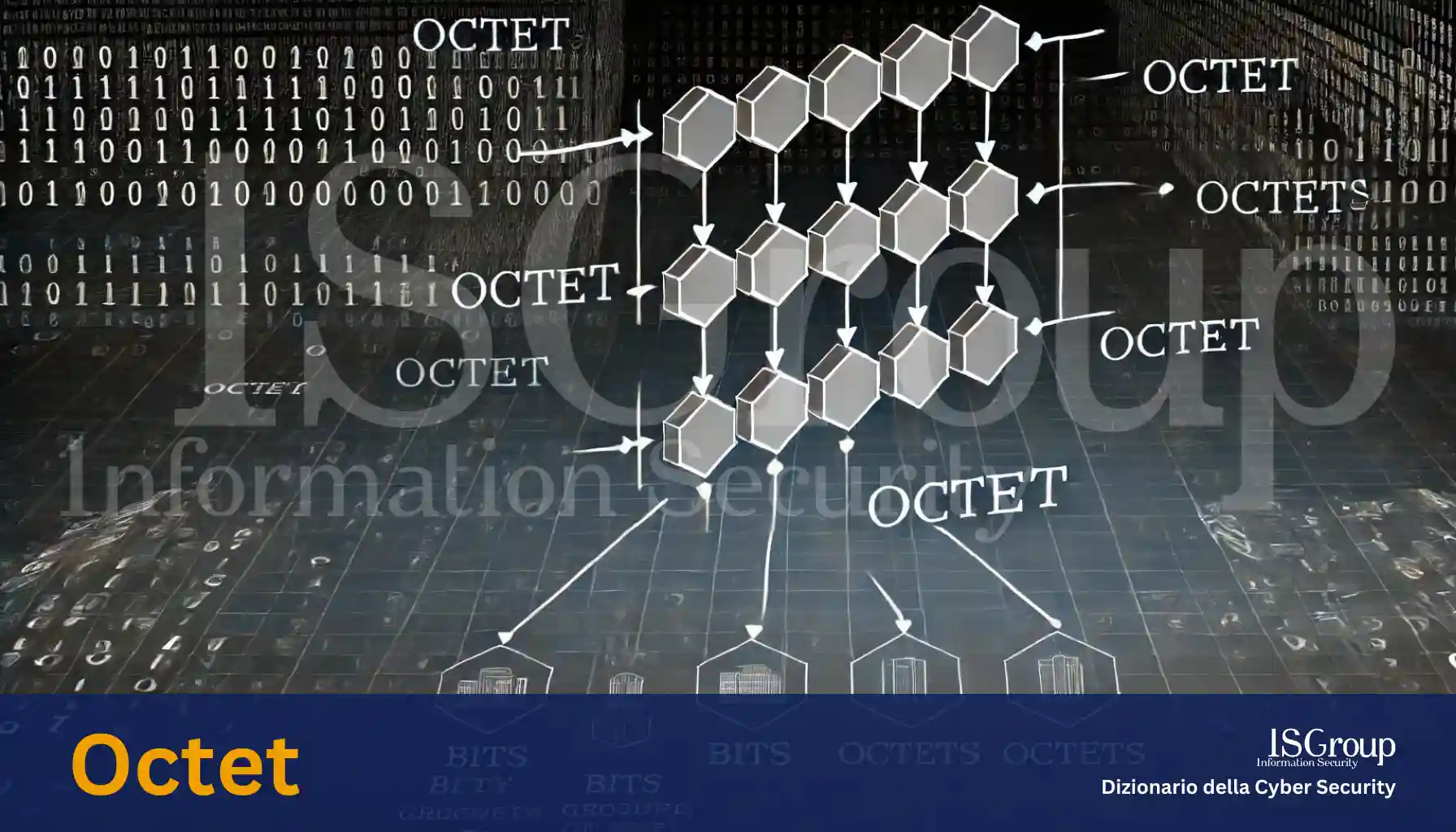
An octet is a sequence of eight bits. In practice, an octet is an eight-bit byte.
Details
In the context of computer science and telecommunications, the term “octet” is often used to avoid ambiguity. While the word “byte” can vary in size depending on computer architecture, “octet” clearly specifies that it consists of eight bits. This is particularly useful in international standards and communication protocols, where clarity and precision are fundamental.
Uses
Octets are widely used in computer networking and programming. For example, Internet Protocol version 4 (IPv4) addresses are represented by four octets. A typical IPv4 address might be displayed as 192.168.0.1, where each number represents an octet. This format facilitates the understanding and management of IP addresses.
Differences between Octet and Byte
While in modern common usage a byte is almost always equivalent to an octet (eight bits), historically and technically a byte could represent a variable number of bits, depending on the system architecture. Using the term “octet” therefore ensures that one is always referring to a sequence of eight bits, eliminating any ambiguity.
Importance of Octets
Octets are fundamental in the representation of digital data. Each ASCII character, for example, is represented by an octet. In data transmissions, octets are used to encode information, ensuring that each unit of data is the same size and therefore more easily manageable by processing systems.
Conclusion
The octet is a key concept in computer science and telecommunications, ensuring precision and uniformity in data representation. Understanding the term “octet” is essential for anyone working in the field of information technology, ensuring that communication and data management occur efficiently and without ambiguity.
Want to give your company the highest level of cyber security? ISGroup SRL is here to help with cyber security solutions tailored to your business.
Would you like us to take care of everything for you? Our Virtual CISO and vulnerability management services are a perfect fit for your organization.
Already know what you need? Explore our services:
- Vulnerability Assessment
- Network Penetration Testing
- Web Application Penetration Testing
- Mobile Application Security Testing
- Ethical Hacking
- Training
And much more. Protect your company with the best cybersecurity experts!