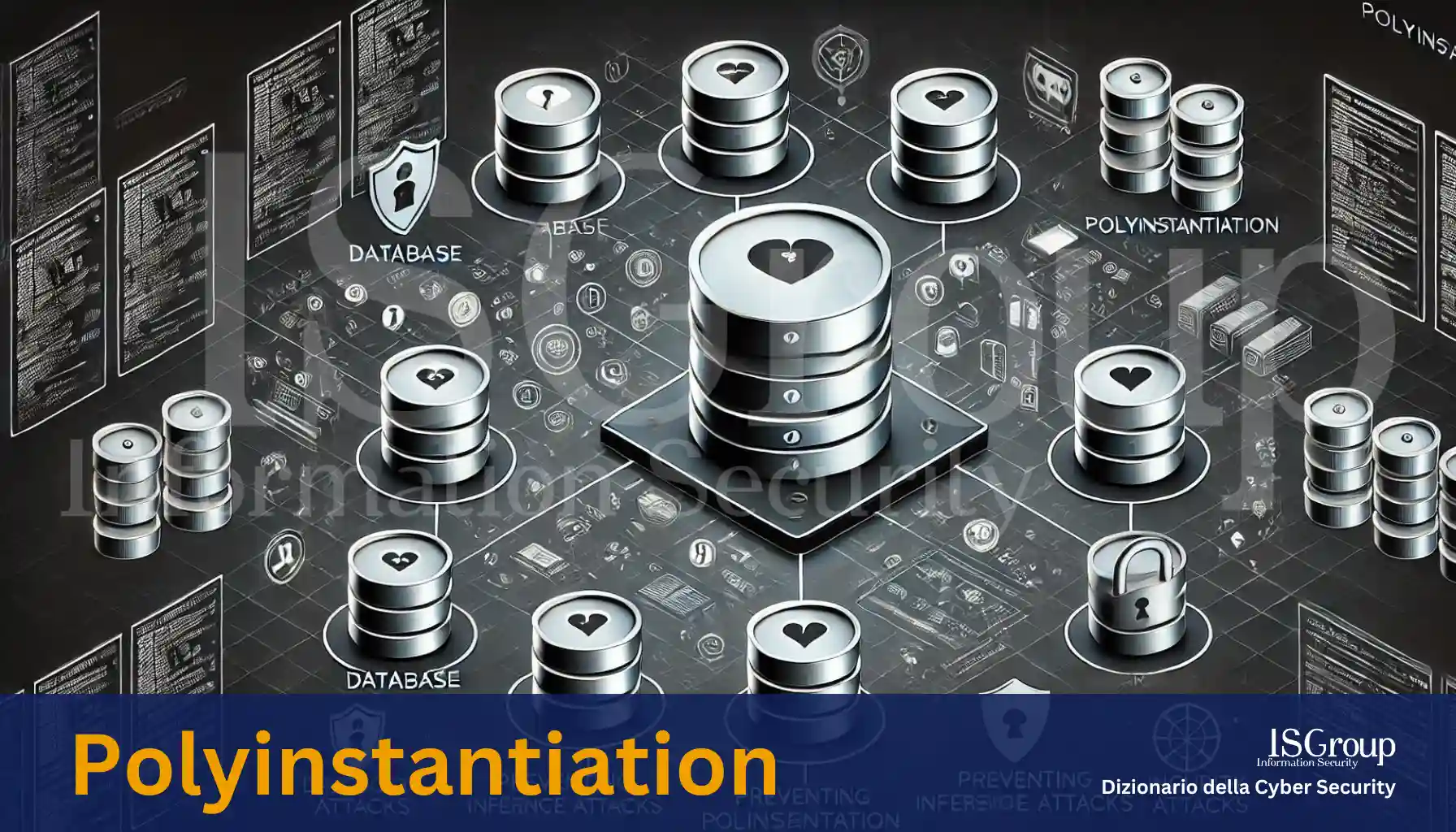
Polyinstantiation is the ability of a database to maintain multiple records with the same key. This technique is primarily used to prevent inference attacks, which are attempts to deduce sensitive information from non-sensitive data.
How it works: In a traditional database, every primary key must be unique, meaning that two records cannot exist with the same key value. However, in some contexts, it may be necessary to handle exceptions to this rule, and this is where polyinstantiation comes into play. For example, in environments with different security levels, it might be necessary to store multiple versions of the same record for users with different authorization levels.
Practical Example: Consider a military database where certain data is classified as “secret” for users with a high level of authorization, but is available in a less detailed form for users with lower authorizations. Polyinstantiation allows both versions of the data to be stored under the same primary key, ensuring that each user can only see the appropriate version of the data based on their authorization level.
Prevention of Inference Attacks: Inference attacks occur when a user manages to deduce sensitive information from non-sensitive data. For example, if a database does not support polyinstantiation and a user attempts to insert a record with an already existing key, they might receive an error message that reveals the existence of the record. This could suggest information to the user that they should not know. Polyinstantiation avoids this problem by allowing the coexistence of multiple records with the same key, but with different security levels, so that each user only sees the data they are authorized to view.
Advantages:
- Improved Security: Provides an additional layer of security by preventing inference attacks.
- Flexibility: Allows for managing different levels of information for users with different authorization levels.
- Data Integrity: Maintains database integrity without compromising the security of sensitive data.
Disadvantages:
- Complexity: Increases the complexity of database management, as multiple versions of the same data must be maintained and synchronized.
- Resources: Requires more storage and management resources, as multiple instances of the same record are stored.
Conclusions: Polyinstantiation is an advanced data management technique that finds application in high-security contexts. Although it entails an increase in complexity and required resources, its advantages in terms of preventing inference attacks and flexibility in managing authorizations make it a valuable solution in environments where data security is paramount.
Want to give your company the highest level of cyber security? ISGroup SRL is here to help with cyber security solutions tailored to your business.
Would you like us to take care of everything for you? Our Virtual CISO and vulnerability management services are a perfect fit for your organization.
Already know what you need? Explore our services:
- Vulnerability Assessment
- Network Penetration Testing
- Web Application Penetration Testing
- Mobile Application Security Testing
- Ethical Hacking
- Training
And much more. Protect your company with the best cybersecurity experts!