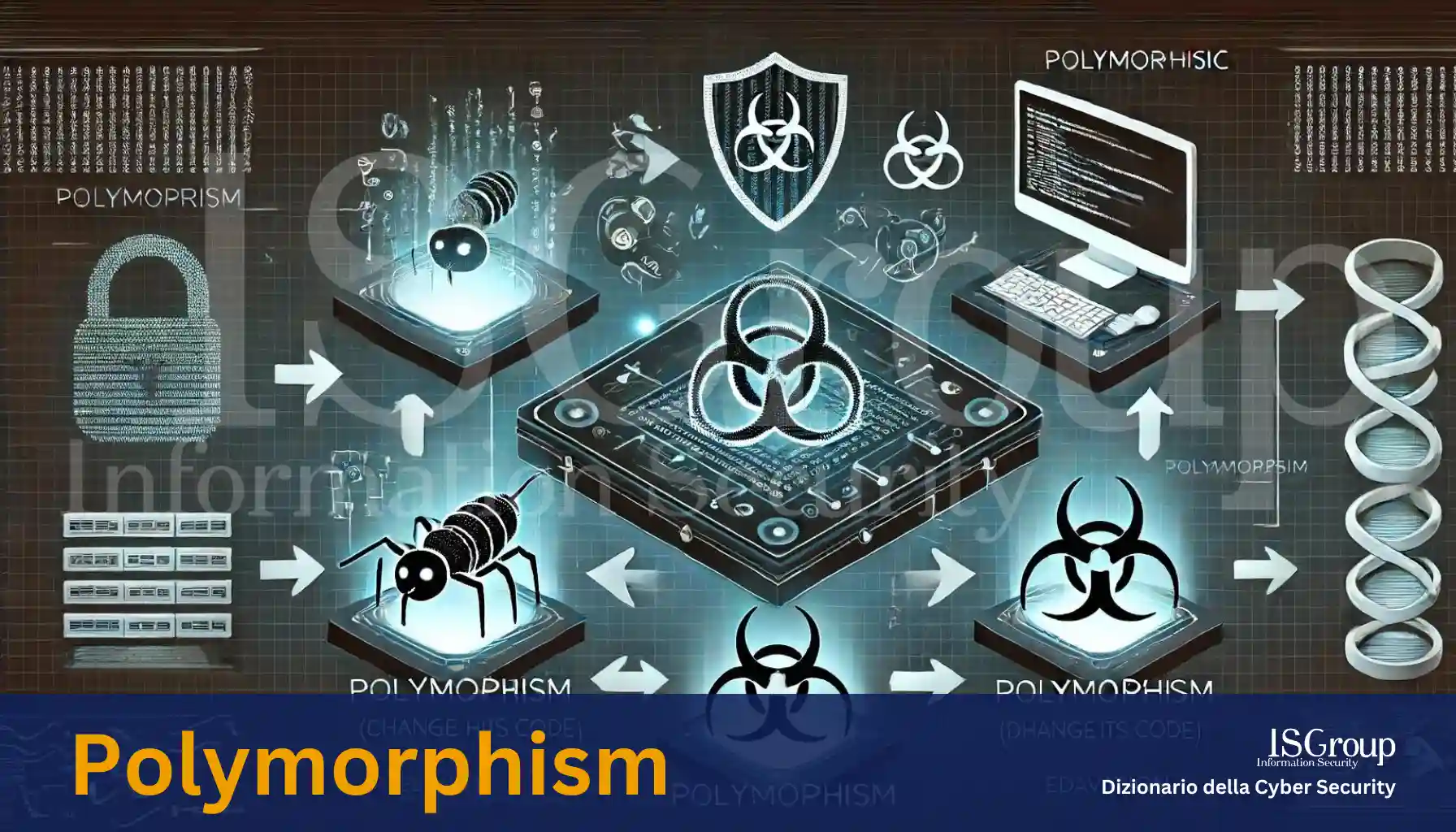
The term “polymorphism” comes from ancient Greek and means “having many forms.” In the field of computer science, this concept takes on a specific and crucial meaning in the context of cybersecurity and malicious software (malware).
Definition
Polymorphism, in terms of malware, is the process by which malicious software modifies its underlying code to avoid detection. This technique allows malware to mutate its internal structure while keeping its malicious functionality unchanged. The result is that the malware appears different every time it infects a new system or is analyzed, making it extremely difficult for cybersecurity software (such as antivirus programs) to recognize and block it effectively.
How It Works
Polymorphism in malware is achieved through encryption algorithms and code obfuscation techniques. When the malware is executed, it uses a decryption module to convert the encrypted code into an executable form. Once the infection is complete, the malware generates a new encrypted version of itself, with a different set of cryptographic keys and obfuscation patterns. This process repeats every time the malware replicates, ensuring that each copy of the malware is uniquely different from the previous ones.
Implications for Cybersecurity
Polymorphism represents a significant challenge for traditional security tools that rely on malware signature recognition. Signatures are specific code sequences used to identify malware. Because polymorphism constantly changes these sequences, signatures quickly become obsolete.
To counter polymorphic malware, security software developers must resort to advanced techniques such as behavioral analysis and machine learning. These methods analyze the software’s behavior rather than its static code, allowing for the identification of suspicious and potentially malicious activity regardless of the form the code takes.
Conclusions
Polymorphism is a sophisticated technique used by malware creators to evade detection and protection mechanisms in computer systems. Understanding this phenomenon is essential for developing effective countermeasures and ensuring the security of information and digital systems. The battle against polymorphic malware is constantly evolving and requires a combination of technological innovation and constant vigilance.
Want to give your company the highest level of cyber security? ISGroup SRL is here to help with cyber security solutions tailored to your business.
Would you like us to take care of everything for you? Our Virtual CISO and vulnerability management services are a perfect fit for your organization.
Already know what you need? Explore our services:
- Vulnerability Assessment
- Network Penetration Testing
- Web Application Penetration Testing
- Mobile Application Security Testing
- Ethical Hacking
- Training
And much more. Protect your company with the best cybersecurity experts!