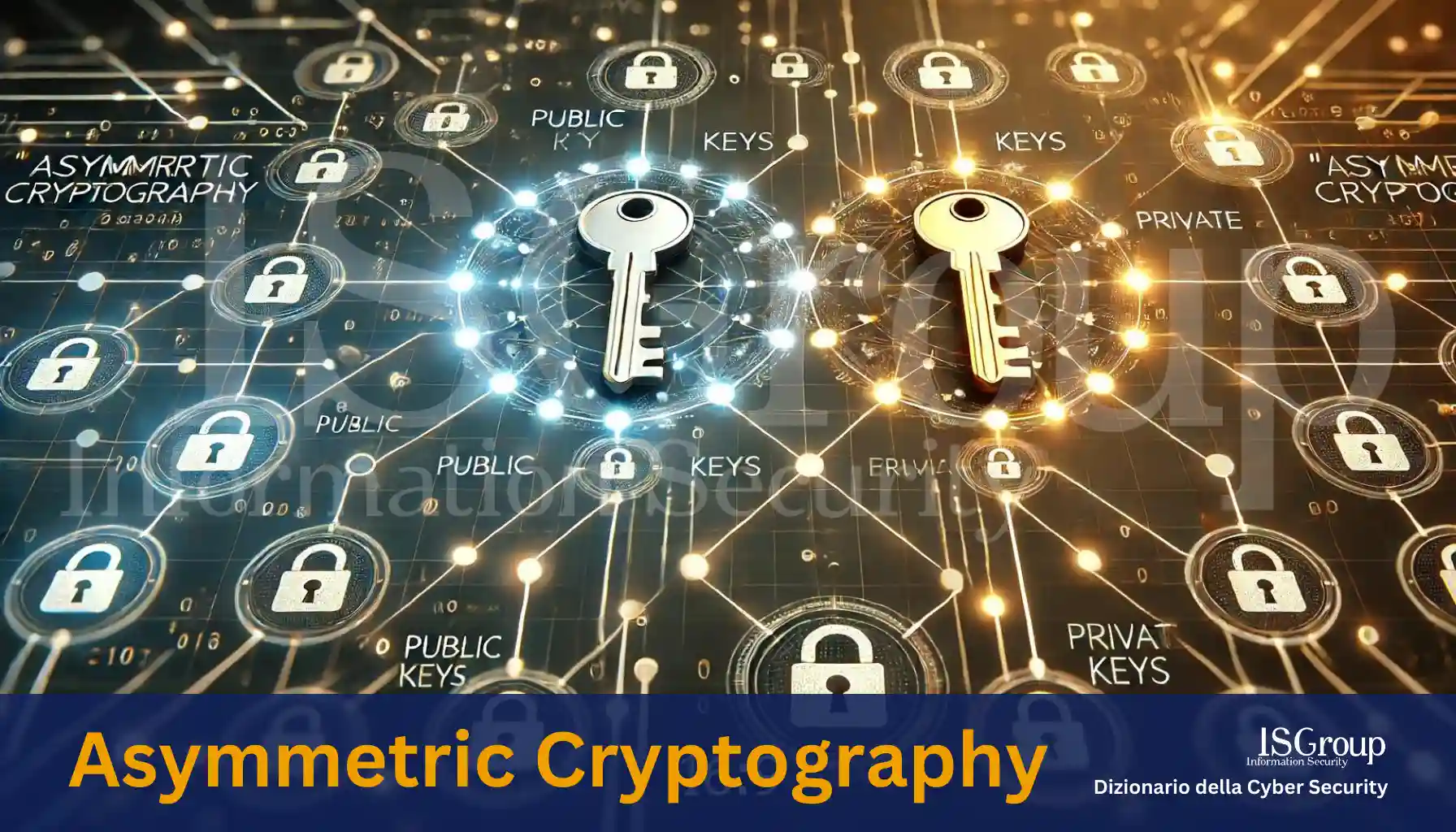
Asymmetric encryption, also known as public-key cryptography, is a modern branch of cryptography that uses algorithms based on a pair of keys: a public key and a private key. This method differs from symmetric encryption, which uses the same key for both data encryption and decryption.
How Asymmetric Encryption Works
In an asymmetric encryption system, each user generates a key pair. The public key is shared with everyone, while the private key is kept secret. The two keys are mathematically related, but it is impossible to derive the private key by knowing only the public one.
When a message is encrypted using the recipient’s public key, only the corresponding private key can decrypt it. This mechanism ensures that only the intended recipient can read the message. Conversely, a message encrypted with a private key can only be decrypted with the corresponding public key, allowing for the verification of the sender’s identity and ensuring the authenticity of the message.
Advantages of Asymmetric Encryption
- Security: The separation of public and private keys reduces the risk of data compromise. Even if a public key is widely distributed, the security of the system depends on the protection of the private key.
- Authentication: Since only the private key can generate a digital signature that can be verified with the public key, asymmetric encryption allows for the authentication of the sender’s identity.
- Non-repudiation: Once a message is digitally signed, the sender cannot deny having sent it, as no one else has access to their private key.
Applications of Asymmetric Encryption
Asymmetric encryption is used in a wide range of applications, including:
- Communication Security: Encrypted emails and virtual private networks (VPNs) use asymmetric encryption to protect transmitted information.
- Digital Signatures: Used to ensure the integrity and authenticity of digital documents.
- Digital Certificates: SSL/TLS certificates used for web transaction security are based on asymmetric encryption.
Conclusions
Asymmetric encryption represents a fundamental pillar of modern cybersecurity. With its ability to protect data and ensure the authenticity of communications, it continues to be a crucial area of technological development and innovation.
Want to give your company the highest level of cyber security? ISGroup SRL is here to help with cyber security solutions tailored to your business.
Would you like us to take care of everything for you? Our Virtual CISO and vulnerability management services are a perfect fit for your organization.
Already know what you need? Explore our services:
- Vulnerability Assessment
- Network Penetration Testing
- Web Application Penetration Testing
- Mobile Application Security Testing
- Ethical Hacking
- Training
And much more. Protect your company with the best cybersecurity experts!