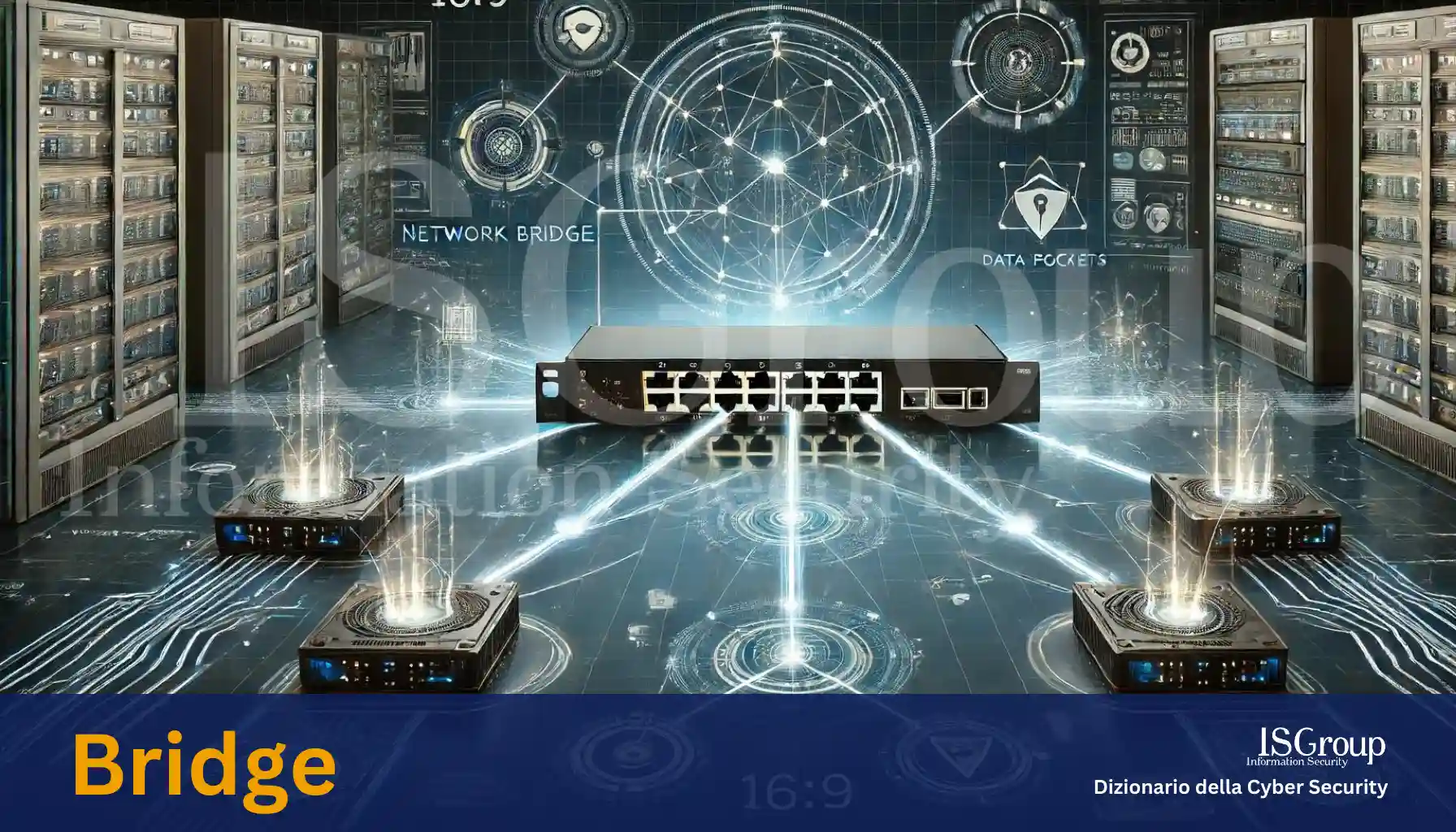
A “Bridge” is a network device used to connect two local area networks (LANs) that use the same protocol, such as Ethernet or Token Ring. The bridge operates at the data link layer of the OSI model (layer 2), filtering and forwarding data packets between the connected networks.
Operation
The bridge analyzes the MAC (Media Access Control) addresses of the devices present in the connected networks. When a data packet arrives at the bridge, it checks the destination MAC address and decides whether to forward the packet to the opposite network or block it. This process helps reduce network traffic, as only packets destined for the other network are forwarded.
Types of Bridges
There are several types of bridges, each with specific functionalities:
- Transparent Bridge: Operates completely transparently to network users. It does not require manual address configuration and automatically builds a MAC address table to determine where to forward packets.
- Source Route Bridge: Uses an address table built dynamically based on the source MAC addresses of packets in transit. It forwards packets only if the recipient is not present in the same network from which the packet originated.
- Traditional Bridge: Connects networks that use the same physical and logical protocol, keeping collision domains separate to improve overall network performance.
Advantages
- Reduction of Network Traffic: By filtering and forwarding only the necessary packets, bridges help reduce network traffic, improving efficiency.
- Security: They can isolate network segments, limiting the spread of potential attacks or network issues.
- Scalability: They allow for the connection of multiple network segments without compromising overall network performance.
Limitations
- Does Not Support Different Networks: Bridges only work between networks using the same protocol. To connect networks with different protocols, devices such as routers or gateways are required.
- Performance Limitations: In very large networks, the MAC address table can become too large to be managed efficiently, causing potential delays.
Conclusion
Bridges represent an effective solution for connecting local networks, improving traffic efficiency, and increasing security. However, with the evolution of network technologies, bridges are often replaced or integrated with switches and routers, which offer more advanced features for network management.
Want to give your company the highest level of cyber security? ISGroup SRL is here to help with cyber security solutions tailored to your business.
Would you like us to take care of everything for you? Our Virtual CISO and vulnerability management services are a perfect fit for your organization.
Already know what you need? Explore our services:
- Vulnerability Assessment
- Network Penetration Testing
- Web Application Penetration Testing
- Mobile Application Security Testing
- Ethical Hacking
- Training
And much more. Protect your company with the best cybersecurity experts!