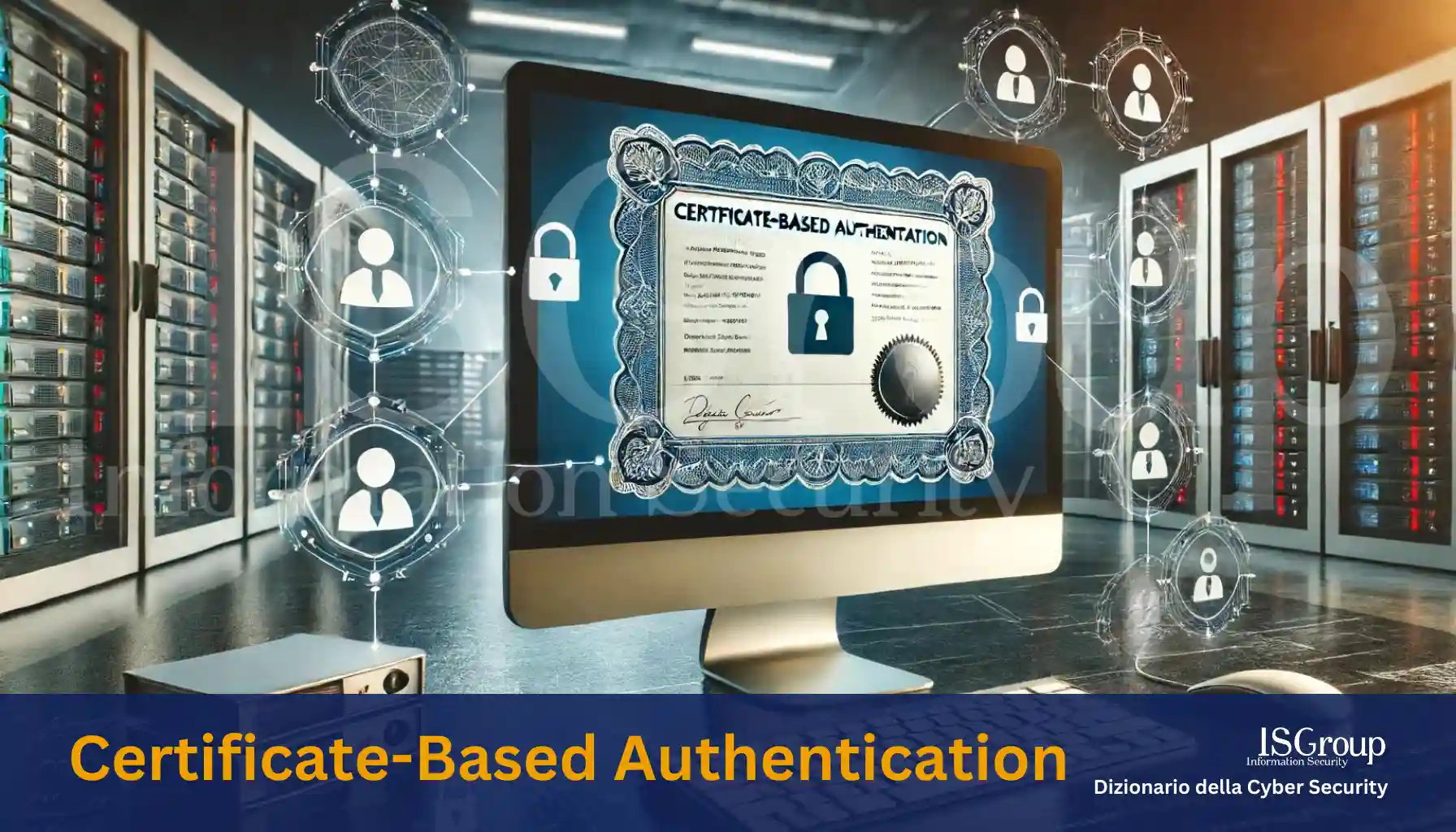
Certificate-Based Authentication is a technology that uses SSL (Secure Sockets Layer) and digital certificates to authenticate and encrypt HTTP traffic. This technique ensures greater security in communication between clients and servers, preventing unauthorized access and protecting data during transfer.
How it works:
- Digital Certificate:
- A digital certificate is an electronic file that contains information about the identity of an entity, such as a website or an organization. It is issued by a trusted Certificate Authority (CA) and includes a public key, entity information, and the CA’s digital signature.
- SSL/TLS:
- SSL (and its successor TLS, Transport Layer Security) is an encryption protocol that provides security for communications over a computer network. SSL/TLS uses digital certificates to establish a secure and encrypted connection between the client (e.g., a web browser) and the server.
- Authentication Process:
- SSL/TLS Handshake:
- During the SSL/TLS handshake, the client requests the server to identify itself. The server responds by sending its digital certificate to the client.
- Certificate Verification:
- The client verifies the server’s digital certificate by checking that it was issued by a trusted CA and that it is still valid. Additionally, the client uses the public key contained in the certificate to ensure that the certificate has not been tampered with.
- Encryption:
- Once the certificate is verified, the client and server establish a symmetric session key to encrypt HTTP traffic. This key is used to encrypt and decrypt the data exchanged during the session.
- SSL/TLS Handshake:
Benefits:
- Security: Certificate-based authentication provides a high level of security, protecting data during transfer and ensuring that only authorized entities can access the information.
- Integrity: Thanks to the use of digital signatures, certificates ensure that data has not been altered during transfer.
- Reliability: Certificates issued by trusted CAs are widely recognized and accepted, increasing trust between the communicating parties.
Common Uses:
- Secure Websites: Certificate-based authentication is commonly used to protect communications between web browsers and web servers, such as in HTTPS websites.
- VPNs: Many Virtual Private Networks (VPNs) use digital certificates to authenticate users and encrypt traffic.
- Secure Email: Certificates can be used to sign and encrypt emails, ensuring that only authorized recipients can read the content.
Certificate-Based Authentication represents a fundamental component of modern cybersecurity, providing a robust mechanism for protecting communications over the Internet and other networks.
Want to give your company the highest level of cyber security? ISGroup SRL is here to help with cyber security solutions tailored to your business.
Would you like us to take care of everything for you? Our Virtual CISO and vulnerability management services are a perfect fit for your organization.
Already know what you need? Explore our services:
- Vulnerability Assessment
- Network Penetration Testing
- Web Application Penetration Testing
- Mobile Application Security Testing
- Ethical Hacking
- Training
And much more. Protect your company with the best cybersecurity experts!