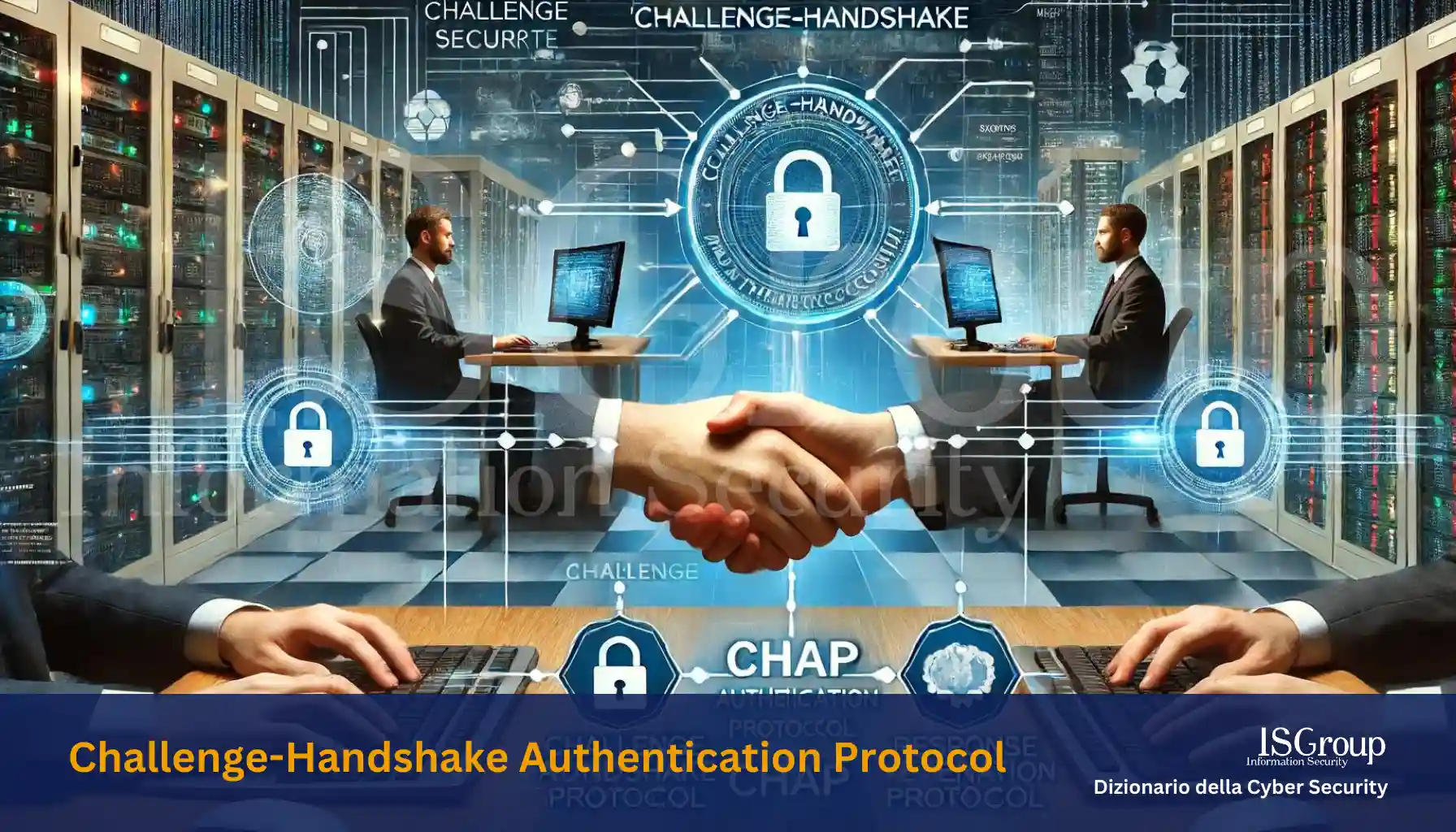
The Challenge-Handshake Authentication Protocol (CHAP) is an authentication protocol used to verify the identity of a user or device securely, preventing replay attacks. CHAP uses a challenge/response authentication mechanism, where the response varies with each challenge, ensuring greater security compared to simpler authentication methods.
How CHAP Works
The operation of CHAP can be divided into three main phases:
- Initialization: When a client attempts to connect to a server, the server sends a challenge to the client. This challenge is a random value generated by the server.
- Response: The client combines the received challenge with a shared secret key (usually a password) and applies a hash function (e.g., MD5) to generate a response. This response is then sent to the server.
- Verification: The server, knowing the shared secret key and the original challenge, applies the same hash function and compares the result with the response received from the client. If the values match, authentication is successful; otherwise, access is denied.
Advantages of CHAP
- Improved Security: Unlike other protocols that transmit passwords in plain text or use static authentication methods, CHAP ensures that each authentication session is unique. This makes it very difficult for an attacker to reuse intercepted information (replay attack).
- Periodic Re-authentication: CHAP can perform periodic authentication checks even after the initial authentication, further improving the security of the connection.
Disadvantages of CHAP
- Dependency on Shared Passwords: Like many other authentication protocols, CHAP relies on a shared secret key (password). If this key is compromised, the security of the protocol is compromised.
- Vulnerability to Brute-Force Attacks: If the secret key is not sufficiently complex, it could be vulnerable to brute-force attacks.
Applications of CHAP
CHAP is commonly used in PPP (Point-to-Point Protocol) communication protocols to authenticate dial-up connections and VPNs (Virtual Private Networks). Its ability to prevent replay attacks and perform periodic authentication makes it a popular choice for environments where security is critical.
In conclusion, the Challenge-Handshake Authentication Protocol (CHAP) is a robust and secure method for authenticating users and devices on insecure networks, thanks to its challenge/response mechanism and its ability to prevent replay attacks.
Want to give your company the highest level of cyber security? ISGroup SRL is here to help with cyber security solutions tailored to your business.
Would you like us to take care of everything for you? Our Virtual CISO and vulnerability management services are a perfect fit for your organization.
Already know what you need? Explore our services:
- Vulnerability Assessment
- Network Penetration Testing
- Web Application Penetration Testing
- Mobile Application Security Testing
- Ethical Hacking
- Training
And much more. Protect your company with the best cybersecurity experts!