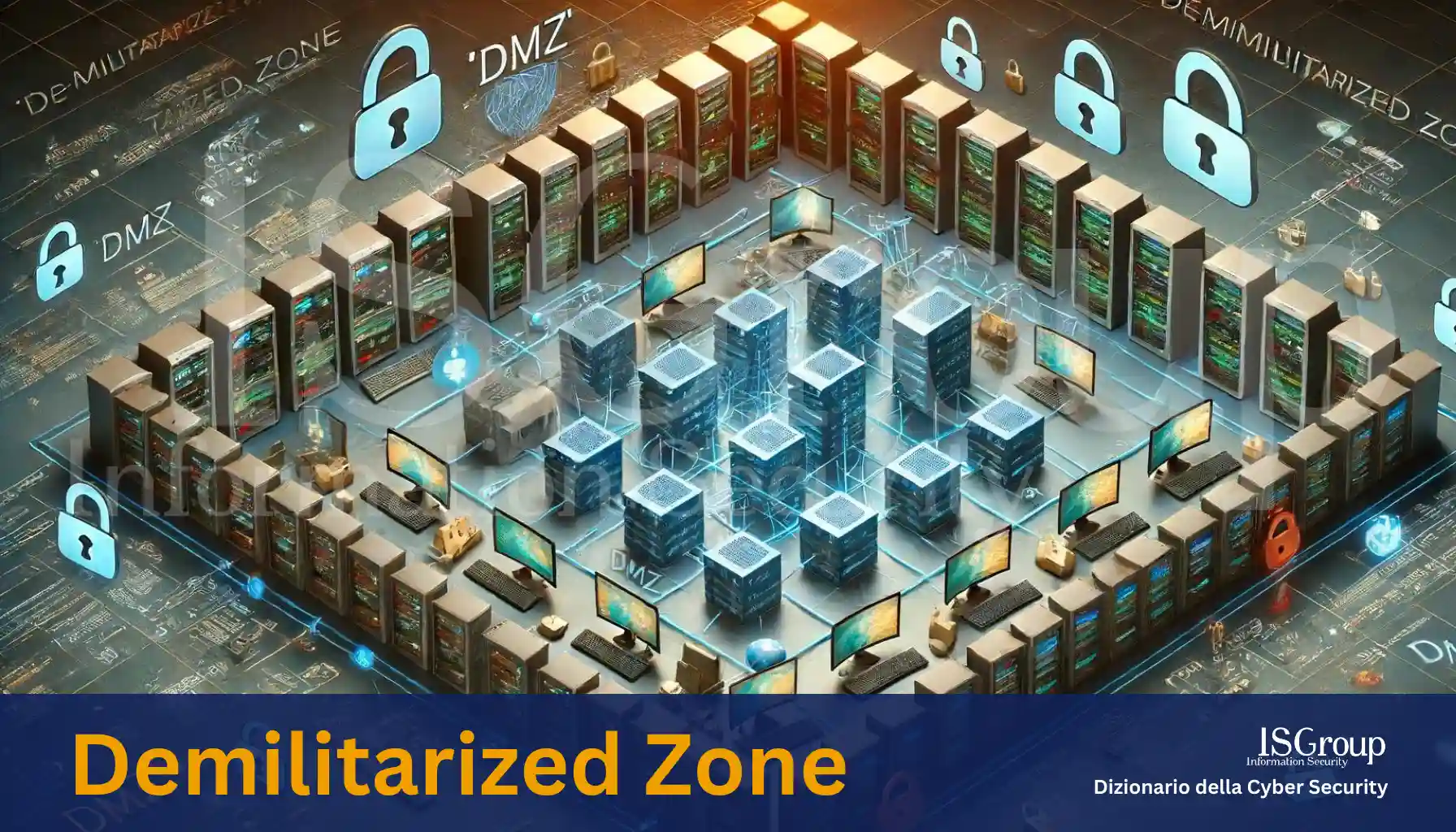
In the field of cybersecurity, a demilitarized zone (DMZ), or perimeter network, is a network area (a subnet) that sits between an organization’s internal network and an external network, usually the Internet. The goal of the DMZ is to improve network security by segmenting the network based on security requirements or policies. This layered model helps protect the internal network by isolating it from external threats.
How It Works
The DMZ acts as a transit mechanism that allows data to pass from a secure source to an insecure destination, or vice versa. In practice, it serves as a buffer zone, protecting the internal network from unauthorized access originating from the outside. Devices placed within the DMZ are visible and accessible from external networks, but their interaction with the internal network is controlled and limited.
DMZ Architecture
The typical architecture of a DMZ includes two firewalls:
- External firewall: Protects the DMZ from attacks originating from the Internet.
- Internal firewall: Protects the internal network from potential compromises of systems within the DMZ.
This double layer of firewalls allows for the application of different security policies for communication between the internal network, the DMZ, and the Internet.
Common Uses
DMZs are commonly used to host services that need to be accessible from the outside, such as:
- Web servers
- Email servers
- FTP servers
- DNS servers
These servers, while accessible from the Internet, are separated from the organization’s internal network, thereby reducing the risk that an attack on one of these servers could compromise the entire corporate network.
Implementation Example
In some cases, a screened subnet used for externally accessible servers is referred to as a DMZ. A typical example is a configuration where an organization has a web server hosted in the DMZ. Web traffic enters through the external firewall, reaches the web server in the DMZ, but cannot directly access the internal network without passing through the internal firewall.
Benefits of the DMZ
- Improved security: By isolating externally accessible services, the risk of direct attacks on the internal network is reduced.
- Simplified management: Allows for centralized and simplified management of security policies for externally accessible services.
- Flexibility: Allows for the application of different security policies for different zones of the network.
Conclusion
The DMZ represents an essential component in modern network security strategies, helping to protect internal networks from potential external threats and ensuring an additional level of security through network segmentation and the implementation of a multi-layered security model.
Want to give your company the highest level of cyber security? ISGroup SRL is here to help with cyber security solutions tailored to your business.
Would you like us to take care of everything for you? Our Virtual CISO and vulnerability management services are a perfect fit for your organization.
Already know what you need? Explore our services:
- Vulnerability Assessment
- Network Penetration Testing
- Web Application Penetration Testing
- Mobile Application Security Testing
- Ethical Hacking
- Training
And much more. Protect your company with the best cybersecurity experts!