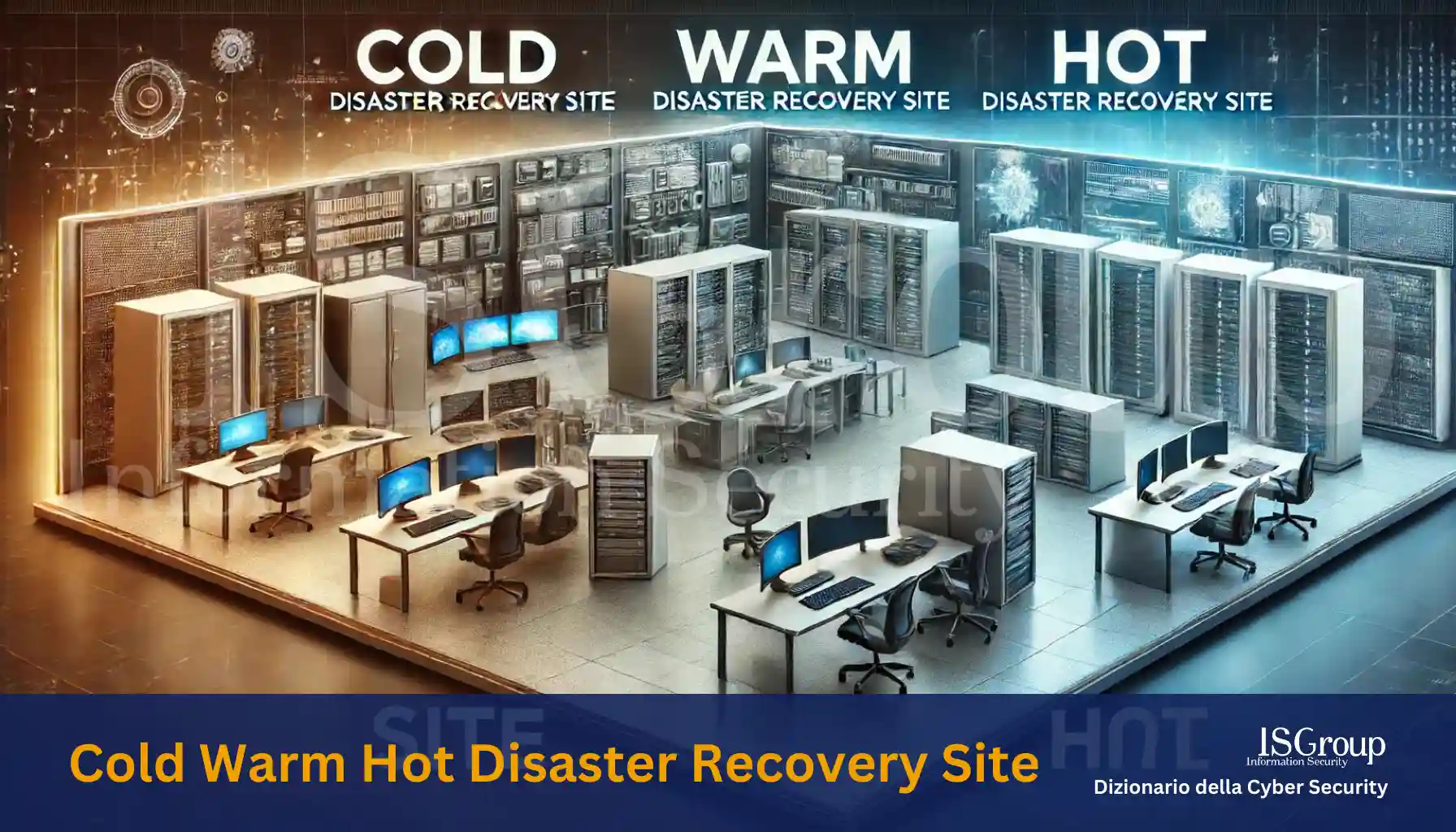
In the context of business continuity and disaster recovery, it is essential to have a plan that allows business operations to resume as quickly as possible in the event of a disaster. Disaster recovery sites can be classified into three main categories: Cold Site, Warm Site, and Hot Site. Each offers different levels of preparedness and recovery times. Below is a detailed overview of each.
Hot Site
A Hot Site represents the most comprehensive and expensive option for disaster recovery. It contains fully redundant hardware and software, as well as telecommunications, telephony, and utility connections that allow all operations from the primary site to continue. In the event of a disaster, failover to a Hot Site occurs within minutes or hours. Data synchronization between the primary site and the Hot Site occurs daily, minimizing or completely eliminating data loss. Additionally, offsite data backup tapes can be obtained and delivered to the Hot Site to help restore operations. These backup tapes must be regularly tested to detect any data corruption, malicious code, or environmental damage. Given the level of preparedness and speed of recovery, a Hot Site is the most expensive option.
Warm Site
A Warm Site offers an intermediate solution in terms of both cost and preparedness. This type of site contains partially redundant hardware and software and has telecommunications, telephony, and utility connections that allow some, but not all, operations from the primary site to continue. Failover to a Warm Site generally occurs within a few hours or days after a disaster. Data synchronization between the primary site and the Warm Site occurs daily or weekly, resulting in minimal data loss. Offsite data backup tapes must be obtained and delivered to the Warm Site to restore operations. Considering the level of preparedness and costs, a Warm Site represents an intermediate choice between a Hot Site and a Cold Site.
Cold Site
A Cold Site is the least expensive option but also the least prepared for disaster recovery. In a Cold Site, hardware must be ordered, shipped, and installed, and software must be loaded. Basic telecommunications, telephony, and utility connections may need to be activated to continue some, but not all, operations of the primary site. The transfer of operations to a Cold Site generally takes weeks or longer, depending on the arrival time of the hardware, after a disaster. No data synchronization occurs between the primary site and the Cold Site, which can lead to significant data loss. Offsite data backup tapes must be obtained and delivered to the Cold Site to restore operations. Due to its lower level of preparedness and longer recovery times, a Cold Site is the least expensive option.
Conclusion
The choice between a Hot Site, Warm Site, or Cold Site depends on the specific needs of the company, the available budget, and the level of tolerance for data loss and downtime. Each option has its advantages and disadvantages, and the decision should be made by carefully considering these factors.
Want to give your company the highest level of cyber security? ISGroup SRL is here to help with cyber security solutions tailored to your business.
Would you like us to take care of everything for you? Our Virtual CISO and vulnerability management services are a perfect fit for your organization.
Already know what you need? Explore our services:
- Vulnerability Assessment
- Network Penetration Testing
- Web Application Penetration Testing
- Mobile Application Security Testing
- Ethical Hacking
- Training
And much more. Protect your company with the best cybersecurity experts!