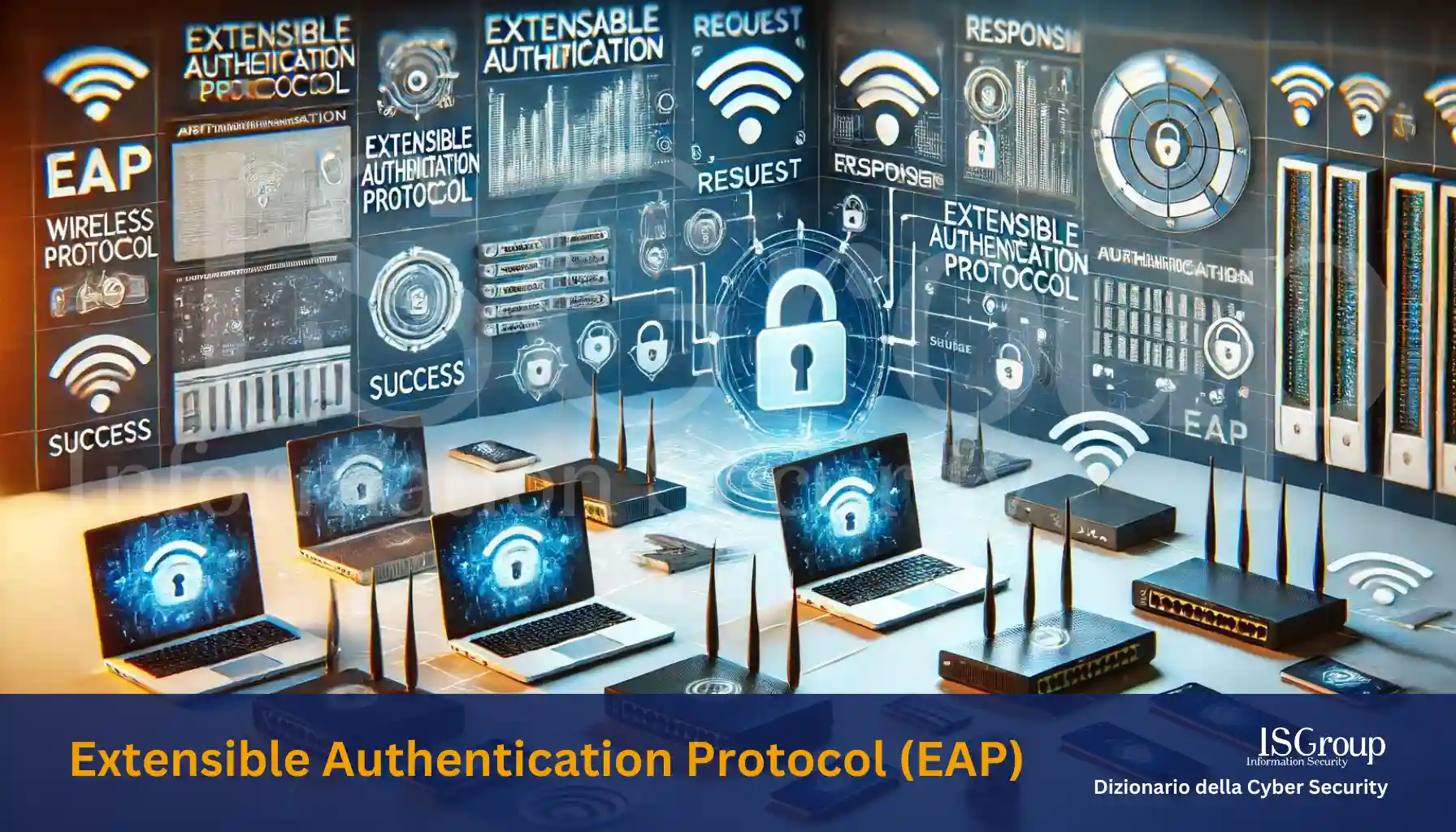
The Extensible Authentication Protocol (EAP) is a flexible and modular authentication framework designed to support a variety of authentication mechanisms over Point-to-Point Protocol (PPP) networks. This protocol is particularly useful in network environments where advanced and customizable security is required.
Key Features
Support for Various Authentication Mechanisms: EAP allows the use of different authentication methods, adapting to the specific security needs of a network. Supported mechanisms include:
- Cleartext Password: A simple authentication method that sends credentials in unencrypted text format.
- Challenge-Response: A more secure method that uses a series of cryptographic questions and answers to verify a user’s identity.
- Arbitrary Dialogue Sequences: Allows for the creation of custom and complex authentication sequences, meeting specific security requirements.
Modularity and Extensibility: One of the main advantages of EAP is its extensibility. This framework is not tied to a single authentication method but can be expanded with new methods as new security needs emerge. This feature makes EAP particularly adaptable to technological innovations and new security standards.
Integration with PPP: EAP was initially designed to work with PPP, a protocol used to establish direct connections between two network nodes. However, its flexibility has led to the adoption of EAP in other contexts as well, such as wireless networks (Wi-Fi) and Virtual Private Networks (VPNs).
Advantages of EAP
- Advanced Security: EAP allows for the use of advanced authentication methods that increase the security of network connections.
- Flexibility: The ability to support various authentication methods makes it suitable for different situations and security requirements.
- Interoperability: As a standard framework, EAP ensures interoperability between devices and applications from different manufacturers.
Common Applications
Wireless Networks: EAP is widely used in Wi-Fi networks, particularly in combination with WPA/WPA2 Enterprise, where it provides secure authentication for network users.
VPN: In VPN networks, EAP enables robust user authentication, ensuring that only authorized devices and users can access the private network.
Remote Access: For remote access via dial-up or other direct connections, EAP offers a secure method to verify the identity of users attempting to connect to the network.
Conclusion
The Extensible Authentication Protocol (EAP) represents a fundamental pillar in modern network security, thanks to its ability to adapt to various authentication methods and evolve with new security needs. Its flexibility and modularity make it an essential tool for ensuring secure and reliable network connections in a constantly changing technological landscape.
Want to give your company the highest level of cyber security? ISGroup SRL is here to help with cyber security solutions tailored to your business.
Would you like us to take care of everything for you? Our Virtual CISO and vulnerability management services are a perfect fit for your organization.
Already know what you need? Explore our services:
- Vulnerability Assessment
- Network Penetration Testing
- Web Application Penetration Testing
- Mobile Application Security Testing
- Ethical Hacking
- Training
And much more. Protect your company with the best cybersecurity experts!