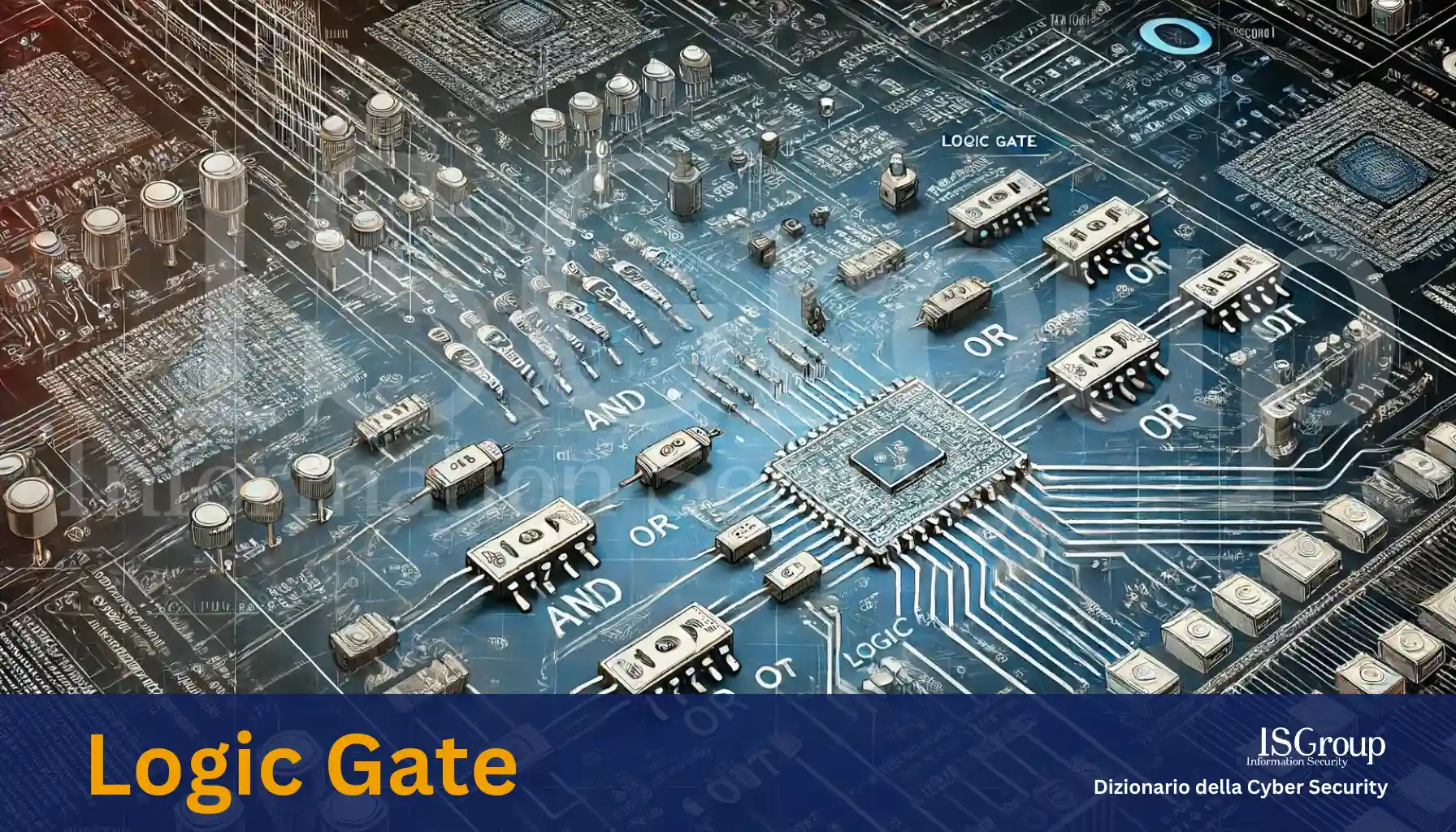
A logic gate is a fundamental component of a digital circuit. Logic gates are devices that perform logical operations on input signals to produce an output. Most logic gates have two inputs and one output. Since digital circuits can only understand binary language, inputs and outputs can only assume one of two states: 0 or 1.
How Logic Gates Work
Logic gates operate based on specific logical rules, which depend on the type of logic gate being used. The most common types of logic gates are:
- AND: Produces an output of 1 only if both inputs are 1. In all other cases, the output is 0.
- OR: Produces an output of 1 if at least one of the inputs is 1. If both inputs are 0, the output is 0.
- NOT: This is a single-input gate that inverts the state of the input. If the input is 0, the output will be 1, and vice versa.
- NAND: This is a combination of an AND gate followed by a NOT gate. It produces an output of 0 only if both inputs are 1. In all other cases, the output is 1.
- NOR: This is a combination of an OR gate followed by a NOT gate. It produces an output of 1 only if both inputs are 0. In all other cases, the output is 0.
- XOR: Produces an output of 1 if the inputs are different from each other. If the inputs are the same, the output is 0.
- XNOR: This is a combination of an XOR gate followed by a NOT gate. It produces an output of 1 if the inputs are the same. If the inputs are different, the output is 0.
Applications of Logic Gates
Logic gates are used in various sectors of digital electronics. Some of the main applications include:
- Computers and processors: Logic gates are the foundation of microprocessors, where they are used to perform arithmetic and logical operations.
- Memory: Memory cells, such as flip-flops and latches, are built using logic gates to store and retrieve data.
- Automation and control: In industrial control systems, logic gates are used to make decisions based on input conditions.
- Communication circuits: Logic gates are employed to manage data flow in communication systems, such as in modulators and demodulators.
Conclusion
Logic gates are essential elements in the field of digital electronics. Understanding their operation and applications is fundamental for anyone involved in the development of electronic circuits and digital systems. As technology evolves, logic gates will continue to play a crucial role in the design and implementation of advanced solutions in the digital world.
Want to give your company the highest level of cyber security? ISGroup SRL is here to help with cyber security solutions tailored to your business.
Would you like us to take care of everything for you? Our Virtual CISO and vulnerability management services are a perfect fit for your organization.
Already know what you need? Explore our services:
- Vulnerability Assessment
- Network Penetration Testing
- Web Application Penetration Testing
- Mobile Application Security Testing
- Ethical Hacking
- Training
And much more. Protect your company with the best cybersecurity experts!