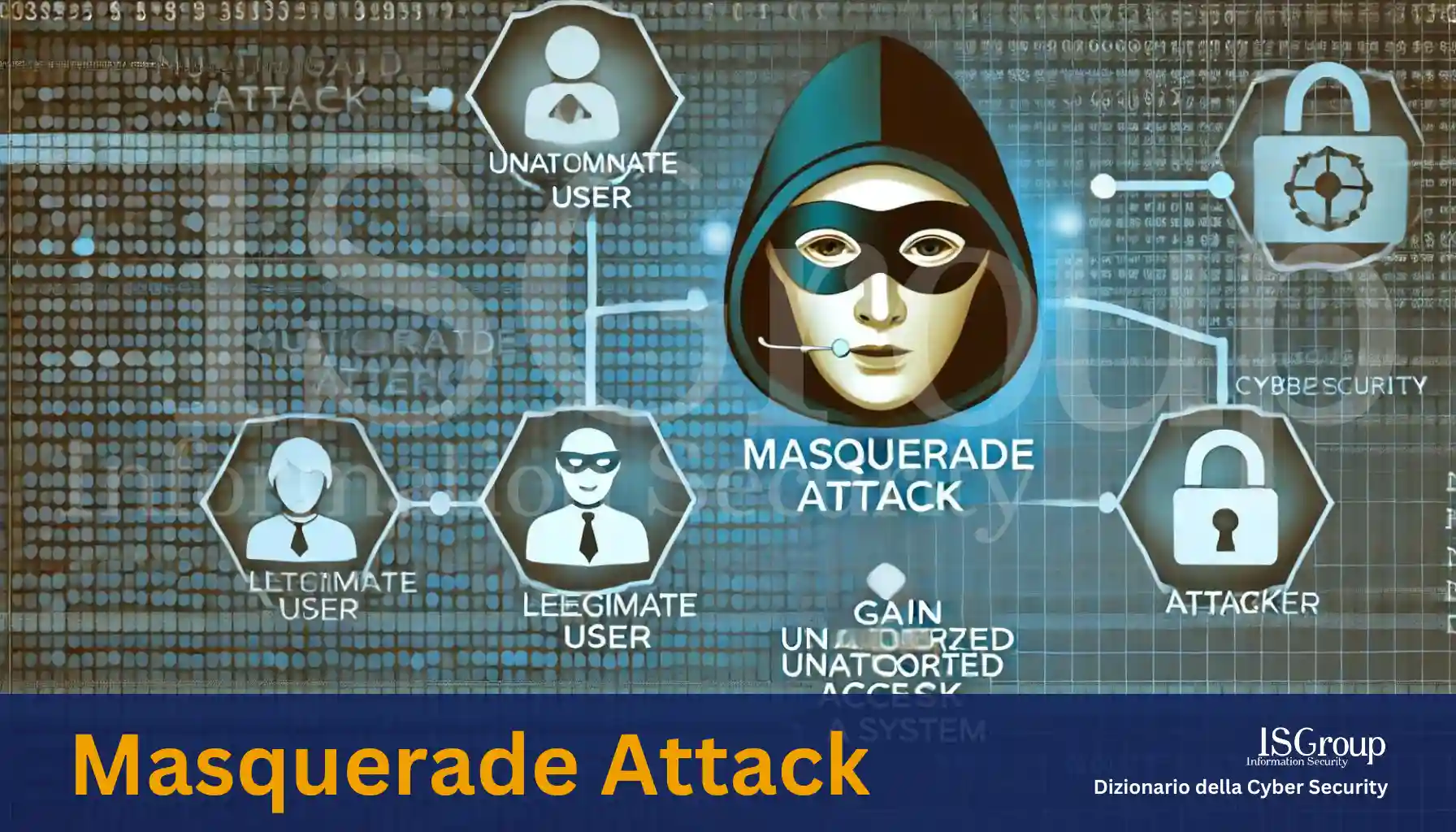
A masquerade attack is a type of cyberattack in which a system entity illegitimately assumes the identity of another entity. In practice, the attacker masquerades as a legitimate subject to gain unauthorized access to resources, data, or system functionality.
How a Masquerade attack works
- Impersonation: The attacker gathers sufficient information about the legitimate entity, such as login credentials (username and password), to successfully impersonate them. This can occur through phishing techniques, network sniffing, or other forms of data collection.
- Unauthorized access: Using the collected credentials, the attacker authenticates to the system as if they were the legitimate user. At this point, they can act undisturbed, accessing sensitive data, modifying information, or executing commands that the legitimate user would have permission to perform.
- Execution of malicious activities: Once access is obtained, the attacker can perform a variety of malicious actions. These may include data theft, information modification, malware distribution, or the compromise of additional systems within the network.
Prevention and defense
- Strong authentication: Implementing multi-factor authentication (MFA) mechanisms can make it much more difficult for attackers to impersonate a legitimate user, as it would require access to multiple authentication elements (for example, a password and a physical device).
- Continuous monitoring: The use of intrusion detection and prevention systems (IDS/IPS) can help identify anomalous behaviors that might indicate an ongoing masquerade attack.
- User training: Educating users on the risks of phishing and other social engineering techniques can reduce the likelihood of credentials being compromised.
- Identity and Access Management (IAM): Implement strict policies for identity and access management, including regular permission reviews and the use of roles based on the principle of least privilege.
Conclusions
Masquerade attacks represent a serious threat to the security of computer systems, exploiting the trust that systems place in the credentials of legitimate users. To effectively protect against this type of attack, it is essential to adopt a combination of robust authentication techniques, continuous monitoring, and user training.
Want to give your company the highest level of cyber security? ISGroup SRL is here to help with cyber security solutions tailored to your business.
Would you like us to take care of everything for you? Our Virtual CISO and vulnerability management services are a perfect fit for your organization.
Already know what you need? Explore our services:
- Vulnerability Assessment
- Network Penetration Testing
- Web Application Penetration Testing
- Mobile Application Security Testing
- Ethical Hacking
- Training
And much more. Protect your company with the best cybersecurity experts!