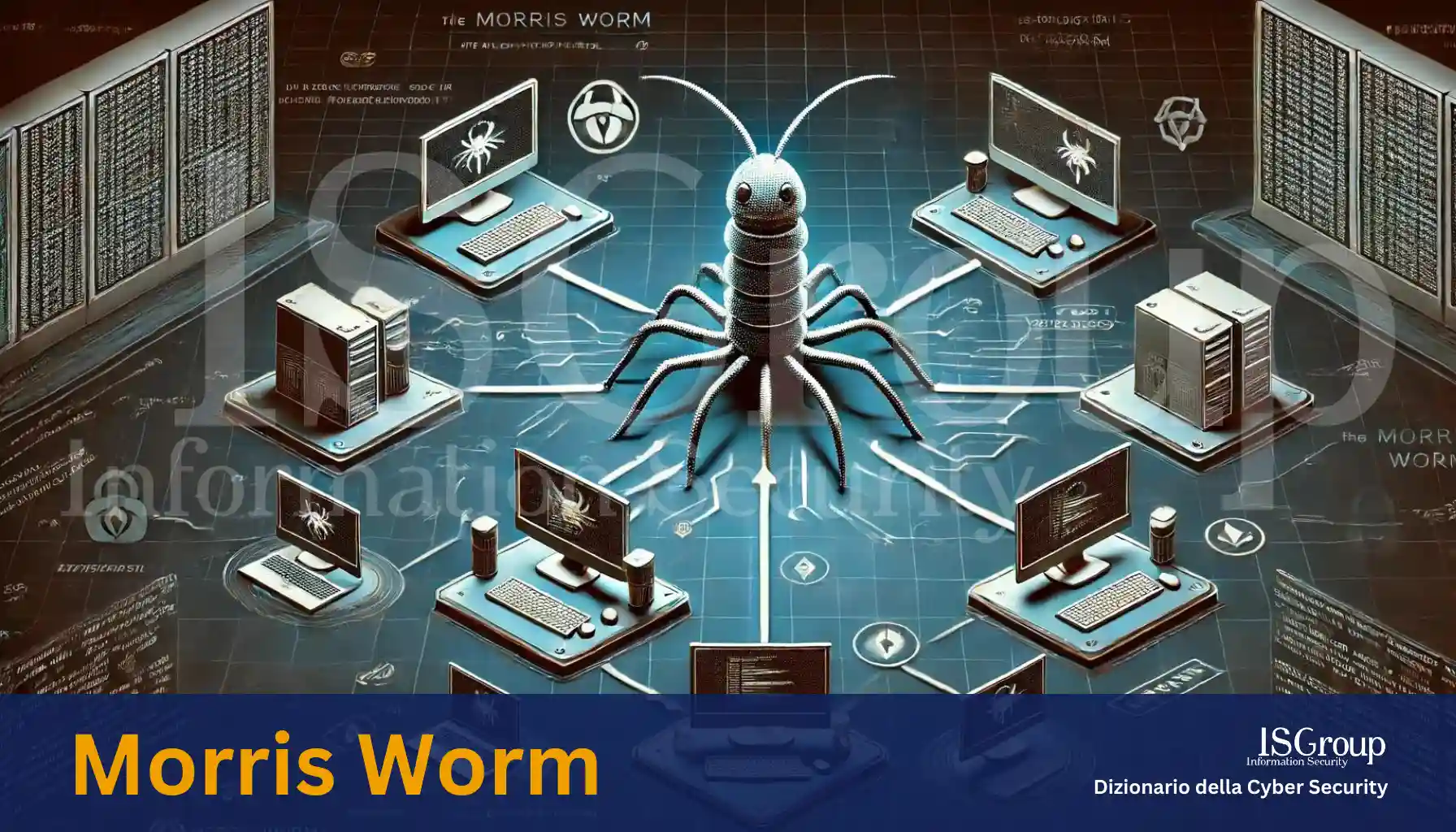
The Morris Worm was one of the first computer worms to spread on a large scale. Written by Robert T. Morris, Jr., this malicious program caused significant problems for the ARPANET network in November 1988, infecting thousands of hosts and raising new awareness about cybersecurity.
Origin and Purpose
The Morris Worm was created by Robert T. Morris, Jr., a doctoral student at the Massachusetts Institute of Technology (MIT) at the time of the incident. Morris stated that the worm’s original intention was to measure the size of the Internet, but a bug in the code caused the program to replicate uncontrollably, leading to severe service disruptions.
Propagation Mechanism
The worm exploited several vulnerabilities in Unix systems to spread. Some of the techniques used included:
- Buffer Overflow: It exploited a vulnerability in a version of the
fingerprogram, causing a buffer overflow that allowed for the execution of arbitrary code. - Password Guessing: It attempted to access remote systems using a dictionary of common passwords.
- Exploiting Trust Relationships: It used trust relationships between Unix systems to access and infect other computers within the same network.
Impact
The impact of the Morris Worm was significant. It is estimated that about 6,000 of the approximately 60,000 hosts connected to ARPANET at the time were infected. The worm caused a significant slowdown in the performance of infected systems, often rendering them unusable, as the worm’s processes consumed all available computing resources.
Legal and Historical Consequences
Following the incident, Robert T. Morris, Jr. was tried and convicted under the Computer Fraud and Abuse Act of 1986. It was the first case of its kind in the United States and marked a milestone in the history of cybersecurity legislation. Morris was sentenced to three years of probation, 400 hours of community service, and a $10,050 fine.
Legacy
The Morris Worm had a lasting impact on the field of cybersecurity. It highlighted the vulnerability of computer networks to malicious attacks and led to an increase in research and development of more effective security measures. Furthermore, the incident raised awareness among the public and IT professionals about the importance of keeping systems updated and protected against new threats.
In conclusion, the Morris Worm represents a crucial event in the history of cybersecurity, which helped shape the security policies and practices we know today.
Want to give your company the highest level of cyber security? ISGroup SRL is here to help with cyber security solutions tailored to your business.
Would you like us to take care of everything for you? Our Virtual CISO and vulnerability management services are a perfect fit for your organization.
Already know what you need? Explore our services:
- Vulnerability Assessment
- Network Penetration Testing
- Web Application Penetration Testing
- Mobile Application Security Testing
- Ethical Hacking
- Training
And much more. Protect your company with the best cybersecurity experts!