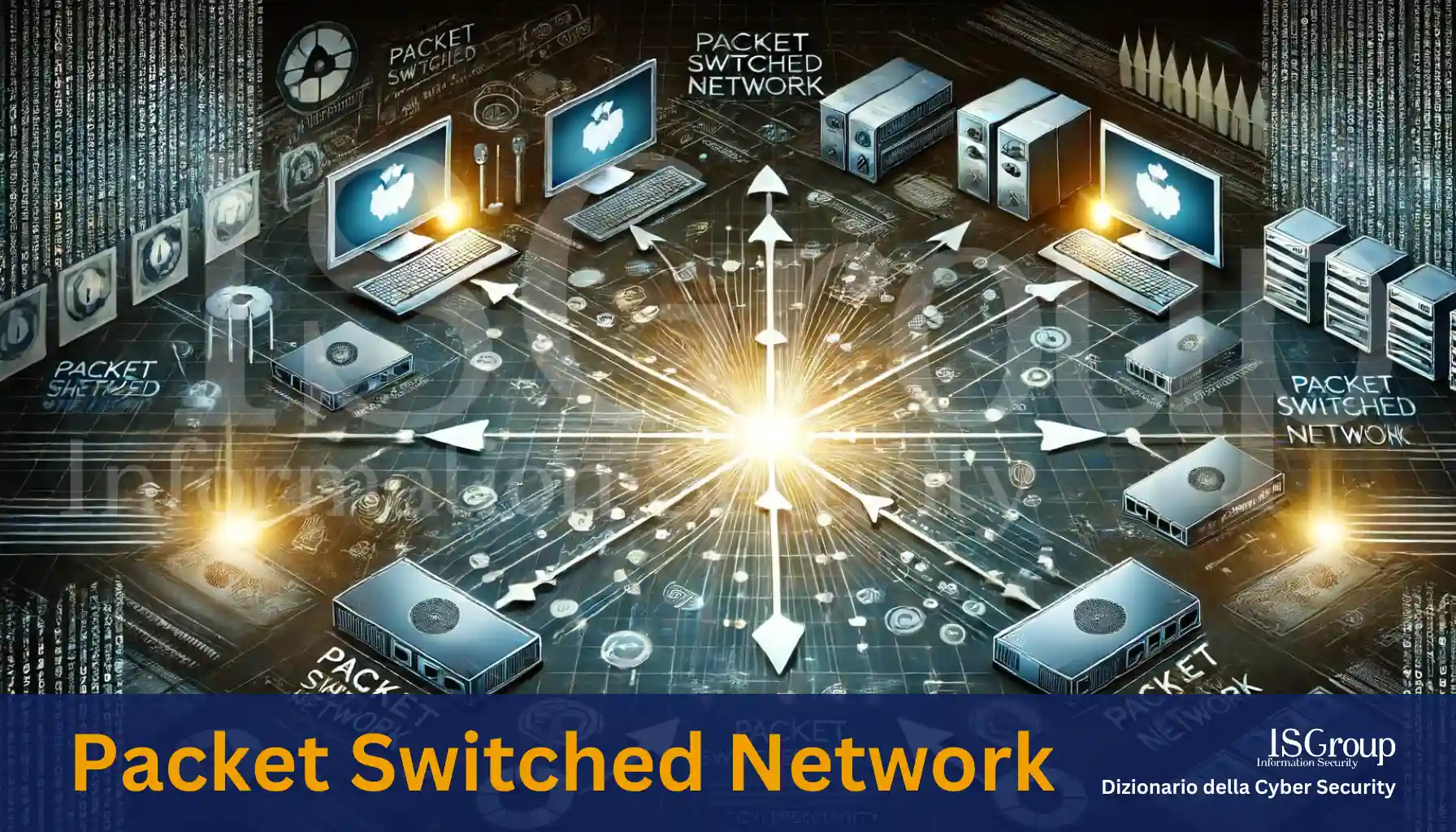
A packet-switching network is a type of telecommunications network where data is divided into smaller packets that are sent individually across the network, each following its own path from a starting point to a final destination.
How it works
In a packet-switching network, the data to be transmitted is divided into packets, each of which contains both a portion of the original data and control information necessary for proper routing and reconstruction of the final message. These packets are then sent across the network independently of one another.
Advantages
- Efficiency: Dividing data into packets allows for better bandwidth management, as packets can take different paths and make the best use of available network resources.
- Flexibility: In the event of congestion or failures in a part of the network, packets can be rerouted through alternative paths, thus ensuring greater system robustness.
- Scalability: The network can easily adapt to an increasing number of users and devices, as it does not require permanent connections between nodes.
Disadvantages
- Latency: Packets may arrive at their destination at different times and out of order, requiring a reassembly process that can introduce delays.
- Overhead: Each packet contains additional control information, which increases the overall load on the network.
Applications
Packet-switching networks are widely used in various contexts, including:
- Internet: The fundamental structure of the Internet is based on a packet-switching network, using the IP (Internet Protocol) for packet routing.
- Local Area Networks (LAN): Many local networks use technologies such as Ethernet, which rely on packet switching for data transmission between devices within a limited area.
- VoIP Telephony: Voice calls over the Internet (Voice over IP) use packets to transmit voice, enabling cost-effective and flexible voice communications.
Conclusion
Packet switching represents one of the fundamental technologies in the modern world of telecommunications, offering significant advantages in terms of efficiency, flexibility, and scalability. Despite some disadvantages, such as latency and overhead, packet-switching networks continue to be a preferred choice for large-scale data transmission.
This article has provided an overview of packet-switching networks, illustrating how they work, their advantages and disadvantages, as well as some of their main applications.
Want to give your company the highest level of cyber security? ISGroup SRL is here to help with cyber security solutions tailored to your business.
Would you like us to take care of everything for you? Our Virtual CISO and vulnerability management services are a perfect fit for your organization.
Already know what you need? Explore our services:
- Vulnerability Assessment
- Network Penetration Testing
- Web Application Penetration Testing
- Mobile Application Security Testing
- Ethical Hacking
- Training
And much more. Protect your company with the best cybersecurity experts!