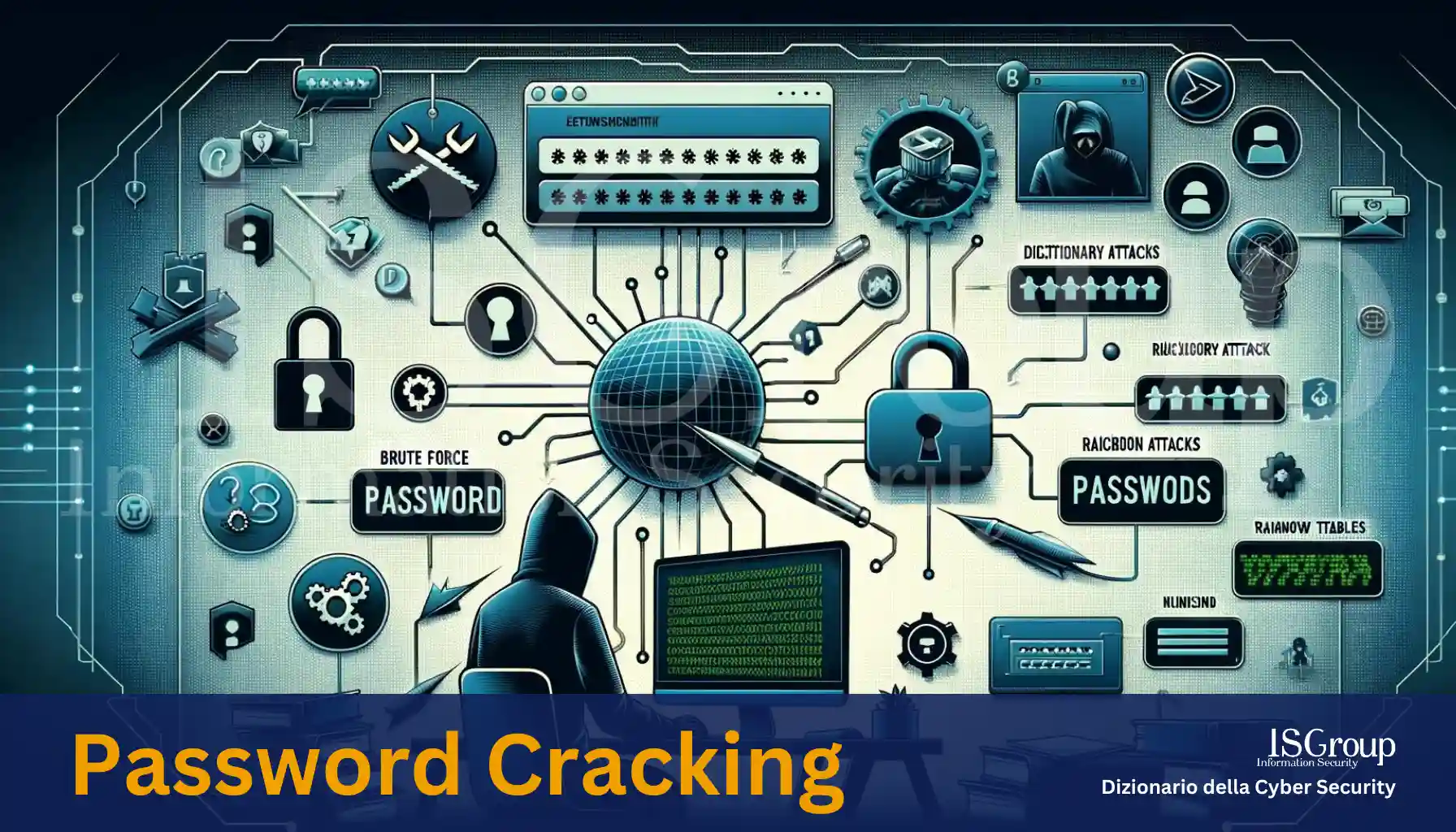
Password cracking is the process of attempting to guess passwords based on information contained in a password file. This practice is used both by security experts to test the robustness of systems and by malicious actors to illegally access confidential information.
Password Cracking Methods
There are several methods for password cracking, each with specific approaches and tools:
- Dictionary Attack: This method uses a predefined list of common words and phrases that people might use as passwords. Attackers try every word on the list until they find the correct one. This type of attack is effective against weak or predictable passwords.
- Brute Force: In a brute force attack, all possible character combinations are tried until the correct one is found. This method is extremely time-consuming and resource-intensive, but it guarantees finding the password, provided there is no lockout mechanism after a certain number of failed attempts.
- Rainbow Tables Attack: Rainbow tables are precomputed tables used to reverse password hash functions. These tables can significantly reduce the time required to crack a password, provided the password hash is present in the table.
- Phishing Attack: This method does not rely on algorithms or computational techniques, but exploits deception. Attackers trick victims into revealing their passwords, often through fake emails that appear to come from trusted sources.
- Social Engineering: Similar to phishing, social engineering relies on the psychological manipulation of people to obtain confidential information. Attackers can exploit trust, urgency, or other human factors to convince victims to reveal their passwords.
Prevention Measures
To protect yourself from password cracking, it is essential to adopt certain security measures:
- Complex Passwords: Use long, complex, and unique passwords consisting of uppercase and lowercase letters, numbers, and symbols.
- Password Managers: Use a password manager to generate and store strong, unique passwords for every account.
- Two-Factor Authentication (2FA): Implement two-factor authentication to add an extra layer of security beyond the password.
- Regular Updates: Change passwords regularly and never reuse the same ones across multiple services.
- Education and Awareness: Educate users on the risks associated with phishing and social engineering, and how to recognize and avoid such threats.
Password cracking represents a significant threat to cybersecurity, but with the right practices and tools, it is possible to mitigate risks and protect your sensitive information.
Want to give your company the highest level of cyber security? ISGroup SRL is here to help with cyber security solutions tailored to your business.
Would you like us to take care of everything for you? Our Virtual CISO and vulnerability management services are a perfect fit for your organization.
Already know what you need? Explore our services:
- Vulnerability Assessment
- Network Penetration Testing
- Web Application Penetration Testing
- Mobile Application Security Testing
- Ethical Hacking
- Training
And much more. Protect your company with the best cybersecurity experts!