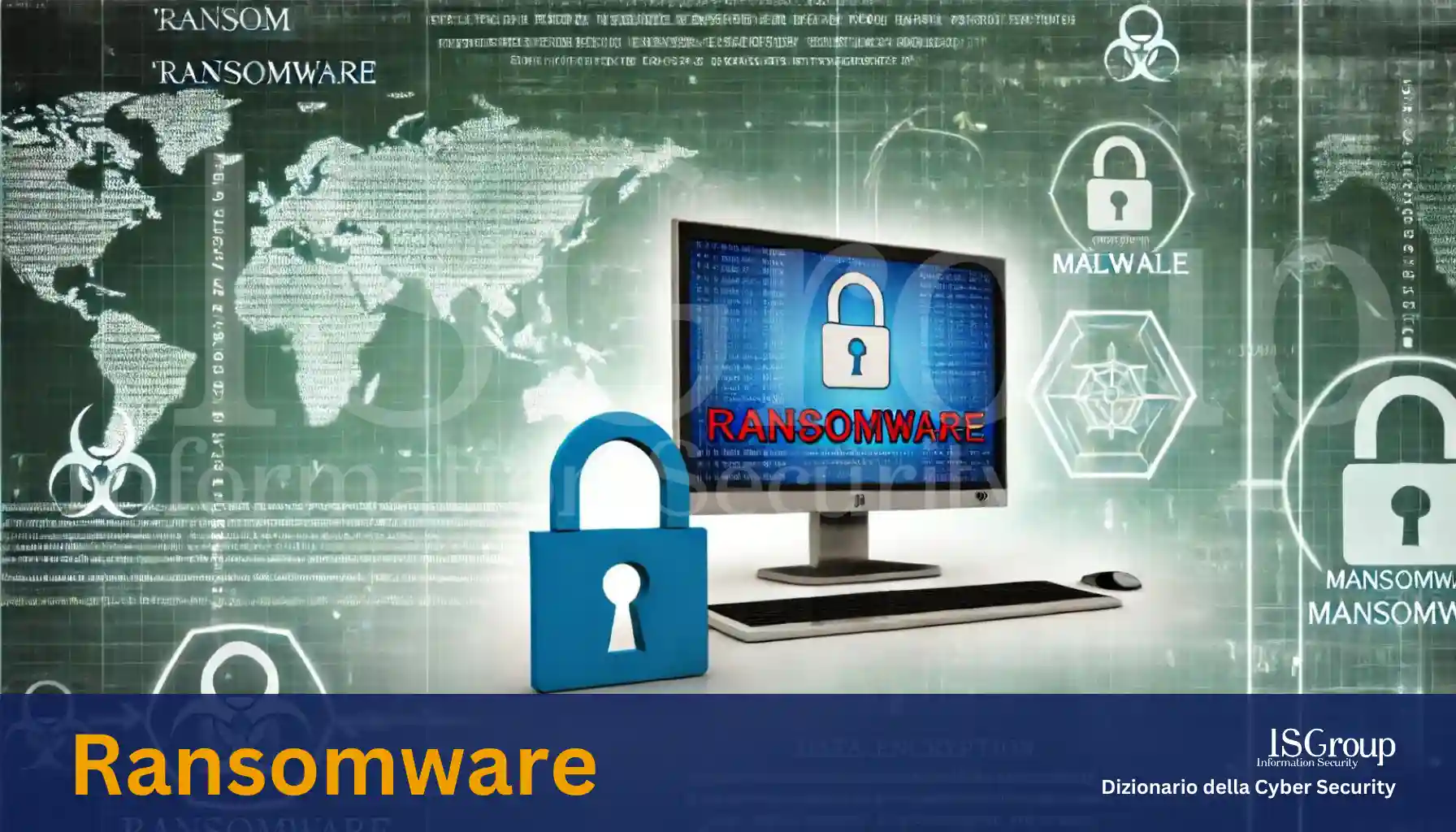
Ransomware is a type of malware that represents a form of digital extortion. This malicious software operates by encrypting the victim’s hard drive, preventing access to crucial files. Once the files have been encrypted, the victim receives a ransom demand: to decrypt the files and regain access, a sum of money, usually in cryptocurrency, must be paid to the attackers.
How does Ransomware work?
Ransomware is usually distributed via phishing emails, downloads from insecure websites, or by exploiting software vulnerabilities. When the malware infects a system, it begins to encrypt the user’s files using advanced encryption algorithms. This process makes the files inaccessible without a decryption key, which is held by the attackers.
Once encryption is complete, the ransomware displays a ransom demand message. This message includes instructions on how to pay the ransom, usually through cryptocurrencies like Bitcoin, to maintain the criminals’ anonymity. Some types of ransomware also set a deadline, threatening to delete the encrypted files if the ransom is not paid within a certain period of time.
Types of Ransomware
There are several variants of ransomware, including:
- Crypto Ransomware: This type encrypts the victim’s files and demands a ransom for the decryption key.
- Locker Ransomware: Blocks access to the operating system, making it impossible to use the computer until the ransom is paid.
- Scareware: This type of ransomware does not encrypt files, but displays fake malware infection alerts, demanding payment to resolve the non-existent problem.
Prevention and Protection
To protect yourself from ransomware, it is essential to adopt a series of preventive measures:
- Regular backups: Perform backup copies of important data on external media or cloud services.
- Software updates: Keep the operating system and software updated to patch any vulnerabilities.
- Antivirus and Anti-malware: Use updated antivirus and anti-malware programs that can detect and block ransomware.
- Caution with emails: Do not open attachments or click on suspicious links in unsolicited emails.
What to do in case of infection
If you are hit by ransomware, it is important to stay calm and consider the following steps:
- Do not pay the ransom: Paying does not guarantee that files will be decrypted and encourages further criminal activity.
- Disconnect the system: Isolate the infected computer from the network to prevent the spread of the malware.
- Use decryption tools: Some cybersecurity organizations provide free tools to decrypt files affected by known ransomware.
- Consult experts: Contact cybersecurity professionals for assistance with data recovery and malware removal.
Ransomware represents a significant threat in the cybersecurity landscape, but with adequate precautions and response measures, it is possible to reduce the risk and mitigate damage in the event of an attack.
Want to give your company the highest level of cyber security? ISGroup SRL is here to help with cyber security solutions tailored to your business.
Would you like us to take care of everything for you? Our Virtual CISO and vulnerability management services are a perfect fit for your organization.
Already know what you need? Explore our services:
- Vulnerability Assessment
- Network Penetration Testing
- Web Application Penetration Testing
- Mobile Application Security Testing
- Ethical Hacking
- Training
And much more. Protect your company with the best cybersecurity experts!