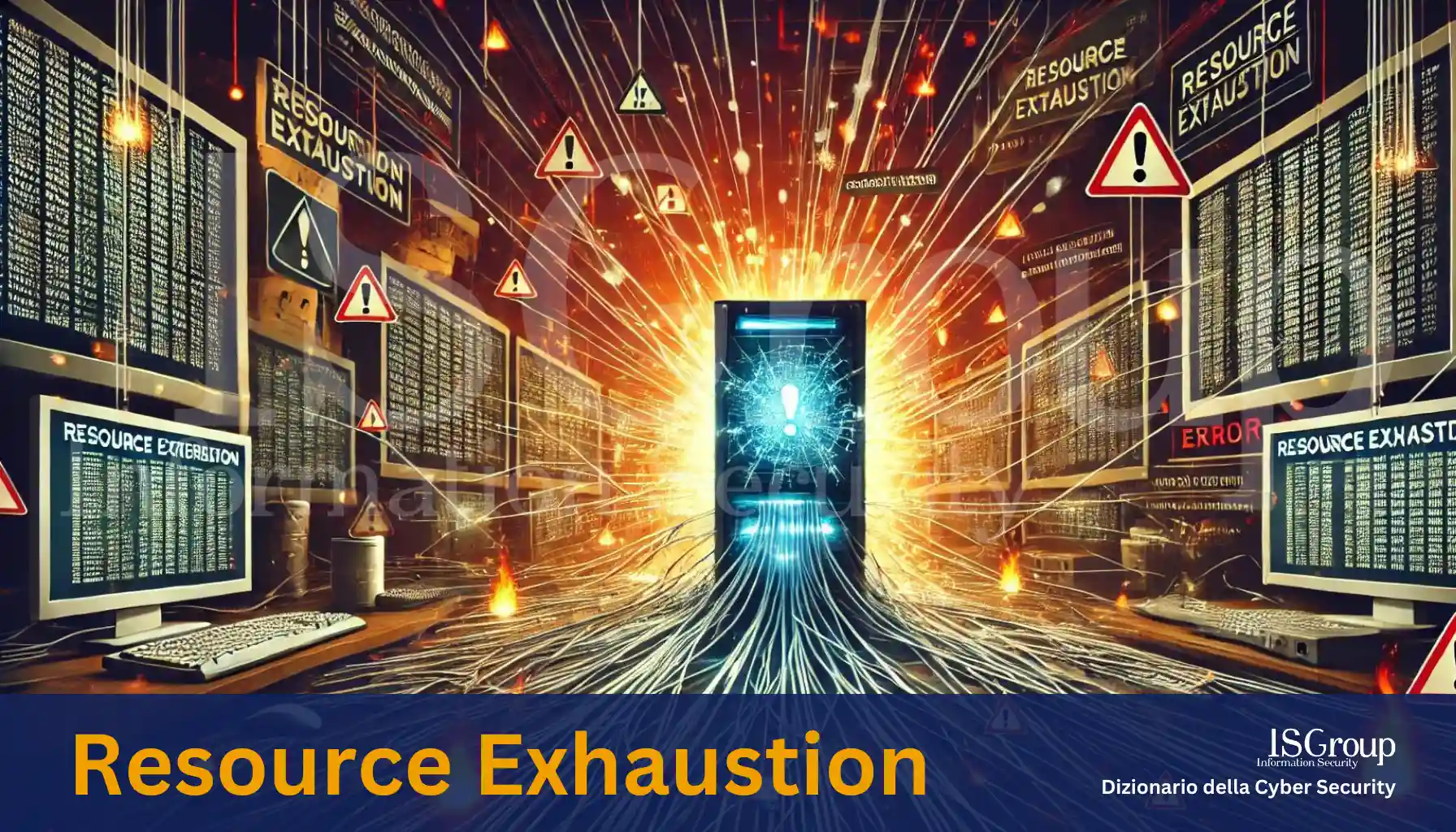
Resource Exhaustion attacks are a category of cyberattacks that aim to exploit the finite resources of a system, making them unavailable to other legitimate users or processes. This type of attack can severely compromise a system’s functionality, slowing down or even completely blocking the services offered.
What is Resource Exhaustion?
Resource exhaustion occurs when a computer system is overloaded beyond its management capacity. Finite resources can include:
- CPU: The central processing unit can be overloaded by intentionally intensive processes.
- Memory: RAM can be consumed by applications or processes that occupy space inefficiently or maliciously.
- Network Bandwidth: Sending a high volume of data can saturate network capacity, making legitimate traffic impossible.
- File descriptors: Every open connection, file, or socket requires a file descriptor, a resource that can be exhausted quickly in the event of targeted attacks.
How Resource Exhaustion Attacks Work
Resource exhaustion attacks exploit vulnerabilities in systems to occupy resources until they are completely depleted. Here are some examples of how they can be conducted:
- Denial of Service (DoS): DoS attacks send an enormous amount of requests to a server, attempting to exhaust the server’s own resources.
- Distributed Denial of Service (DDoS): Similar to DoS, but conducted by multiple compromised systems (often called botnets) to increase the intensity of the attack.
- Memory Leak: Poorly designed applications can consume memory without releasing it, slowly leading to its exhaustion.
- Fork Bomb: A malicious program that replicates itself infinitely, creating a huge number of processes until CPU and memory resources are exhausted.
Consequences of Resource Exhaustion Attacks
Resource exhaustion attacks can have serious consequences, including:
- Service Interruption: Legitimate users cannot access services, causing loss of productivity and trust.
- Data Loss: In extreme cases, the system might corrupt or lose data due to overloading.
- Reputational Damage: Companies that are victims of such attacks may suffer damage to their reputation and customer trust.
Prevention and Mitigation
To protect against resource exhaustion attacks, organizations can adopt several measures:
- Continuous Monitoring: Implement monitoring systems to detect abnormal resource usage.
- Rate Limiting: Limit the number of requests a single user can make in a given period of time.
- Load Balancing: Distribute the workload across multiple servers to avoid overloading.
- Patches and Updates: Keep systems updated with the latest security patches to reduce vulnerabilities.
In summary, resource exhaustion attacks represent a significant threat to the availability of IT services. Implementing effective defense strategies is essential to ensure operational continuity and protect an organization’s critical resources.
Want to give your company the highest level of cyber security? ISGroup SRL is here to help with cyber security solutions tailored to your business.
Would you like us to take care of everything for you? Our Virtual CISO and vulnerability management services are a perfect fit for your organization.
Already know what you need? Explore our services:
- Vulnerability Assessment
- Network Penetration Testing
- Web Application Penetration Testing
- Mobile Application Security Testing
- Ethical Hacking
- Training
And much more. Protect your company with the best cybersecurity experts!