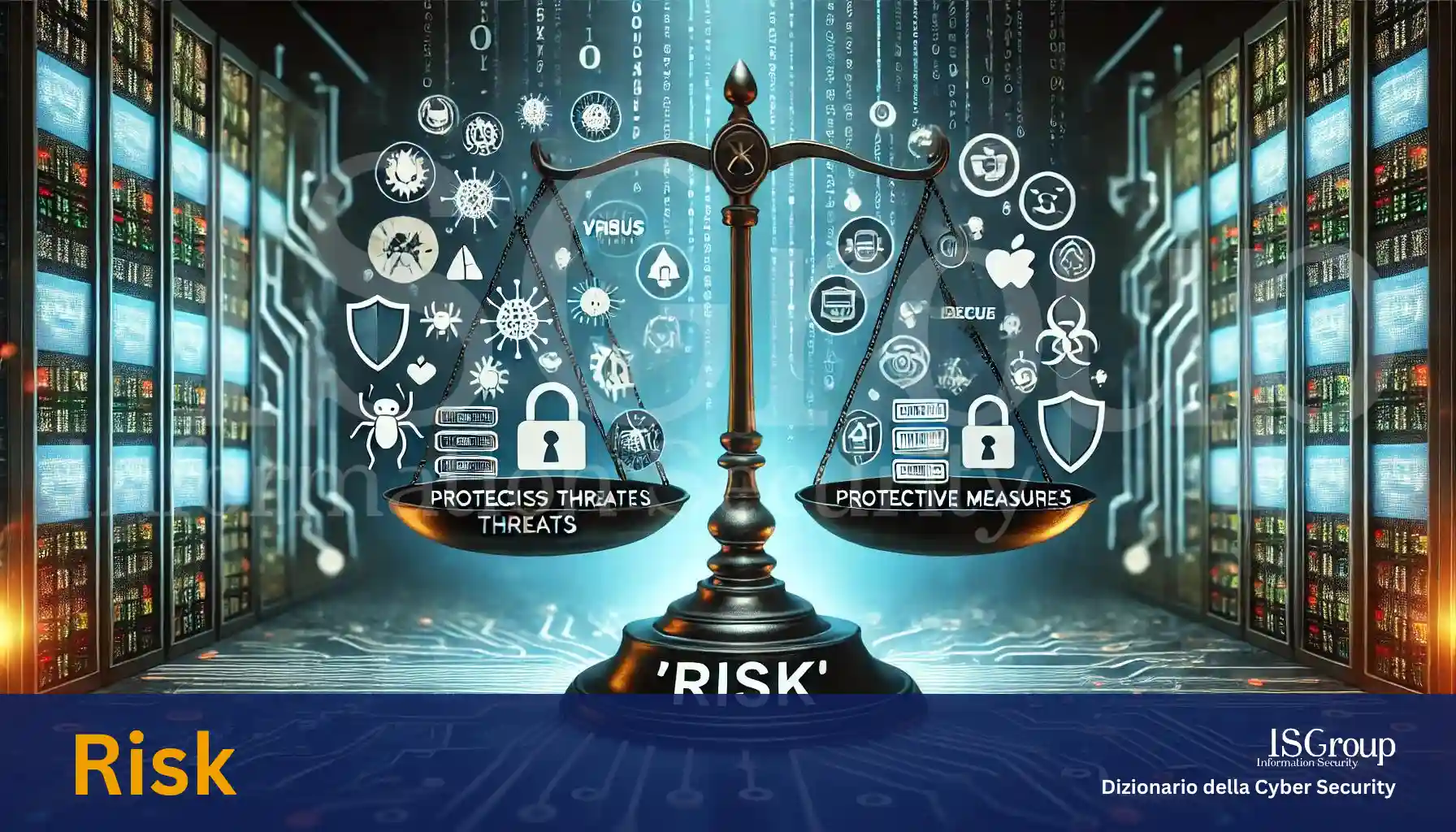
The term “risk” refers to the probability that an undesirable or harmful event will occur, combining the level of threat with the level of vulnerability. In other words, risk is the product of threat and vulnerability, thus determining the probability of a successful attack.
Threat
A threat represents any potential source of harm that can exploit a vulnerability. Threats can be of various natures, including cyberattacks, natural disasters, human error, or acts of sabotage. The severity of a threat depends on its capacity to cause damage and the frequency with which it may occur.
Vulnerability
A vulnerability is a weakness or gap in a system that can be exploited by a threat to cause damage. These can include cybersecurity flaws, configuration errors, lack of backup procedures, or inadequately trained personnel. The higher the level of vulnerability, the higher the associated risk.
Probability of a Successful Attack
Risk is established as the probability of a successful attack, meaning the possibility that a threat will exploit a specific vulnerability. This concept is crucial in security management, as it allows for the identification and mitigation of potential threats and weaknesses in an organization’s systems.
Risk Management
Risk management is the process of identifying, assessing, and prioritizing risks, followed by a coordinated and cost-effective application of resources to minimize, monitor, and control the probability and/or impact of unfortunate events. This can include the implementation of security measures, staff training, the creation of emergency response plans, and the adoption of advanced technologies for information protection.
Conclusion
Understanding the concept of risk and its relationship with threat and vulnerability is fundamental to developing effective security strategies. Proper risk management allows for minimizing the chances of successful attacks and better protecting critical assets and information.
Want to give your company the highest level of cyber security? ISGroup SRL is here to help with cyber security solutions tailored to your business.
Would you like us to take care of everything for you? Our Virtual CISO and vulnerability management services are a perfect fit for your organization.
Already know what you need? Explore our services:
- Vulnerability Assessment
- Network Penetration Testing
- Web Application Penetration Testing
- Mobile Application Security Testing
- Ethical Hacking
- Training
And much more. Protect your company with the best cybersecurity experts!