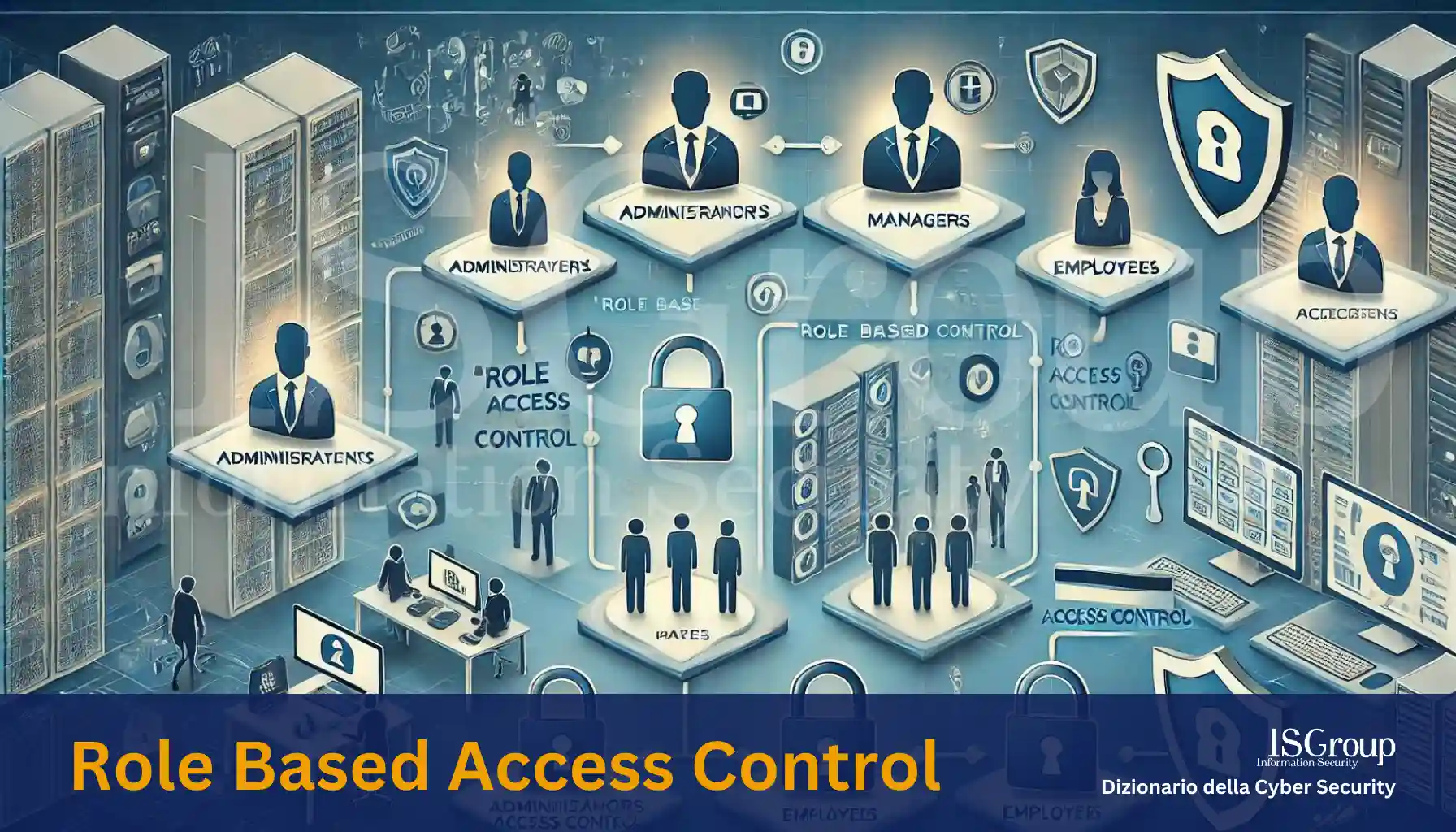
Role-Based Access Control (RBAC) is an information security management approach that assigns specific roles to users based on their organizational functions. Authorization is determined based on the assigned roles.
Description:
RBAC is a system that simplifies and optimizes access control within an organization. Instead of assigning specific permissions to each individual user, users are assigned to roles that have predefined permissions necessary to perform their tasks. This approach reduces administrative complexity and minimizes the risk of errors in permission assignment.
Key components:
- Users: The individuals or entities that require access to specific resources within an organization.
- Roles: Groupings of permissions that define what users can or cannot do. Roles are determined by organizational functions and job responsibilities.
- Permissions: The specific authorizations that determine access to resources, such as files, databases, applications, and other IT resources.
- Role Assignments: The association between users and roles, which determines the permissions granted to the users.
Benefits:
- Improved security: By assigning permissions based on roles, the risk of unauthorized access is reduced.
- Ease of management: Permission administration becomes simpler, as it is only necessary to manage roles rather than individual users.
- Compliance: RBAC helps maintain compliance with security regulations by ensuring that only authorized individuals have access to sensitive resources.
- Flexibility: Roles can be easily updated or modified to adapt to changes in organizational functions without having to manually update permissions for each user.
Usage example:
In a company, employees can be assigned to various roles such as “Administrator,” “Developer,” “Analyst,” or “Standard User.” An “Administrator” might have full access to all systems and data, while a “Developer” might have access only to development and test environments. An “Analyst” might have access to specific datasets required for analysis, and a “Standard User” might have limited access to the basic functions necessary for their daily work.
In summary, Role-Based Access Control is an efficient and secure methodology for managing access to resources in an organization, reducing risks and simplifying permission administration.
Want to give your company the highest level of cyber security? ISGroup SRL is here to help with cyber security solutions tailored to your business.
Would you like us to take care of everything for you? Our Virtual CISO and vulnerability management services are a perfect fit for your organization.
Already know what you need? Explore our services:
- Vulnerability Assessment
- Network Penetration Testing
- Web Application Penetration Testing
- Mobile Application Security Testing
- Ethical Hacking
- Training
And much more. Protect your company with the best cybersecurity experts!