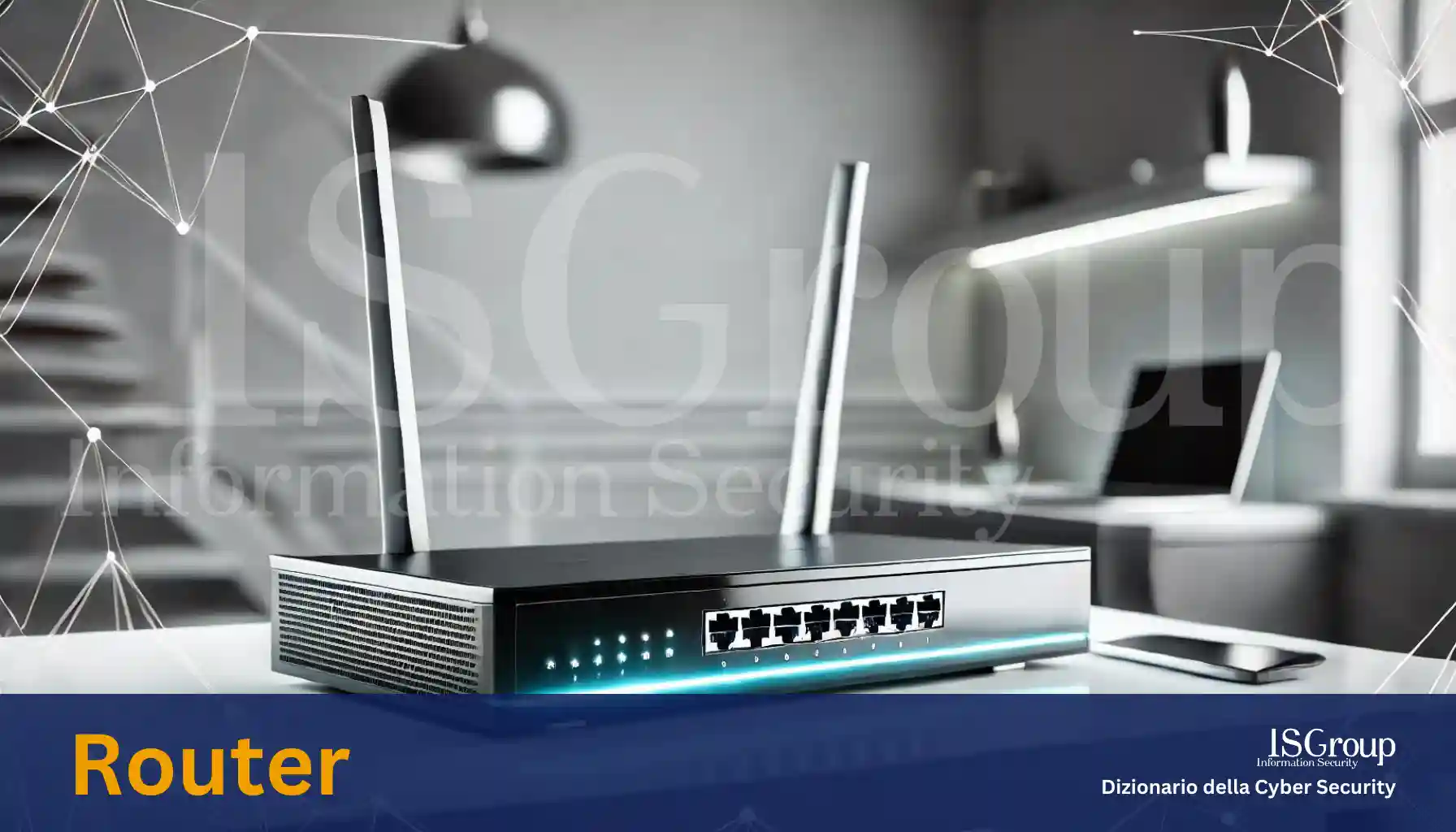
A router is a fundamental device in computer networks, used to interconnect different logical networks by routing information toward other networks based on IP addresses. This device is essential for ensuring that data sent from one device correctly reaches the intended destination through a series of interconnected networks.
How a Router Works
The primary function of a router is data packet routing. When a data packet arrives at the router, it analyzes the destination IP address contained within the packet itself. Based on internal routing tables, the router determines the best path through which to forward the packet toward the destination network.
Main Components of a Router
- Network Interfaces: A router has multiple network interfaces, each connected to a different network. These interfaces can be either wired (Ethernet) or wireless.
- CPU: The router’s CPU executes the routing software and manages packet routing operations.
- Memory: Includes RAM for running active processes and flash memory to store the operating system and routing tables.
- Operating System: Routers run a specific networking operating system, such as Cisco IOS, which manages all routing operations.
Types of Routers
- Backbone Routers: Used in the backbones of large networks, such as those of ISPs, to route large volumes of traffic.
- Access Routers: Located at the edges of networks and used to connect local area networks (LANs) to Internet Service Providers (ISPs).
- SOHO Routers (Small Office/Home Office): Designed for home or small office environments, they often combine routing functionality with switches and wireless access points.
Additional Features
In addition to packet routing, many routers offer additional features, such as:
- Firewall: To protect the network from unauthorized access.
- NAT (Network Address Translation): To allow multiple devices in a private network to share a single public IP address.
- VPN (Virtual Private Network): To create secure connections between different networks over the Internet.
Importance of the Router
Routers are essential for the operation of the Internet and corporate networks. Without routers, data could not travel from one network to another, making communication between devices on different networks impossible.
In summary, the router is a crucial device in modern networks, responsible for the efficient and secure routing of data across interconnected networks, ensuring that information correctly reaches its destination.
Want to give your company the highest level of cyber security? ISGroup SRL is here to help with cyber security solutions tailored to your business.
Would you like us to take care of everything for you? Our Virtual CISO and vulnerability management services are a perfect fit for your organization.
Already know what you need? Explore our services:
- Vulnerability Assessment
- Network Penetration Testing
- Web Application Penetration Testing
- Mobile Application Security Testing
- Ethical Hacking
- Training
And much more. Protect your company with the best cybersecurity experts!