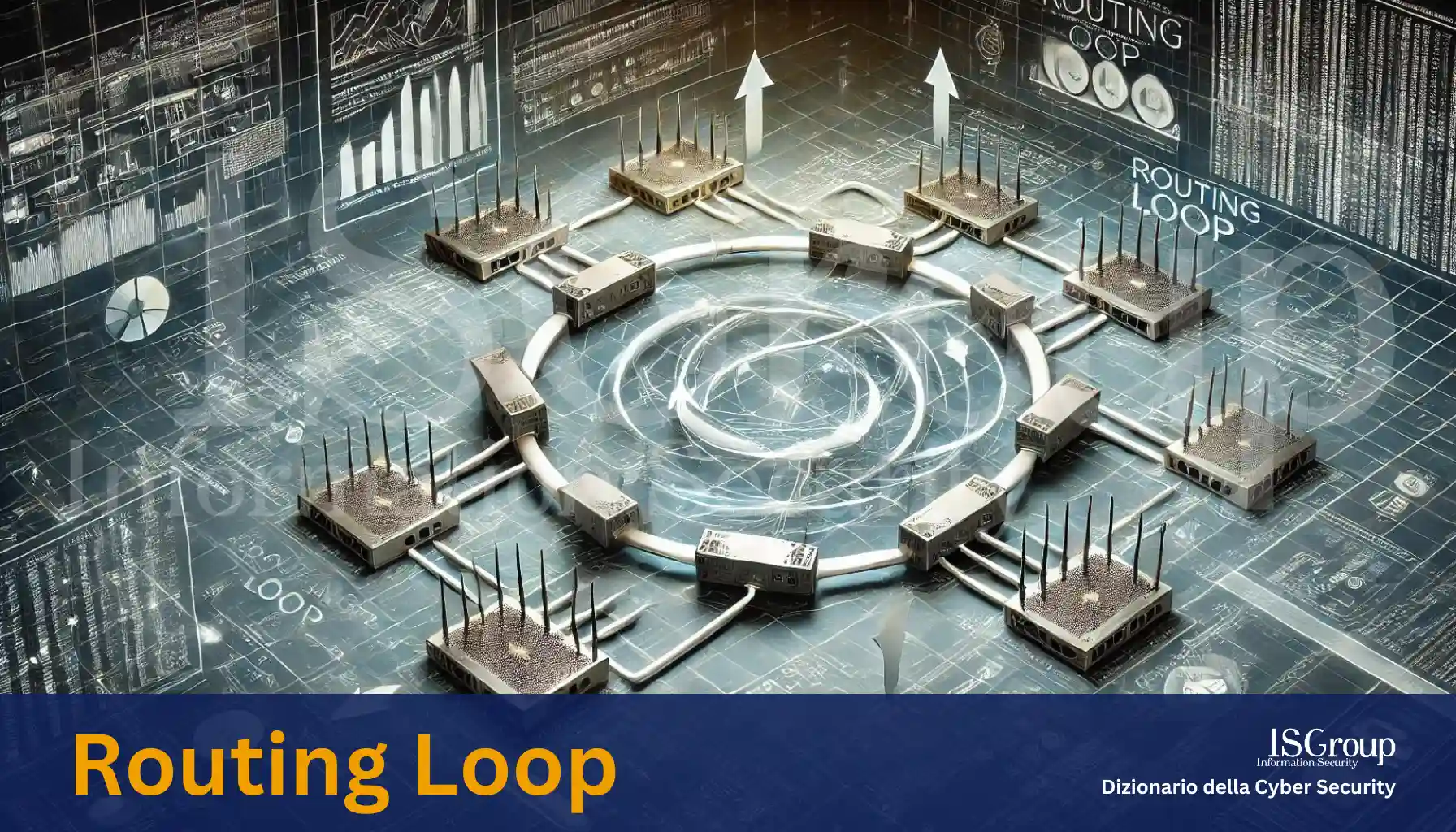
A routing loop is a problematic situation that can occur within a computer network, where two or more incorrectly configured routers repeatedly exchange the same data packet. This condition can cause various network issues, including bandwidth saturation, communication delays, and, in some cases, complete service interruption.
Causes of a Routing Loop
A routing loop can occur for several reasons, including:
- Incorrect Configuration: When routers are not configured correctly, they may end up sending data packets back and forth between each other without ever reaching the final destination.
- Incompatibility between Routing Protocols: The use of different or poorly configured routing protocols can lead to conflicts and routing loops. For example, distance-vector routing protocols (like RIP) can be more susceptible to routing loops than link-state routing protocols (like OSPF).
- Routing Table Errors: An error in the routing table of one or more routers can cause packets to be routed incorrectly.
Consequences of a Routing Loop
The consequences of a routing loop can be severe for the network. Some of the negative effects include:
- Bandwidth Saturation: Because packets are sent repeatedly between routers, network bandwidth can be quickly consumed, reducing network performance for other users and applications.
- Increased Latency: Packets traveling unnecessarily between routers can introduce significant delays, negatively affecting the quality of communications.
- Packet Loss: In some cases, packets may be lost if the routers cannot handle the additional load caused by the routing loop.
Prevention and Resolution
There are several techniques to prevent and resolve routing loops:
- Implementation of TTL (Time to Live): The TTL field in IP packets can help prevent routing loops, as every time a packet passes through a router, its TTL value is decremented. When the TTL reaches zero, the packet is discarded.
- Use of Effective Routing Protocols: The use of modern and robust routing protocols, such as OSPF or EIGRP, which are designed to avoid routing loops, can significantly reduce the risk of routing loops.
- Network Monitoring and Maintenance: Constant network monitoring and regular maintenance can help identify and quickly resolve any configuration issues that could lead to a routing loop.
In conclusion, routing loops represent a significant challenge for network management, but with proper configuration, monitoring, and the use of appropriate routing protocols, it is possible to mitigate these problems and keep the network running efficiently.
Want to give your company the highest level of cyber security? ISGroup SRL is here to help with cyber security solutions tailored to your business.
Would you like us to take care of everything for you? Our Virtual CISO and vulnerability management services are a perfect fit for your organization.
Already know what you need? Explore our services:
- Vulnerability Assessment
- Network Penetration Testing
- Web Application Penetration Testing
- Mobile Application Security Testing
- Ethical Hacking
- Training
And much more. Protect your company with the best cybersecurity experts!