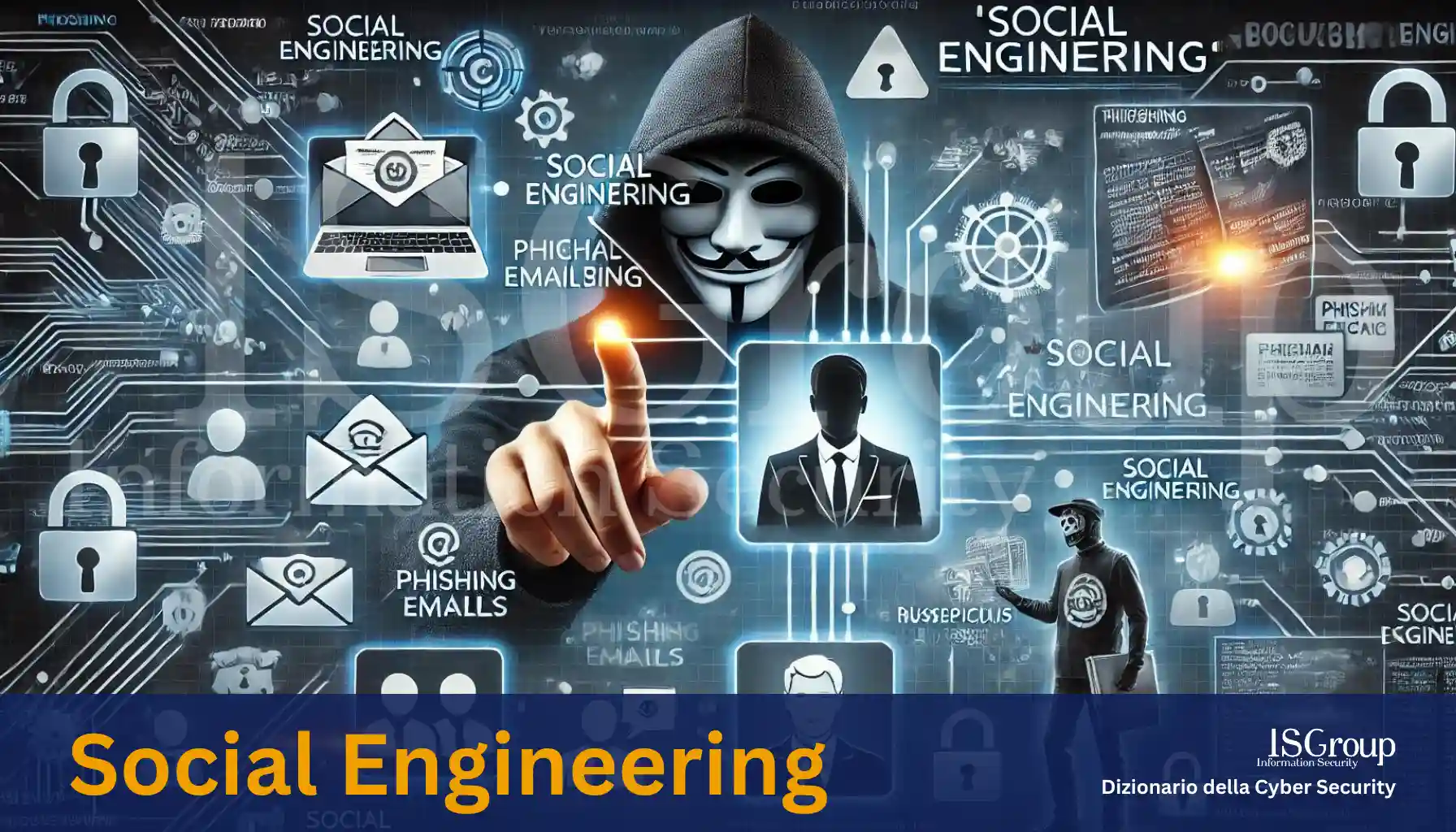
The term “Social Engineering” refers to a series of non-technical or low-tech techniques used to attack computer systems. These techniques rely on the psychological manipulation of people to induce them to perform actions or disclose confidential information. In practice, Social Engineering exploits human vulnerabilities rather than technological ones.
Social Engineering Methods
Here are some of the most common Social Engineering methods:
- Impersonation: The attacker poses as a trusted person, such as a colleague, a supplier, or a representative of an organization, to obtain sensitive information.
- Lies: Falsehoods are told to convince victims to provide information or access to systems.
- Tricks: The attacker uses deceptive stratagems to induce people to reveal information or perform certain actions. An example could be a fake request for technical support.
- Bribes: People can be bribed with money or other benefits to reveal sensitive information.
- Blackmail: The attacker threatens the victim with the disclosure of compromising information or with physical, psychological, or reputational harm to get what they want.
- Threats: The use of intimidation and threats to obtain information or unauthorized access.
Examples of Social Engineering
- Phishing: One of the most common attacks, where the attacker sends seemingly legitimate emails that induce victims to click on malicious links or provide personal information.
- Pretexting: The attacker creates a fictional scenario (pretext) to obtain information from the victim. For example, they might pretend to be an investigator or an employee of the company.
- Baiting: The attacker offers something tempting (for example, an infected USB device) to induce people to pick it up and use it, thereby infecting the systems.
Prevention of Social Engineering
To protect yourself from Social Engineering attacks, it is essential to adopt some best practices:
- Training and Awareness: Educate employees about Social Engineering techniques and how to recognize potential attacks.
- Identity Verification: Always verify the identity of people before disclosing sensitive information or granting access to systems.
- Security Policies: Implement rigorous security policies and procedures that include the management of sensitive information and system access.
- Incident Reporting: Encourage employees to immediately report any suspicious activity or attempt at Social Engineering.
Social Engineering represents a significant threat to information security, as it exploits human weaknesses rather than technological ones. Recognizing and preventing these attacks is essential to protect sensitive information and maintain the integrity of computer systems. For organizations that want to concretely verify their exposure to psychological manipulation techniques, there are dedicated paths for simulation and human risk analysis.
Want to give your company the highest level of cyber security? ISGroup SRL is here to help with cyber security solutions tailored to your business.
Would you like us to take care of everything for you? Our Virtual CISO and vulnerability management services are a perfect fit for your organization.
Already know what you need? Explore our services:
- Vulnerability Assessment
- Network Penetration Testing
- Web Application Penetration Testing
- Mobile Application Security Testing
- Ethical Hacking
- Training
And much more. Protect your company with the best cybersecurity experts!