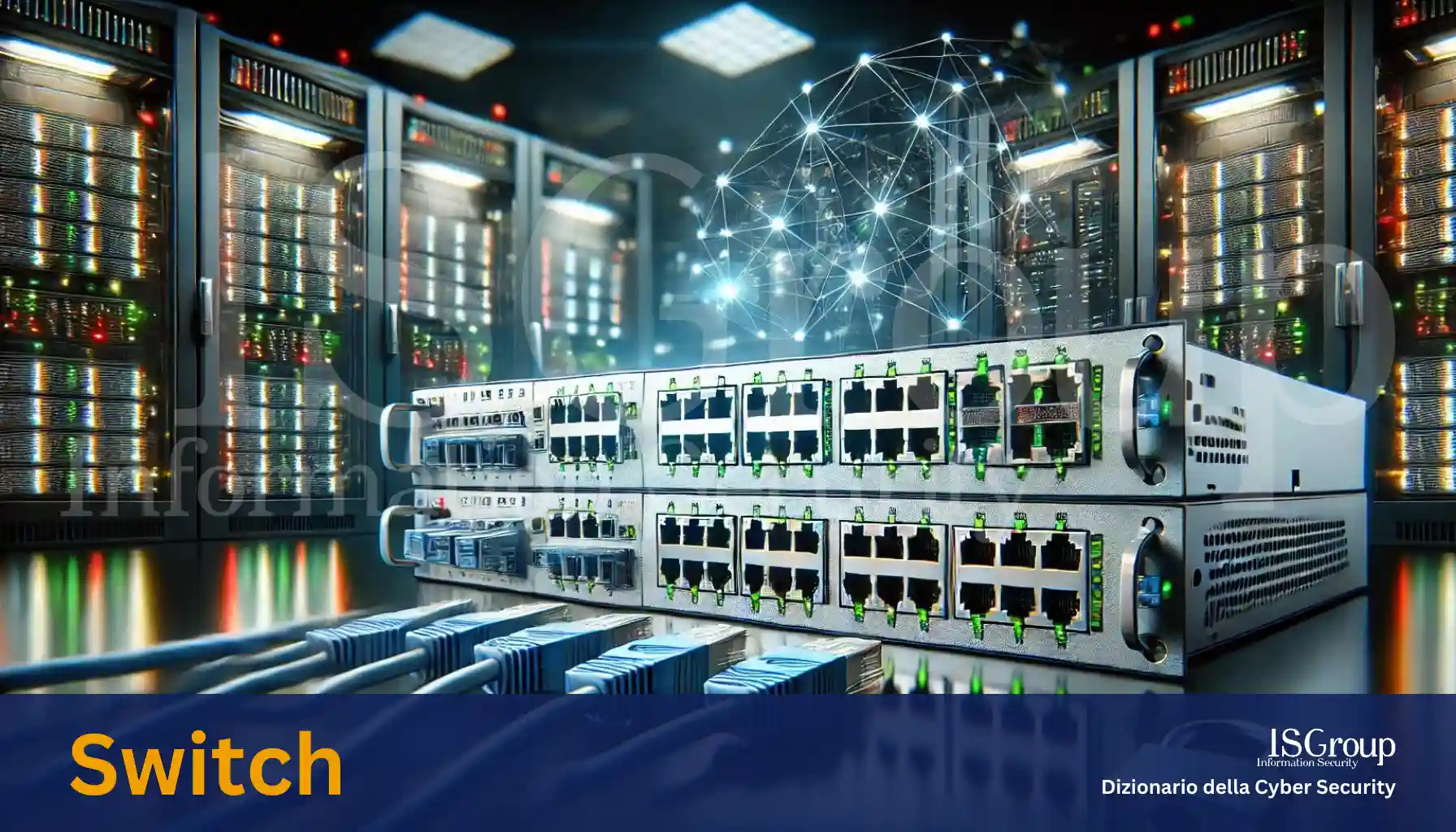
A switch is an essential network device for managing communications within a local area network (LAN). Its primary function is to receive, process, and forward data between connected devices, ensuring that information reaches the intended recipient correctly.
How a Switch Works
The operation of a switch is based on the management of MAC (Media Access Control) addresses. Every device connected to a network has a unique MAC address, which the switch uses to identify and direct data. When a data packet arrives at one of the switch’s ports, the device examines the destination MAC address and checks if it is present in its address table.
The MAC address table is a type of map that the switch creates and constantly updates. This table tracks which MAC addresses are associated with each switch port. In this way, the switch can forward data only to the correct port, avoiding the unnecessary sending of traffic to all ports (as happens with a hub). This process not only increases network efficiency but also reduces data collisions and improves security.
Types of Switches
There are several types of switches, each designed to meet specific network needs:
- Unmanaged Switches: These are simple to use and do not require special configurations. They are ideal for small home networks or offices where advanced network traffic management is not necessary.
- Managed Switches: These offer advanced management and configuration features, such as VLANs (Virtual LANs), QoS (Quality of Service), and traffic monitoring. They are suitable for corporate networks or complex environments where detailed control of network operations is required.
- PoE (Power over Ethernet) Switches: These provide electrical power to connected devices via the Ethernet cable, in addition to transmitting data. They are useful for powering devices such as IP phones, surveillance cameras, and wireless access points.
Advantages of Switches
Using switches in a network offers numerous advantages:
- Efficiency: By reducing network traffic and minimizing data collisions, switches significantly improve network performance.
- Security: Thanks to the ability to forward data only to the recipient devices, switches reduce the risk of unauthorized access to information.
- Scalability: It is easy to add new devices to the network without compromising overall performance, making switches ideal for growing networks.
Conclusion
Switches represent a fundamental component for building and managing efficient and secure networks. With their ability to intelligently manage data traffic, they help optimize the performance of local networks, supporting a wide range of applications and devices. Whether it is a small home network or a large corporate infrastructure, the adoption of appropriate switches is crucial to ensuring reliable and robust connectivity.
Want to give your company the highest level of cyber security? ISGroup SRL is here to help with cyber security solutions tailored to your business.
Would you like us to take care of everything for you? Our Virtual CISO and vulnerability management services are a perfect fit for your organization.
Already know what you need? Explore our services:
- Vulnerability Assessment
- Network Penetration Testing
- Web Application Penetration Testing
- Mobile Application Security Testing
- Ethical Hacking
- Training
And much more. Protect your company with the best cybersecurity experts!