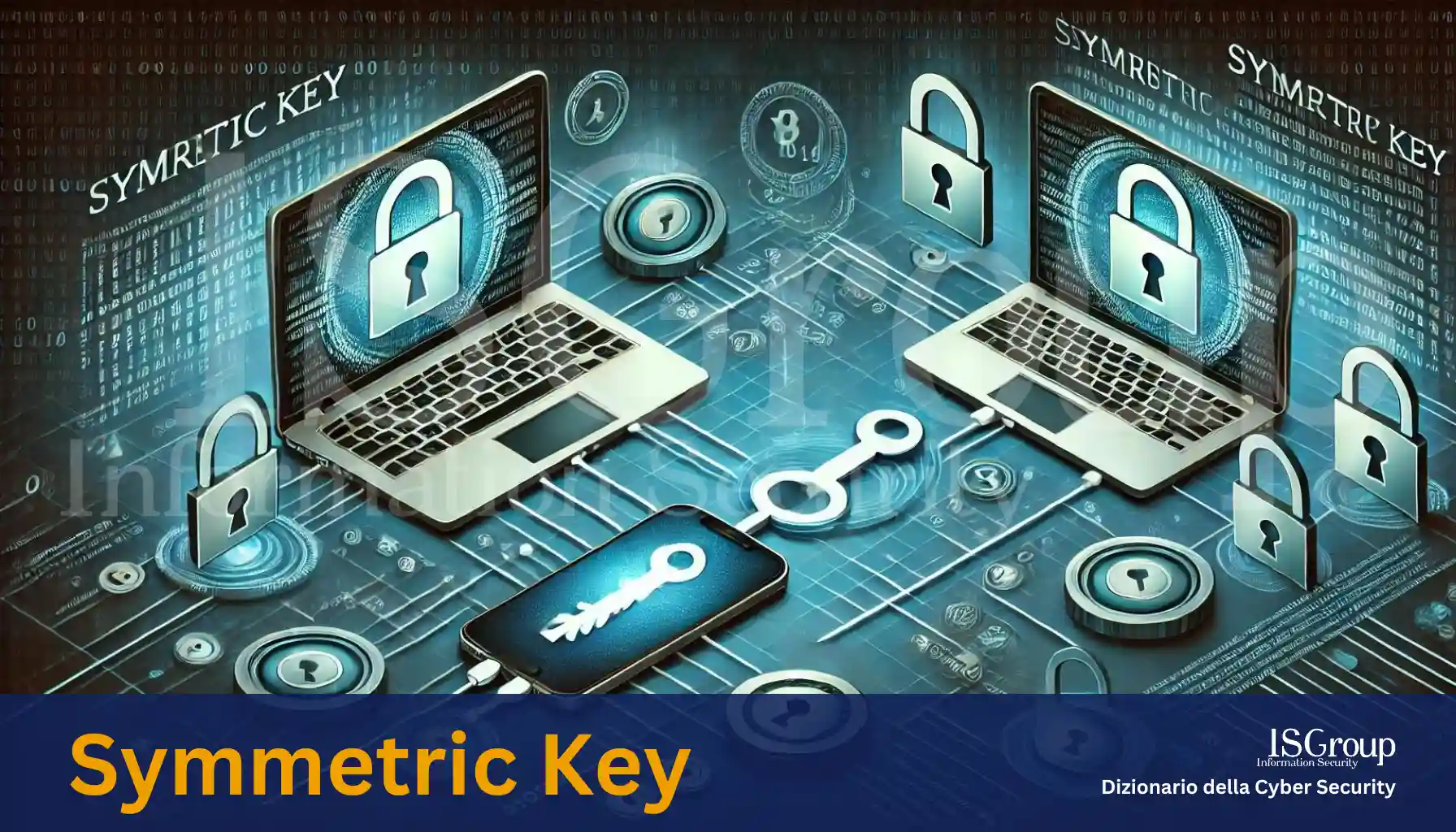
A Symmetric Key is a cryptographic key used in a symmetric cryptographic algorithm. In this context, “symmetric” refers to the fact that the same key is used for both encrypting and decrypting data. This is in contrast to asymmetric cryptography, where different keys are used for the encryption and decryption process.
Main Characteristics
Efficiency
Symmetric algorithms are generally faster than asymmetric algorithms, making them ideal for processing large amounts of data. This is due to their lower computational complexity.
Security
The security of a symmetric key depends on the secrecy of the key itself. If the key is compromised, the entire encryption system becomes vulnerable. For this reason, the secure management and distribution of symmetric keys is crucial.
Types of Symmetric Algorithms
There are several symmetric encryption algorithms; among the most well-known are:
- DES (Data Encryption Standard): A block cipher algorithm that uses a 56-bit key. It is considered obsolete due to its vulnerabilities.
- AES (Advanced Encryption Standard): A more modern and secure algorithm that supports key lengths of 128, 192, and 256 bits. It is widely used in many security applications.
- 3DES (Triple DES): A method that applies the DES algorithm three times to each data block, significantly improving security compared to standard DES.
Practical Use
Symmetric keys are commonly used in various scenarios, including:
- Data Encryption: Protecting data stored on hard drives or other forms of storage.
- Secure Transmission: Protecting communications between two parties, such as in VPNs (Virtual Private Networks) and network security protocols like SSL/TLS.
- Authentication: Verifying the identity of users and devices through protocols like Kerberos.
Advantages and Disadvantages
Advantages
- Speed: Symmetric algorithms are generally faster to execute than asymmetric ones.
- Efficiency: They are efficient for encrypting large amounts of data.
Disadvantages
- Key Management: The need to keep keys secret and distribute them securely can be complex.
- Scalability: In a system with many users, key management can become difficult because each pair of users requires a different key.
Conclusion
Symmetric keys represent a fundamental element in modern cryptography, offering a balance between speed and efficiency. However, their security depends heavily on proper key management, which remains a critical challenge for many organizations.
Want to give your company the highest level of cyber security? ISGroup SRL is here to help with cyber security solutions tailored to your business.
Would you like us to take care of everything for you? Our Virtual CISO and vulnerability management services are a perfect fit for your organization.
Already know what you need? Explore our services:
- Vulnerability Assessment
- Network Penetration Testing
- Web Application Penetration Testing
- Mobile Application Security Testing
- Ethical Hacking
- Training
And much more. Protect your company with the best cybersecurity experts!