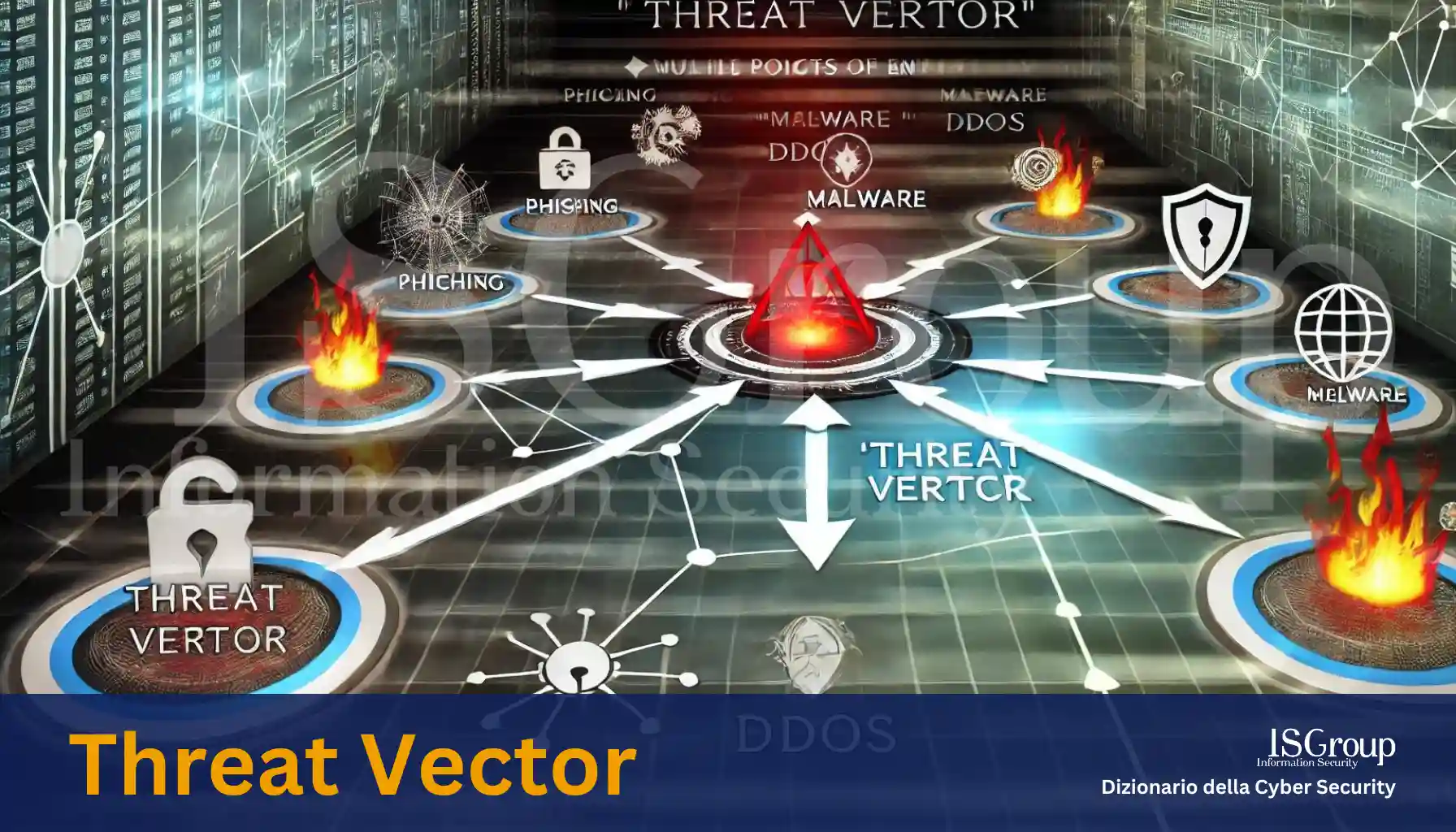
The term “Threat Vector” refers to the method or path used by a threat to reach a target. In other words, it represents the means through which a malicious entity, such as a hacker or malware, penetrates a computer system or compromises the security of a network.
Key Characteristics
- Attack Method: The threat vector describes the specific way an attack is executed. It can include techniques such as phishing, software vulnerability exploits, brute-force attacks, and much more.
- Access Path: It identifies the path the threat follows to reach its objective. This path can go through various stages, such as infiltration, privilege escalation, and data exfiltration.
Types of Threat Vectors
- Email Phishing: One of the most common threat vectors, where attackers send deceptive emails to trick victims into providing sensitive information or installing malware.
- Malware: Malicious software designed to infiltrate, damage, or disable computers, networks, or mobile devices. It can include viruses, trojans, ransomware, and spyware.
- Web Attacks: The use of compromised or fake websites to exploit browser vulnerabilities or trick the user into downloading malware.
- Social Engineering: Psychological techniques used to manipulate people into revealing confidential information or performing actions that compromise security.
- Network Attacks: These include network sniffing, IP address spoofing, DDoS (Distributed Denial of Service) attacks, and unauthorized access through weaknesses in network configuration.
Importance of Defense
Understanding threat vectors is fundamental to developing effective defense strategies. Companies and individuals can adopt various measures to protect themselves, such as using updated security software, cybersecurity training, implementing robust security policies, and proactive monitoring of external and internal threats. This approach integrates naturally with a proper threat assessment, which allows for measuring actual exposure before defining countermeasures.
Reducing Risk: From Vector to Response
The concept of a threat vector is closely linked to that of a threat model: identifying the relevant vectors for one’s context is the starting point for building a structured model and prioritizing defensive interventions. Being aware of the methods attackers use to penetrate systems is the first step toward a more solid and resilient defense.
Protect your organisation with Threat Intelligence and Digital Risk Protection.
Choose ISGroup for a practical, tailored engagement:
- A focused assessment of your environment and requirements
- Clear findings with a prioritised, actionable roadmap
- Direct support from experienced specialists through remediation and implementation