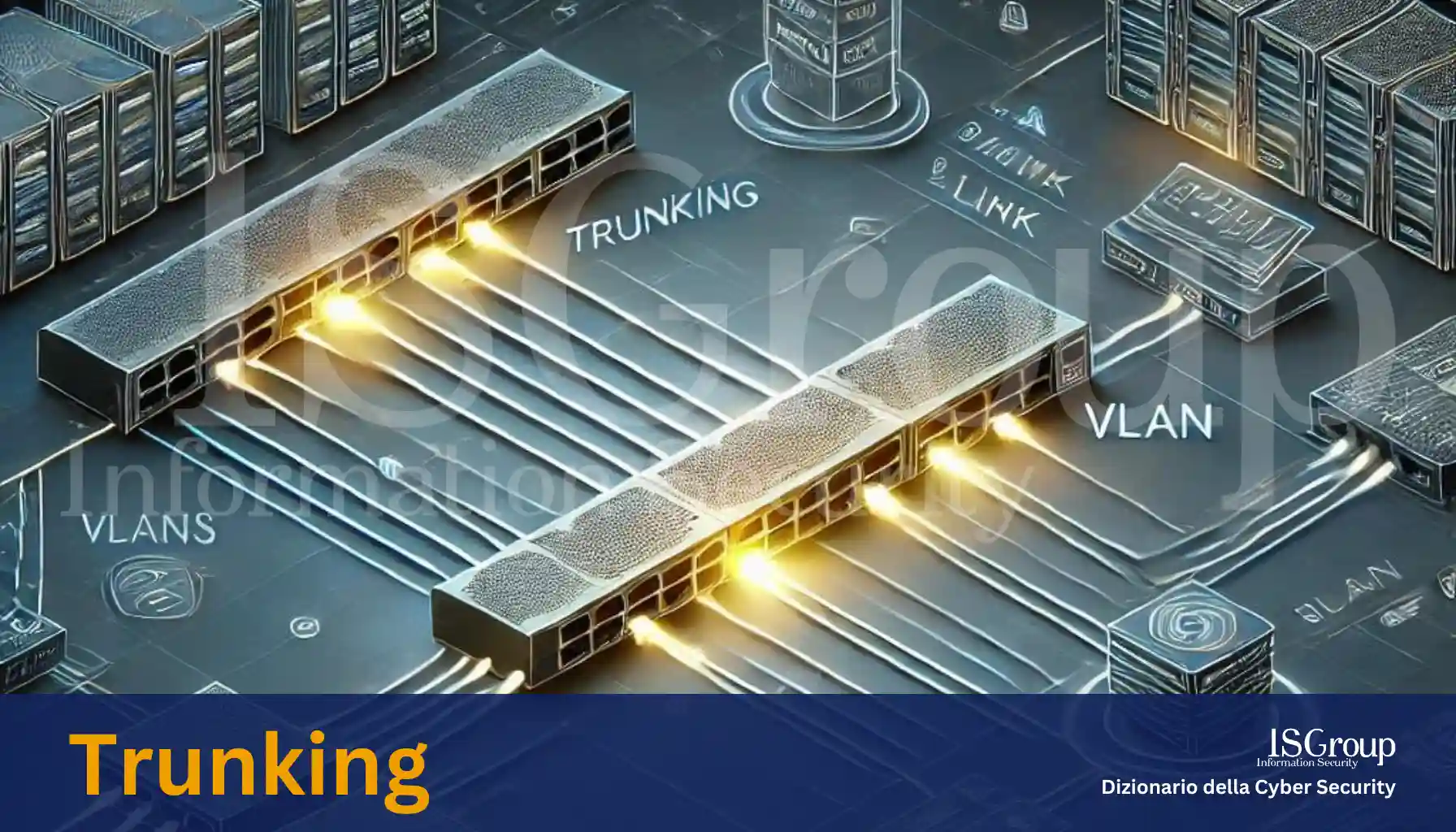
The term “Trunking” refers to a networking technique used to connect multiple switches so that they can share information about VLANs (Virtual Local Area Networks) with each other. This connection occurs via a link called a “trunk,” which allows the simultaneous transmission of traffic belonging to different VLANs across a single physical connection.
How Trunking Works
When using trunking, the involved switches can communicate with each other and transmit data originating from different VLANs without the need for separate physical connections for each VLAN. This is made possible by encapsulating network frames with a VLAN tag, which identifies which VLAN each frame belongs to.
VLAN Tagging
The VLAN tagging process is essential for trunking. Network frames are “tagged” with a VLAN Identifier (VID) using protocols such as IEEE 802.1Q. This tag is added to the Ethernet frame before it is transmitted across the trunk and is removed by the destination switch, which uses the tag to correctly route the frame to the appropriate VLAN.
Benefits of Trunking
- Network Efficiency: Trunking reduces the need for multiple physical connections, optimizing the use of network resources.
- Centralized VLAN Management: It allows for simpler and more centralized management of VLANs, facilitating network administration.
- Scalability: It supports network expansion without adding physical complexity, allowing for smoother growth of network infrastructures.
- Cost Reduction: It minimizes the number of cables and ports required, reducing hardware and maintenance costs.
Trunking Applications
Trunking is widely used in corporate networks and data centers, where it is common to have many VLANs to separate network traffic based on different criteria, such as business departments, traffic types (data, voice, video), or security levels. It is particularly useful in virtualization scenarios, where numerous virtual machines can share the same physical infrastructure but require logical isolation through separate VLANs.
Implementation
To implement trunking, it is necessary to configure the ports of the involved switches to operate in trunk mode. This can be done via the switch command-line interface (CLI) or network management tools. Network administrators must ensure that the same VLANs are configured on all switches connected via the trunk to ensure correct traffic transmission.
Conclusion
Trunking represents a fundamental technique for the efficiency and scalability of modern networks, allowing for optimized VLAN management and a reduction in operational costs. Thanks to trunking, networks can expand and adapt to growing traffic and isolation needs without compromising ease of management.
Want to give your company the highest level of cyber security? ISGroup SRL is here to help with cyber security solutions tailored to your business.
Would you like us to take care of everything for you? Our Virtual CISO and vulnerability management services are a perfect fit for your organization.
Already know what you need? Explore our services:
- Vulnerability Assessment
- Network Penetration Testing
- Web Application Penetration Testing
- Mobile Application Security Testing
- Ethical Hacking
- Training
And much more. Protect your company with the best cybersecurity experts!