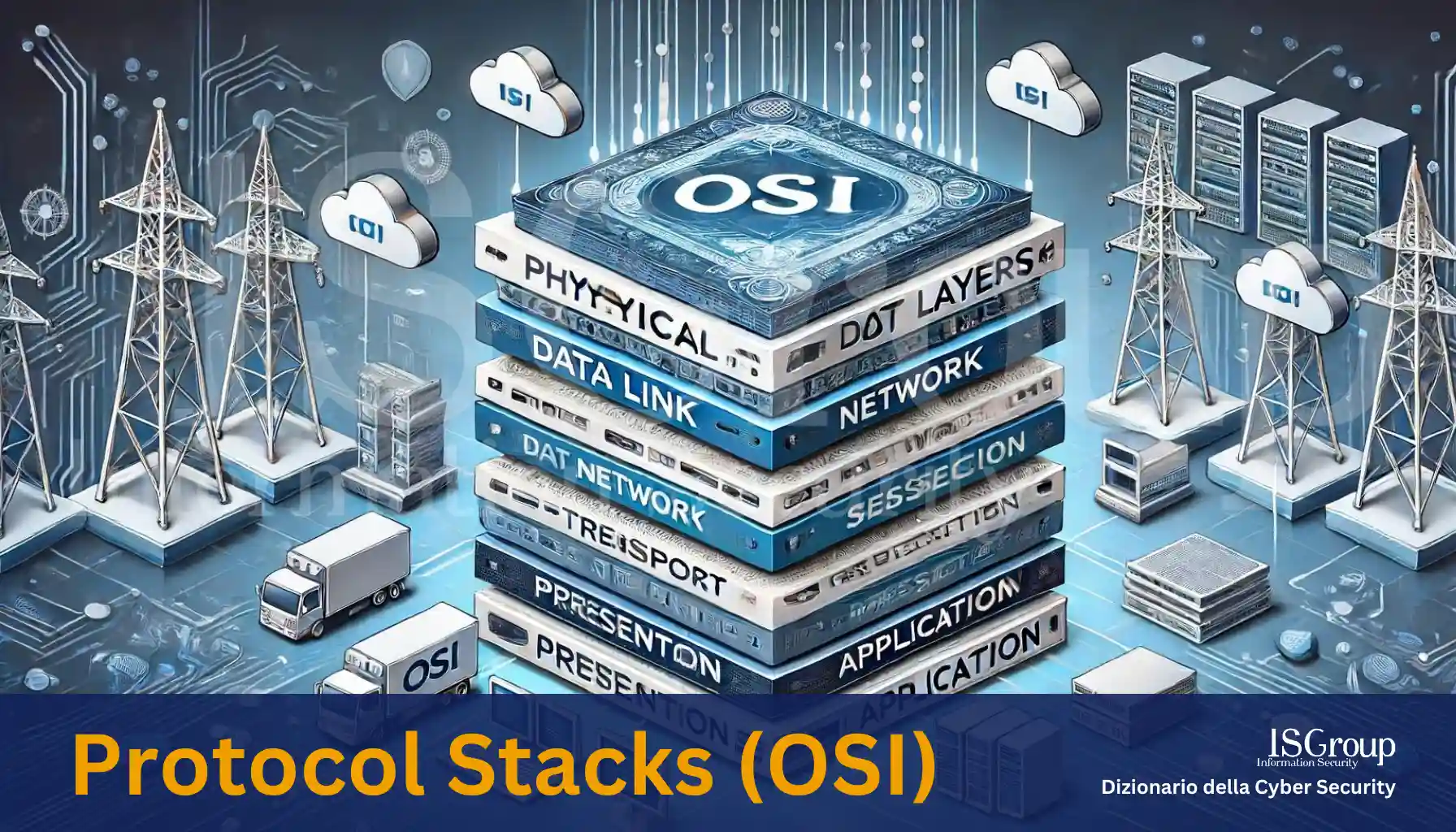
The protocol stack is a fundamental concept in communication networks. It refers to a set of network protocol layers that work together to facilitate communication between devices on a network. The most well-known and widely used protocol stack is the OSI (Open Systems Interconnection) model, developed by the ISO (International Organization for Standardization).
OSI Model: An Overview
The OSI model consists of seven layers, each with specific functionalities and responsibilities. These layers allow the communication process to be broken down into more manageable and modular steps, facilitating interoperability and standardization across different network systems. The seven layers of the OSI model are as follows:
- Physical Layer:
- Responsible for the transmission of raw data in the form of electrical or optical signals across the physical transmission medium.
- Includes components such as cables, connectors, and transmission hardware.
- Data Link Layer:
- Manages the transmission of data frames between two directly connected nodes.
- Provides basic error detection and correction, as well as flow control.
- Network Layer:
- Responsible for routing data packets between nodes on different networks.
- Uses IP addresses and routing algorithms to determine the best path for data.
- Transport Layer:
- Ensures reliable end-to-end data transfer.
- Uses protocols like TCP (Transmission Control Protocol) to provide flow control, segmentation, and data reassembly.
- Session Layer:
- Manages communication sessions between applications.
- Coordinates the start, management, and termination of dialogue sessions.
- Presentation Layer:
- Translates data between the network format and the format understandable by the application.
- Handles data encoding, compression, and encryption.
- Application Layer:
- Provides network services directly to end-user applications.
- Includes protocols such as HTTP (HyperText Transfer Protocol), FTP (File Transfer Protocol), and SMTP (Simple Mail Transfer Protocol).
Importance of the OSI Protocol Stack
The OSI model is essential because it provides a common reference framework for understanding how data is transmitted across a network. This structure allows manufacturers and developers to create hardware and software that can easily interoperate, regardless of the manufacturer or technology used. Furthermore, the separation into layers allows network problems to be isolated to specific levels, facilitating diagnosis and troubleshooting.
Conclusion
The OSI protocol stack represents a structured and standardized approach to network communication. Understanding the seven layers of the OSI model and their functions is crucial for anyone working in the networking field, as it offers a clear guide for the design, management, and troubleshooting of communication networks.
Want to give your company the highest level of cyber security? ISGroup SRL is here to help with cyber security solutions tailored to your business.
Would you like us to take care of everything for you? Our Virtual CISO and vulnerability management services are a perfect fit for your organization.
Already know what you need? Explore our services:
- Vulnerability Assessment
- Network Penetration Testing
- Web Application Penetration Testing
- Mobile Application Security Testing
- Ethical Hacking
- Training
And much more. Protect your company with the best cybersecurity experts!