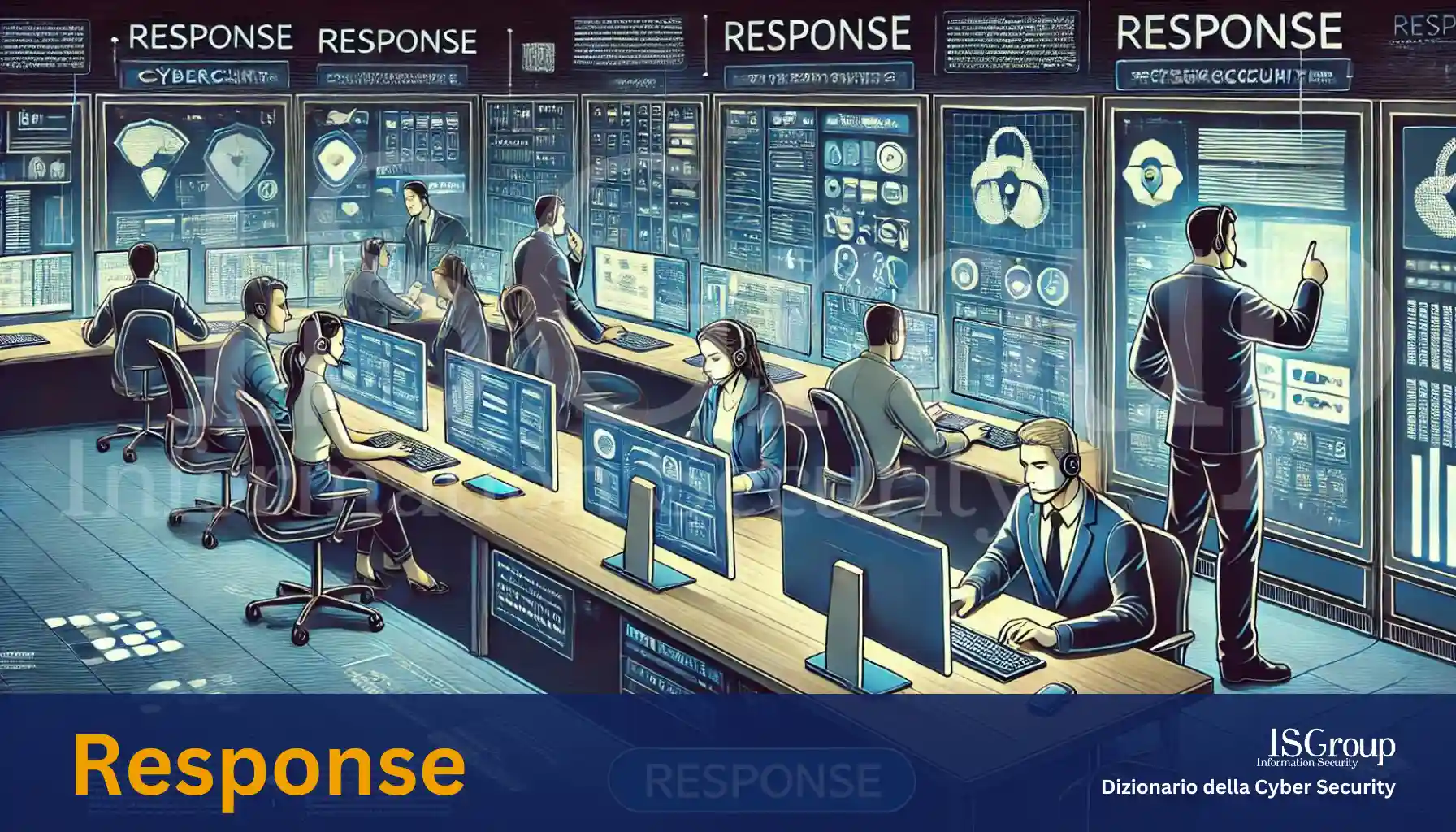
A response is information sent in reaction to a stimulus. In the context of communication and computer science, a response represents the feedback or message that follows an initial action or request.
Areas of Application
- Human Communication: In interpersonal communication, a response can be verbal or non-verbal. For example, if someone asks a question, the response can be a sentence (verbal) or a gesture like a nod (non-verbal).
- Computer Science and Technology: In computer systems, a response is often the message that a server sends to a client after receiving a request. For example, when you visit a website, the browser sends a request to the server, which responds by sending the requested web page.
- Psychology: In psychology, a response is the behavior or reaction that follows a specific stimulus. This can include automatic responses, such as reflexes, or more complex responses involving cognitive processes.
Types of Responses
- Immediate: A response provided right after the stimulus. For example, an instant reply to a text message.
- Delayed: A response provided after a certain period of time. For example, a reply to an email that arrives after a few hours or days.
- Automatic: A response generated without direct human intervention, often used in automated systems. For example, an automated email reply confirming receipt of a message.
- Manual: A response provided by a person, which requires time and effort to formulate. For example, a letter in response to a formal request.
Importance of Responses
Responses are fundamental to the effective functioning of many communication and interaction systems. They allow for a continuous flow of information, facilitate problem-solving, and keep the dynamics of communication active. In the digital age, the ability to provide quick and relevant responses has become crucial for user satisfaction and operational efficiency.
Conclusion
Understanding the concept of a response and its various applications is essential for navigating effectively through different fields of communication, computer science, and social sciences. Responses not only complete the communication cycle but also contribute to creating meaningful and functional interactions.
This term, although simple, plays a key role in multiple sectors, highlighting the importance of an appropriate and timely reaction to any type of stimulus.
Want to give your company the highest level of cyber security? ISGroup SRL is here to help with cyber security solutions tailored to your business.
Would you like us to take care of everything for you? Our Virtual CISO and vulnerability management services are a perfect fit for your organization.
Already know what you need? Explore our services:
- Vulnerability Assessment
- Network Penetration Testing
- Web Application Penetration Testing
- Mobile Application Security Testing
- Ethical Hacking
- Training
And much more. Protect your company with the best cybersecurity experts!