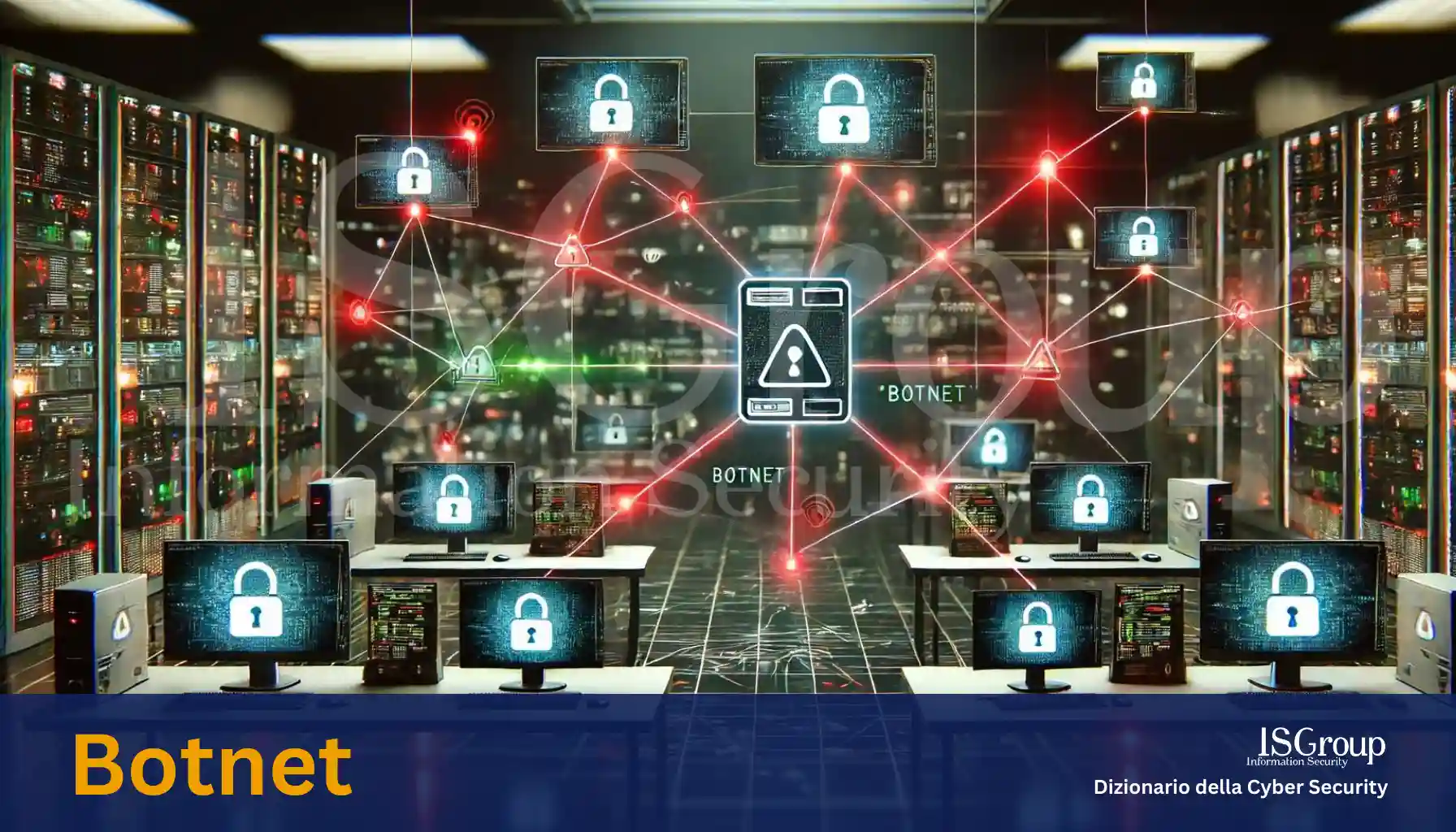
A botnet is a network of compromised computers, also known as “bots” or “zombies,” controlled by a central entity, often a cybercriminal. These infected computers are exploited to carry out malicious activities on a large scale, often without the knowledge of their owners. Botnets represent one of the most serious threats to cybersecurity, as they can be used for a wide range of attacks.
How a Botnet Works
- Infection: The process begins with the infection of computers via malware, which can be spread through phishing emails, compromised websites, or software vulnerabilities. Once infected, the computer becomes part of the botnet and can receive commands from the controller.
- Command and Control (C&C): Bots are managed through command and control servers. The cybercriminal uses these servers to send instructions to the bots, coordinating their activities to maximize the effectiveness of the attack.
- Malicious Activities: Once a botnet has been created, it can be used for various purposes, including:
- Sending Spam: Botnets are often used to send massive amounts of spam emails, overloading email servers and propagating further malware.
- Distributing Malware: Botnets can spread viruses, ransomware, and other types of malware to a vast network of computers.
- DDoS Attacks (Distributed Denial of Service): One of the most common uses of botnets is executing DDoS attacks, where a large number of requests are sent to a server or network, making services inaccessible to legitimate users.
Consequences and Defenses
The consequences of a botnet attack can be devastating for victims, both individuals and organizations. Owners of infected computers may suffer data theft, system damage, and a loss of trust in their devices. Companies may face service interruptions, reputational damage, and significant economic losses.
To defend against botnets, it is crucial to adopt robust cybersecurity measures, which include:
- Installing updated antivirus and antimalware software.
- Regularly updating the operating system and applications to patch vulnerabilities.
- User awareness regarding the risks of phishing and other social engineering techniques.
- Monitoring network traffic to detect suspicious behavior that could indicate the presence of bots.
In summary, botnets represent a complex and pervasive threat in the cybersecurity landscape. Understanding how they work and implementing appropriate defense measures are essential to protecting computer systems from these large-scale orchestrated attacks.
Want to give your company the highest level of cyber security? ISGroup SRL is here to help with cyber security solutions tailored to your business.
Would you like us to take care of everything for you? Our Virtual CISO and vulnerability management services are a perfect fit for your organization.
Already know what you need? Explore our services:
- Vulnerability Assessment
- Network Penetration Testing
- Web Application Penetration Testing
- Mobile Application Security Testing
- Ethical Hacking
- Training
And much more. Protect your company with the best cybersecurity experts!