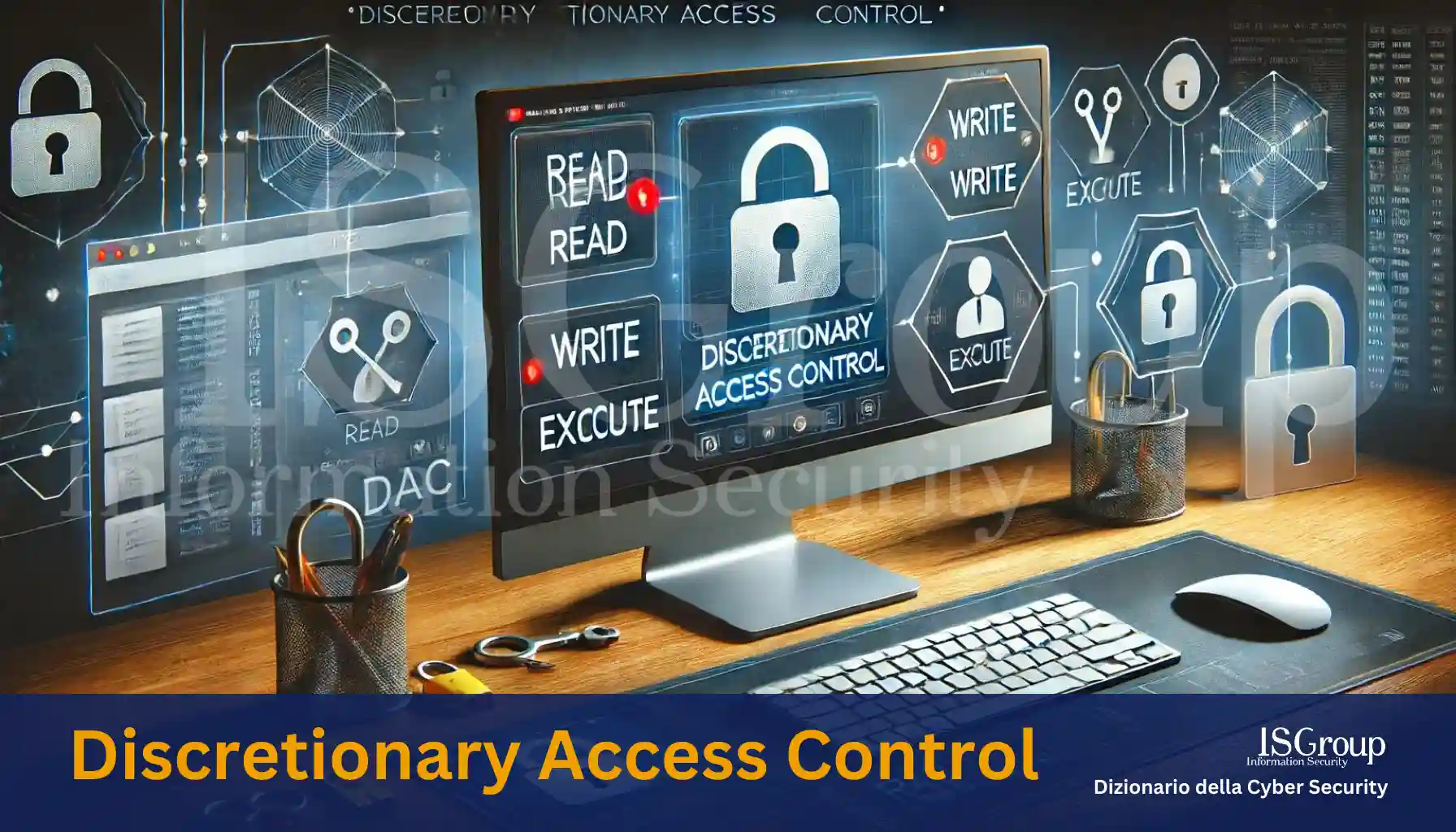
Discretionary Access Control (DAC) is an access management model that allows users to autonomously manage permissions for their own data. In other words, DAC grants the owner of a file or resource the ability to decide who can access it and with what privileges.
In the DAC model, every resource has an owner, usually the creator of the resource itself. This owner has the ability to grant or revoke access to other users, establishing precise rules on who can view, modify, or execute the resource. A typical example of DAC is the use of a password to protect a document: the document owner can decide who is authorized to know and use the password to access the content.
Key Features of DAC
- Flexibility: Users can share resources with whomever they wish, allowing for dynamic access management. This is particularly useful in collaborative environments where rapid information exchange is necessary.
- Simplicity: The implementation and management of DAC are relatively simple, as they do not require complex access control structures. The resource owner manages permissions directly.
- Individual Control: DAC provides granular control to users, who can autonomously decide who can do what with their resources.
Advantages of DAC
- Ease of Use: Since users have control over their own data, they can easily manage who has access to their information.
- Adaptability: DAC adapts well to organizations that need a flexible system for information sharing.
Disadvantages of DAC
- Security: The high flexibility of DAC can lead to security issues. If a user accidentally grants permissions to unauthorized users, it can result in a data breach.
- Difficulty of Management at Scale: In environments with many users and resources, managing permissions manually can become complex and error-prone.
Examples of DAC Usage
A typical usage scenario for DAC is in home environments or small offices, where team members or family members need to share files and documents. For example, in an office, an employee can create a document and then decide which colleagues can view or edit it by setting the permissions directly.
In conclusion, Discretionary Access Control is an access management model that offers a high degree of flexibility and individual control, but which can present challenges in terms of security and large-scale management.
Want to give your company the highest level of cyber security? ISGroup SRL is here to help with cyber security solutions tailored to your business.
Would you like us to take care of everything for you? Our Virtual CISO and vulnerability management services are a perfect fit for your organization.
Already know what you need? Explore our services:
- Vulnerability Assessment
- Network Penetration Testing
- Web Application Penetration Testing
- Mobile Application Security Testing
- Ethical Hacking
- Training
And much more. Protect your company with the best cybersecurity experts!