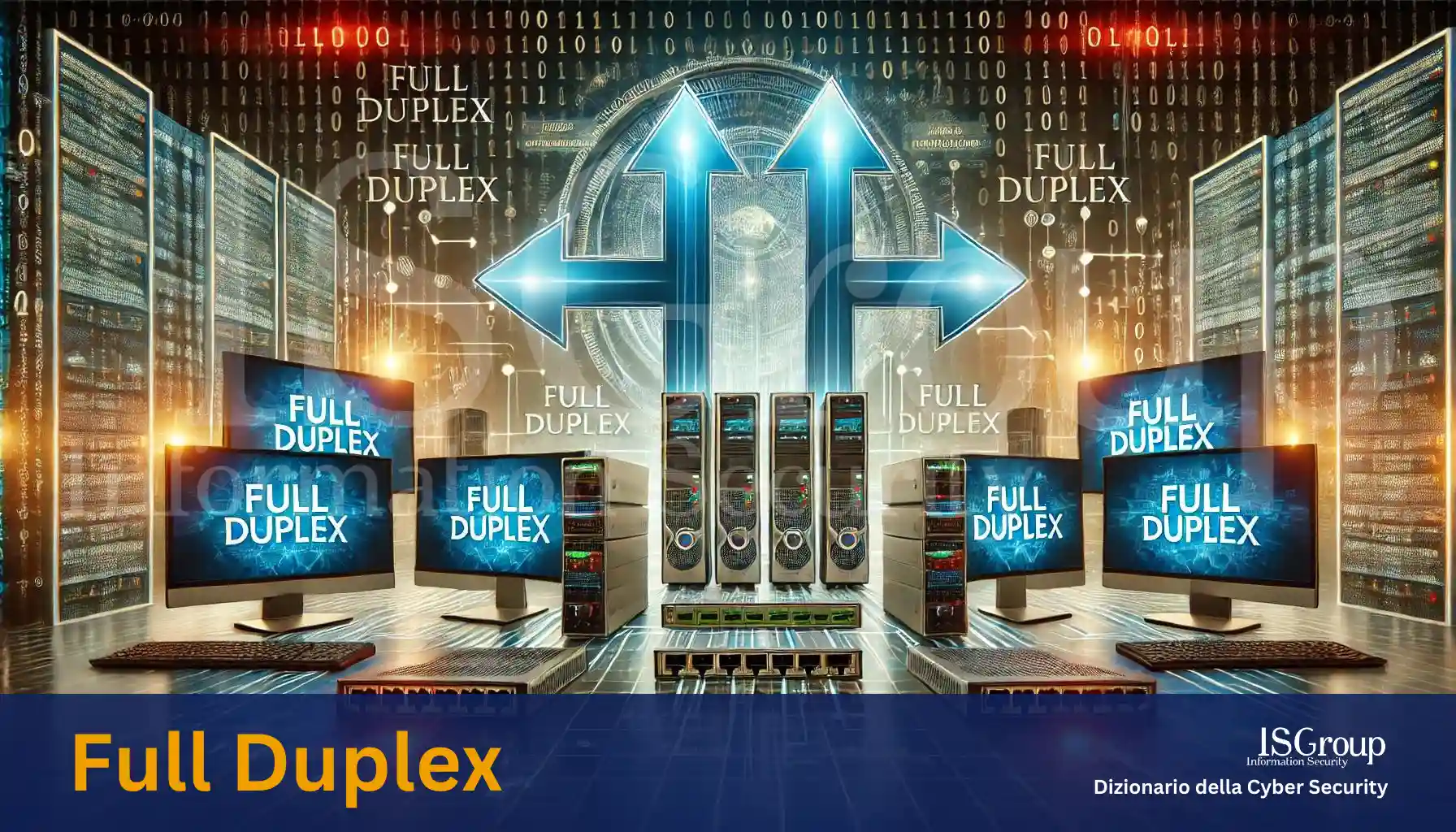
The term “Full Duplex” refers to a type of duplex communication channel that allows data transmission in both directions simultaneously. This means that both the sender and the receiver can send and receive information at the same time, without having to wait for the other to finish their transmission.
Key Features
- Simultaneous Communication: In a full duplex system, data can travel in two directions simultaneously. For example, during a phone call, both parties can speak and listen at the same time without interruptions.
- Efficiency: This type of communication is highly efficient, as it eliminates the waiting times associated with alternating data transmission, which is typical of half-duplex systems (where only one device can transmit at a time).
- Implementation: Full duplex technology is used in many applications, including Ethernet networks, mobile communications, and broadband connections. In wireless systems, for example, advanced techniques such as echo cancellation and interference management are used to facilitate full duplex communication.
- Advantages: The main advantage of a full duplex system is the increased speed and fluidity of communication, which results in a better user experience. This is particularly important in applications that require continuous and rapid data transmission, such as video calls and online gaming.
- Hardware: To support full duplex communication, hardware must be designed to handle the simultaneous transmission and reception of signals. This may include the use of separate cables for sending and receiving data or advanced wireless technologies that allow bidirectional transmission on a single frequency.
Examples of Use
- Telephony: As mentioned, one of the most common examples of full duplex is telephony. When we talk on the phone, both we and the other person can speak and listen simultaneously.
- Computer Networks: In Ethernet networks, full duplex allows devices to send and receive data at the same time, significantly improving transfer speeds and reducing latency.
- Radio Communications: Some advanced radio systems use full duplex to facilitate immediate, bidirectional communication between two stations.
Conclusion
Full duplex represents a significant advancement in communication technologies, offering superior speed and efficiency compared to systems that only allow for alternating data transmission. Thanks to this technology, modern communication has become faster and more fluid, improving the user experience in multiple areas, from phone calls to high-speed data networks.
Want to give your company the highest level of cyber security? ISGroup SRL is here to help with cyber security solutions tailored to your business.
Would you like us to take care of everything for you? Our Virtual CISO and vulnerability management services are a perfect fit for your organization.
Already know what you need? Explore our services:
- Vulnerability Assessment
- Network Penetration Testing
- Web Application Penetration Testing
- Mobile Application Security Testing
- Ethical Hacking
- Training
And much more. Protect your company with the best cybersecurity experts!