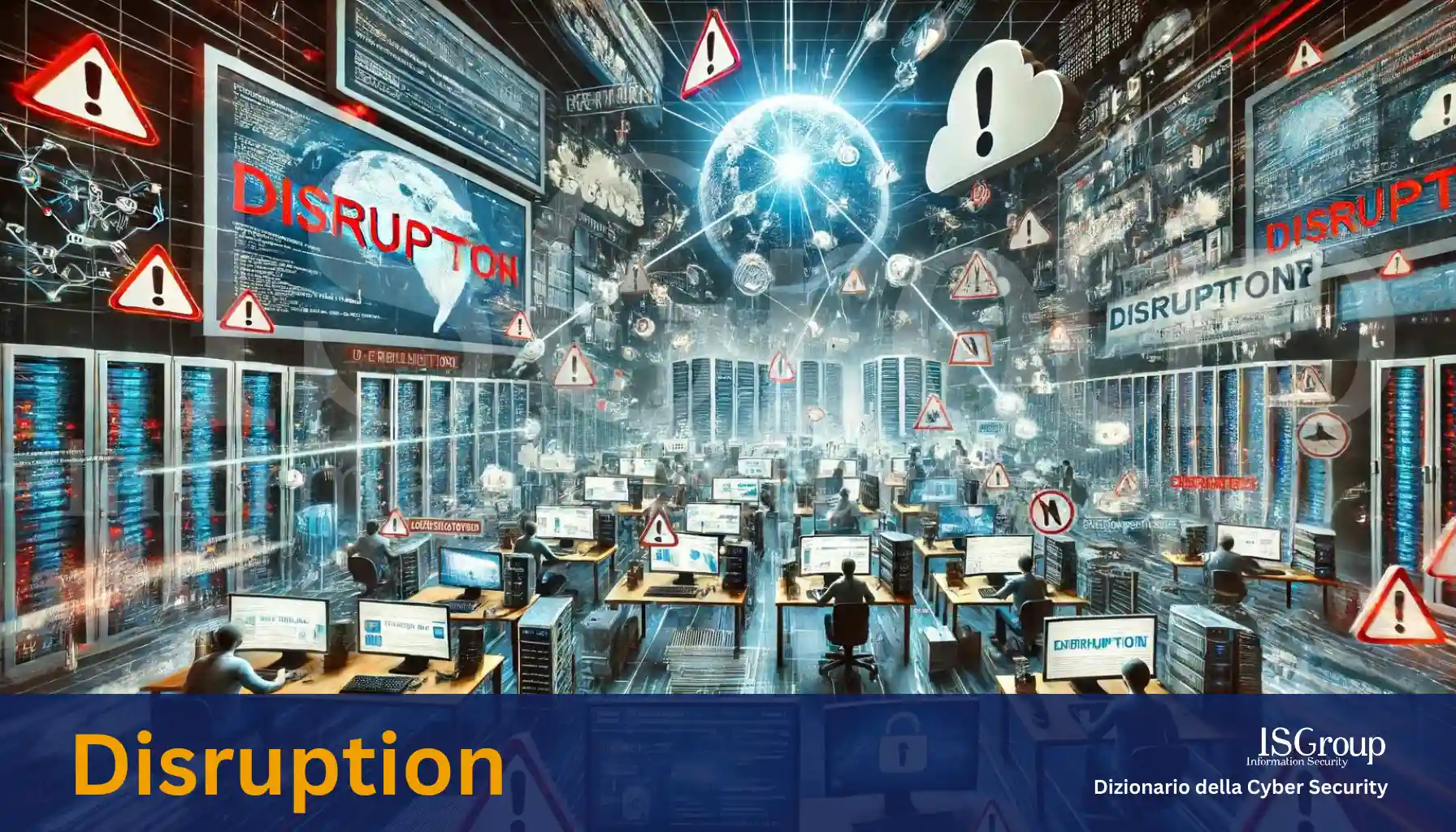
“Disruption” refers to a circumstance or event that interrupts or prevents the proper functioning of a system’s services and functions.
Description: Disruption can occur in various contexts and sectors, including technology, economics, transportation, and many others. This term is often used to describe unforeseen events that cause significant discontinuities in standard processes, leading to an interruption of normal operations. The nature of a disruption can range from minor technical issues to catastrophic events that require an immediate and coordinated response.
Common Examples:
- Technology: A cyberattack that compromises a company’s servers, making data inaccessible and interrupting online services.
- Economy: A financial crisis that destabilizes global markets, causing significant losses and economic slowdowns.
- Transportation: A train accident that blocks a main line, causing delays and diversions for thousands of commuters.
- Environment: An earthquake or flood that destroys critical infrastructure, such as roads and bridges, making transportation and communication difficult.
Impact: The impact of a disruption can be vast and long-lasting. It can cause financial losses, damage to reputation, and involve high costs for restoring operations. Furthermore, it can negatively affect customer trust and market stability.
Managing Disruption: To effectively manage a disruption, organizations must develop business continuity and disaster recovery plans. These plans include strategies for prevention, rapid response, and the restoration of normal operations. Staff training, the adoption of advanced monitoring technologies, and collaboration with external entities are key elements for addressing and mitigating the effects of disruptions.
Conclusion: Disruption is an inevitable phenomenon in the modern world, but with adequate preparation and a timely response, organizations can minimize its negative effects and ensure a quick recovery.
Want to give your company the highest level of cyber security? ISGroup SRL is here to help with cyber security solutions tailored to your business.
Would you like us to take care of everything for you? Our Virtual CISO and vulnerability management services are a perfect fit for your organization.
Already know what you need? Explore our services:
- Vulnerability Assessment
- Network Penetration Testing
- Web Application Penetration Testing
- Mobile Application Security Testing
- Ethical Hacking
- Training
And much more. Protect your company with the best cybersecurity experts!