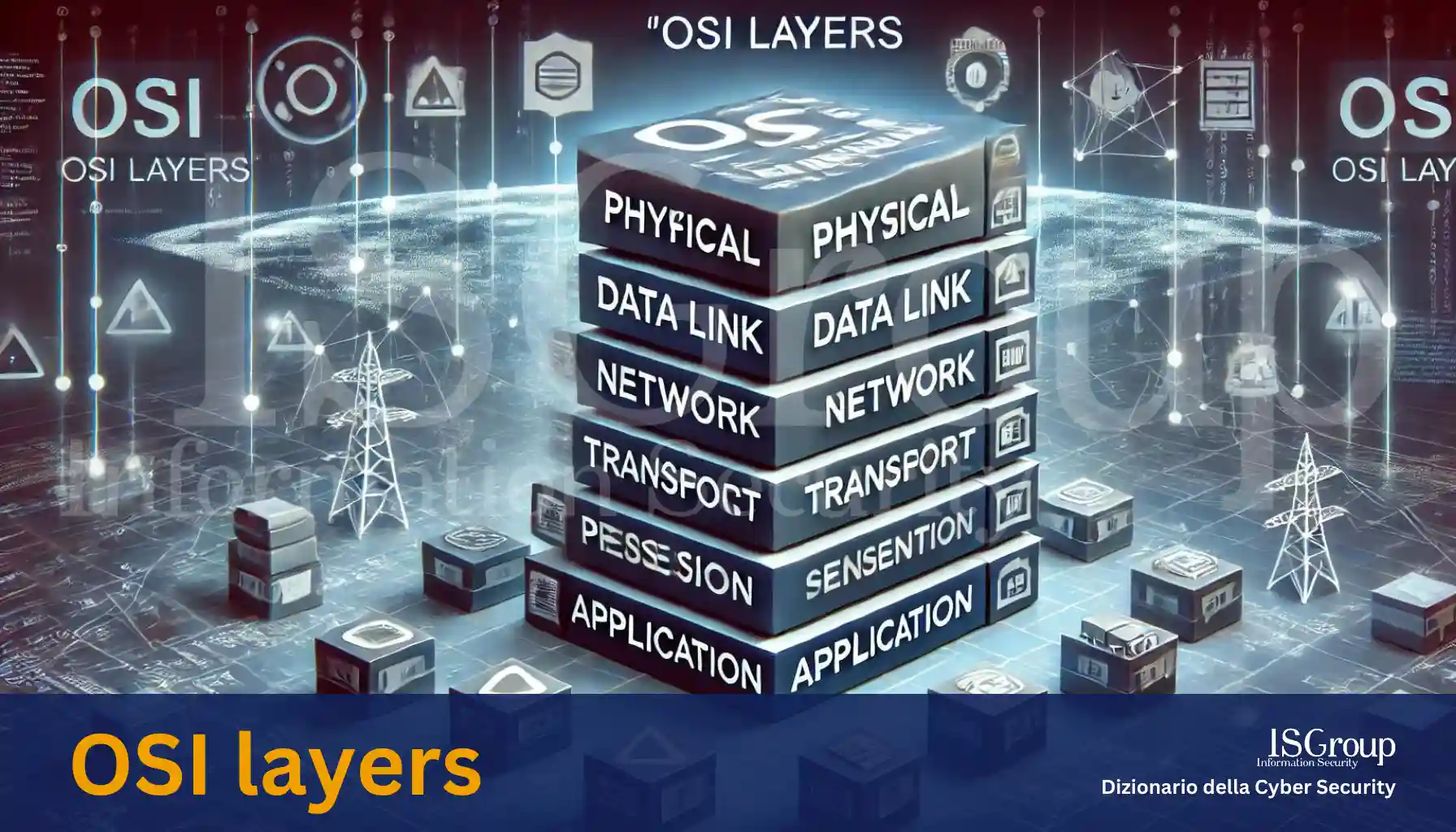
The Open Systems Interconnection (OSI) reference model is a fundamental concept in telecommunications and network systems. The main idea of the OSI model is that the communication process between two endpoints in a telecommunications network can be divided into layers, each of which adds its own set of special and related functions. Every user or program that communicates is located on a computer equipped with these seven functional layers.
The Flow of Data Through the Layers
In any given message between users, data flows through each layer at the sending point, passes through the levels in the computer, and when the message arrives, another data flow moves up through the layers in the receiving computer until it reaches the end user or program. The programming and hardware that provide these seven functions are generally a combination of the computer’s operating system, applications (such as a web browser), TCP/IP or alternative transport and network protocols, and the software and hardware that allow a signal to be placed on one of the lines connected to the computer.
The Layering of the OSI Model
The OSI model divides telecommunications into seven layers. The layers are divided into two groups: the four upper layers are used whenever a message passes to or from a user, while the three lower layers (up to the network layer) are used when any message passes through the host computer or router. Messages destined for this computer are passed to the upper layers, while messages destined for another host are not forwarded to the upper layers, but are instead routed to another host.
The Seven OSI Layers
Layer 7: Application Layer
This is the layer where communication partners, quality of service, user authentication, and privacy are identified, along with any constraints on data syntax. This layer is not the application itself, although some applications may perform application-layer functions.
Layer 6: Presentation Layer
This layer, usually part of an operating system, converts incoming and outgoing data from one presentation format to another (for example, from a text stream to a popup window with the newly arrived text). It is sometimes called the syntax layer.
Layer 5: Session Layer
This layer sets up, coordinates, and terminates conversations, exchanges, and dialogues between applications at each end. It deals with session and connection coordination.
Layer 4: Transport Layer
This layer handles end-to-end control (for example, determining whether all packets have arrived) and error control. It ensures the complete transfer of data.
Layer 3: Network Layer
This layer deals with data routing (sending them in the right direction to the correct destination in outgoing transmissions and receiving incoming transmissions at the packet level). The network layer handles routing and forwarding.
Layer 2: Data Link Layer
This layer provides synchronization for the physical layer and handles bit stuffing for strings of 1s in excess of 5. It provides knowledge and management of the transmission protocol.
Layer 1: Physical Layer
This layer transmits the bit stream across the network at the electrical and mechanical level. It provides the hardware means to send and receive data over a physical medium.
In summary, the OSI model is a fundamental tool for understanding how data is transmitted and received across a network, dividing the process into seven distinct layers, each with its own specific functions.
Want to give your company the highest level of cyber security? ISGroup SRL is here to help with cyber security solutions tailored to your business.
Would you like us to take care of everything for you? Our Virtual CISO and vulnerability management services are a perfect fit for your organization.
Already know what you need? Explore our services:
- Vulnerability Assessment
- Network Penetration Testing
- Web Application Penetration Testing
- Mobile Application Security Testing
- Ethical Hacking
- Training
And much more. Protect your company with the best cybersecurity experts!