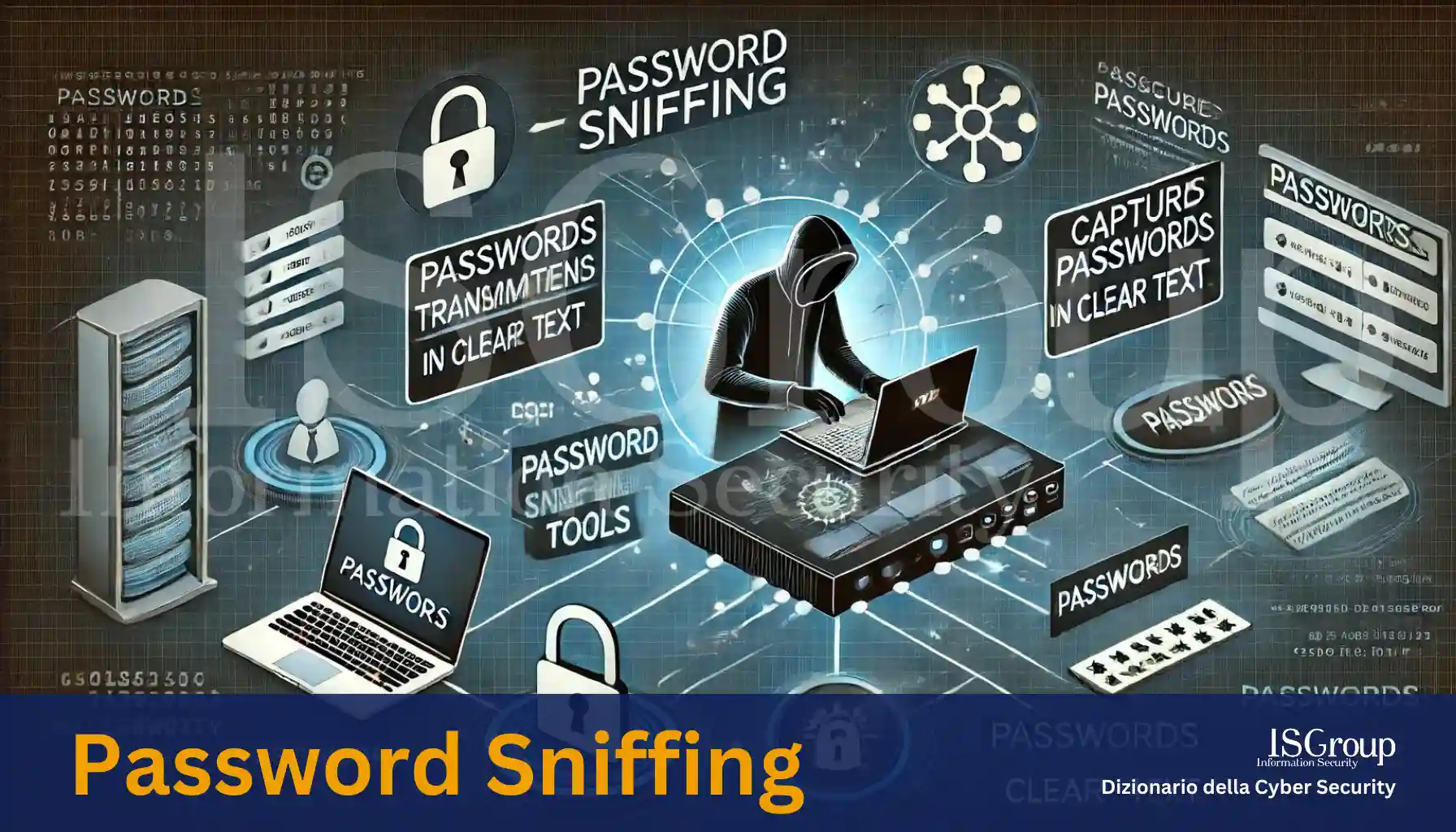
The term “Password Sniffing” refers to a technique of passive interception of communications on a local area network (LAN) to obtain password information. This cyberattack method exploits the vulnerability of unencrypted networks by monitoring data traffic traveling across the network to collect login credentials.
How Password Sniffing Works
Password sniffing involves the use of specialized software, known as “sniffers,” which are designed to listen to network traffic passively. These tools analyze data packets transmitted over the network, specifically looking for character sequences that might represent passwords. Since many network communications occur in plaintext, a sniffer can easily capture and display this information.
Examples of Sniffing Tools
Among the most well-known sniffing software are:
- Wireshark: A powerful network traffic analysis tool that allows for the interception and inspection of data packets in real-time.
- tcpdump: A command-line utility for capturing network packets, commonly used to diagnose network issues.
- Cain & Abel: A password recovery software that includes sniffing features for LAN networks.
Security Implications
The use of password sniffing can have serious implications for cybersecurity. If an attacker manages to intercept unencrypted passwords, they can gain unauthorized access to systems, accounts, and sensitive data. This type of attack is particularly dangerous in corporate networks, where unauthorized access can lead to data theft, system compromises, and other malicious acts.
Countermeasures
To protect networks from password sniffing, several security measures are recommended:
- Encryption: Use secure communication protocols such as HTTPS, SSH, and VPNs to encrypt data transmitted over the network.
- Strong Authentication: Implement multi-factor authentication (MFA) mechanisms to add an extra layer of security.
- Network Monitoring: Employ intrusion detection systems (IDS) to monitor network traffic and identify suspicious activity.
- Network Segmentation: Separate networks into isolated segments to limit access to sensitive data.
Conclusion
Password sniffing represents a significant threat to network security, but with the right preventive measures, it is possible to reduce the risk of unauthorized interception. Awareness and training in cybersecurity are essential to protect sensitive information and maintain the integrity of networks.
Want to give your company the highest level of cyber security? ISGroup SRL is here to help with cyber security solutions tailored to your business.
Would you like us to take care of everything for you? Our Virtual CISO and vulnerability management services are a perfect fit for your organization.
Already know what you need? Explore our services:
- Vulnerability Assessment
- Network Penetration Testing
- Web Application Penetration Testing
- Mobile Application Security Testing
- Ethical Hacking
- Training
And much more. Protect your company with the best cybersecurity experts!