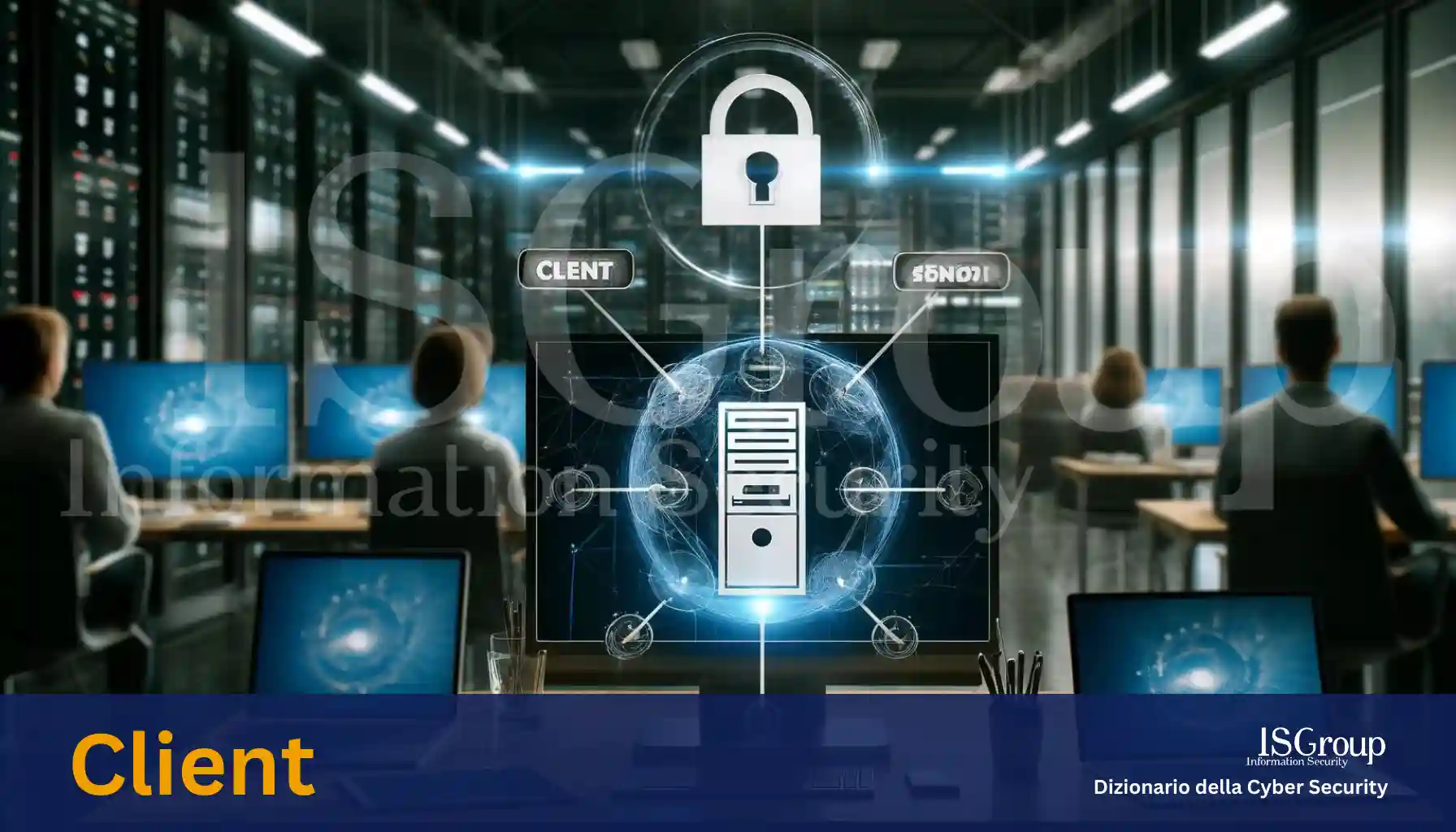
A client is a system entity that requests and uses a service provided by another system entity, called a server. In some cases, the server may in turn be a client of another server.
How it works: In the context of computer networks and software architectures, the client represents the party that initiates communication and sends requests to the server to obtain specific services or resources. This relationship is the foundation of the client-server model, a common structure used to organize communication and resource distribution within a network.
Examples of Clients:
- Web browser: When we browse the Internet, our browser acts as a client. It sends HTTP requests to web servers to obtain web pages, images, videos, and other content.
- Email client: Programs like Microsoft Outlook or Mozilla Thunderbird connect to email servers to send and receive emails.
- Mobile applications: Apps on our smartphones often function as clients, requesting data and services from remote servers, such as social media apps that retrieve updates from their respective platforms’ servers.
Client-Server Relationship: The relationship between client and server is essentially a request-response relationship. The client sends a request for a specific service, and the server processes this request and sends an appropriate response. This model is scalable and can be applied to various forms of communication between devices, software, and even internal processes of a single system.
Client as Server: In some advanced configurations, a server can also function as a client for other servers. This frequently occurs in distributed systems and microservices architectures, where system components are divided into independent services that interact with each other. For example, a web server can act as a client to a database server, requesting data needed to respond to user requests.
Conclusion: The client is a fundamental component in modern network and software architectures. Understanding the role of the client and its interaction with the server is crucial for designing and managing efficient and scalable systems. The flexibility of the client-server model allows for the construction of technological solutions that can easily adapt to the ever-evolving needs of users and organizations.
Want to give your company the highest level of cyber security? ISGroup SRL is here to help with cyber security solutions tailored to your business.
Would you like us to take care of everything for you? Our Virtual CISO and vulnerability management services are a perfect fit for your organization.
Already know what you need? Explore our services:
- Vulnerability Assessment
- Network Penetration Testing
- Web Application Penetration Testing
- Mobile Application Security Testing
- Ethical Hacking
- Training
And much more. Protect your company with the best cybersecurity experts!