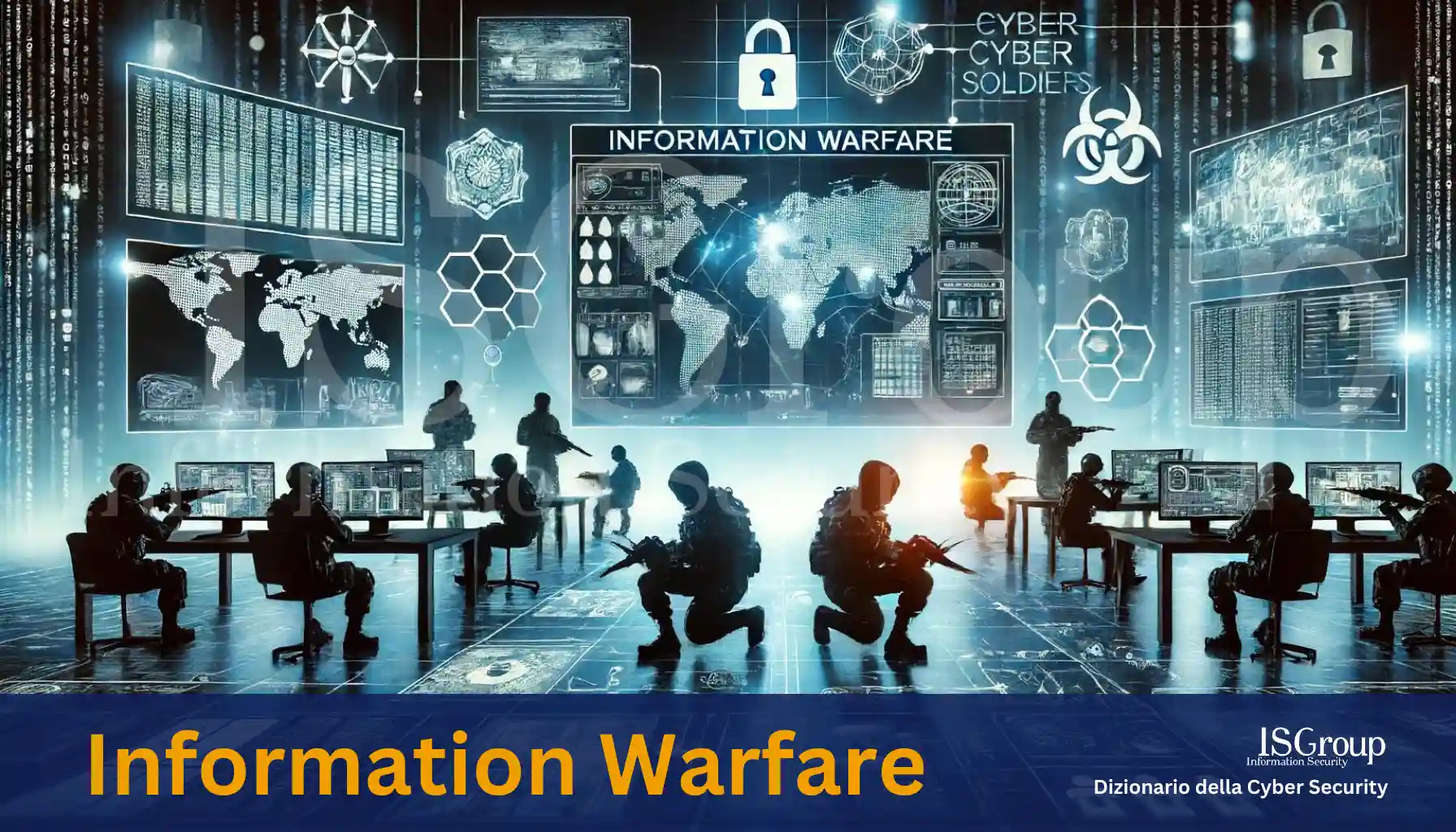
Information Warfare is the competition between offensive and defensive actors for the control and use of information resources. This concept has become increasingly relevant in the digital age, where information is a critical resource for governments, companies, and individuals.
Main Characteristics
- Offensive and Defensive: Information warfare involves two main operational dimensions: offensive and defensive. Offensive actors seek to collect, manipulate, and disseminate information to gain strategic or tactical advantages. Defensive actors, on the other hand, seek to protect their information resources, maintain data integrity, and prevent intrusions.
- Information Resources: Information resources include data, communication systems, IT infrastructure, social networks, and media outlets. These resources are crucial for intelligence gathering, strategic planning, and the conduct of operations.
- Digital Technologies: With the advent of the Internet and digital technologies, information warfare has taken on new dimensions. Techniques include hacking, phishing, disinformation, digital propaganda, and Distributed Denial of Service (DDoS) attacks.
Tools and Techniques
- Cyber Attacks: Cyber attacks are a key component of information warfare. These attacks can aim to steal sensitive data, sabotage computer systems, or spy on communications.
- Disinformation: The intentional spread of false or misleading information is a common tactic to destabilize adversaries, influence public opinion, and create confusion.
- Propaganda: The strategic use of propaganda to influence perceptions and opinions is an ancient technique that finds new applications in the digital age, thanks to social media and online platforms.
Implications
Information warfare has significant implications for national security, the economy, and society. Governments and organizations must develop effective strategies to protect their information resources and respond to cyber threats. Furthermore, it is essential to promote digital literacy and awareness of disinformation-related threats among the population.
Conclusion
Information warfare represents a complex and constantly evolving challenge. Understanding the dynamics of this type of conflict and developing adequate defense capabilities are crucial for protecting modern societies from emerging threats in the information domain.
Want to give your company the highest level of cyber security? ISGroup SRL is here to help with cyber security solutions tailored to your business.
Would you like us to take care of everything for you? Our Virtual CISO and vulnerability management services are a perfect fit for your organization.
Already know what you need? Explore our services:
- Vulnerability Assessment
- Network Penetration Testing
- Web Application Penetration Testing
- Mobile Application Security Testing
- Ethical Hacking
- Training
And much more. Protect your company with the best cybersecurity experts!