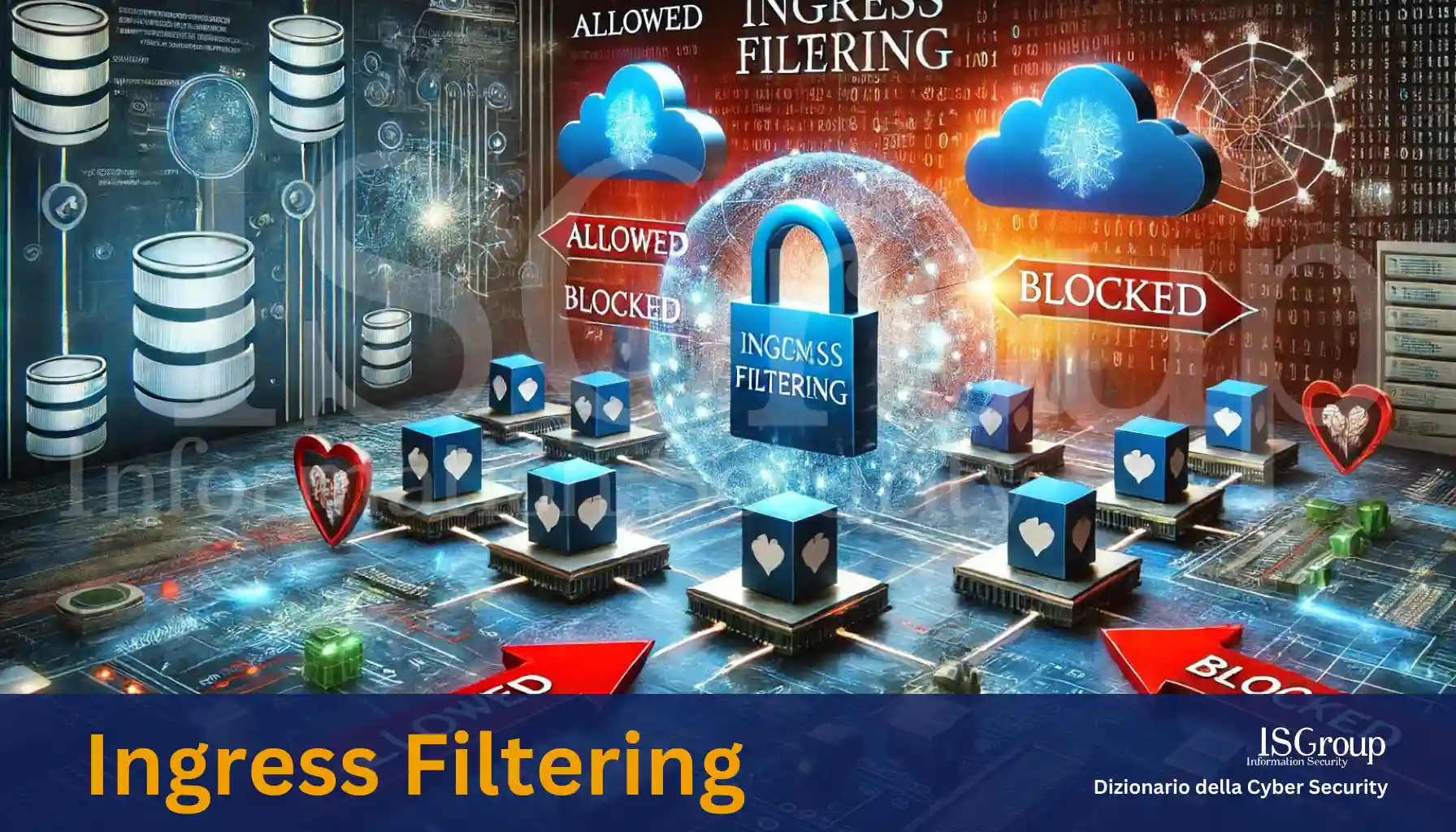
Ingress Filtering is a network security technique used to filter incoming traffic. Its primary goal is to prevent the transmission of unauthorized or potentially harmful data into the internal network. This practice is essential for protecting network infrastructure from external attacks and unwanted traffic that could compromise the security of systems and data.
How it works
Ingress Filtering operates by examining data packets arriving at the network and determining whether they should be allowed or blocked based on a set of predefined criteria. These criteria may include:
- Source IP address: Verifies whether the IP address from which the packet originates is trusted and authorized.
- Protocols and ports used: Checks if the protocols and ports used in the packet are permitted by the network’s security policies.
- Packet signature: Analyzes the content of the packet to identify known patterns of attacks or malicious traffic.
Benefits
Implementing Ingress Filtering offers numerous benefits, including:
- Increased security: Reduces the risk of external attacks such as Distributed Denial of Service (DDoS) attacks, intrusions, and hacking attempts.
- Spoofing prevention: Prevents the use of forged IP addresses (spoofing), a common technique used by attackers to mask their identity.
- Network efficiency: Eliminates unwanted and unauthorized traffic, improving overall network performance.
Implementation
To effectively implement Ingress Filtering, it is necessary to correctly configure network devices, such as routers and firewalls. These devices must be programmed to:
- Block traffic based on specific criteria.
- Continuously monitor incoming traffic to identify new threats.
- Regularly update filtering rules to adapt to changes in security threats.
Conclusion
Ingress Filtering is a crucial component of any network security strategy. By filtering incoming traffic, it is possible to protect internal resources from external attacks and maintain the integrity and availability of systems and data. Proper implementation and management of this technique contribute to creating a more secure and reliable network environment.
Want to give your company the highest level of cyber security? ISGroup SRL is here to help with cyber security solutions tailored to your business.
Would you like us to take care of everything for you? Our Virtual CISO and vulnerability management services are a perfect fit for your organization.
Already know what you need? Explore our services:
- Vulnerability Assessment
- Network Penetration Testing
- Web Application Penetration Testing
- Mobile Application Security Testing
- Ethical Hacking
- Training
And much more. Protect your company with the best cybersecurity experts!