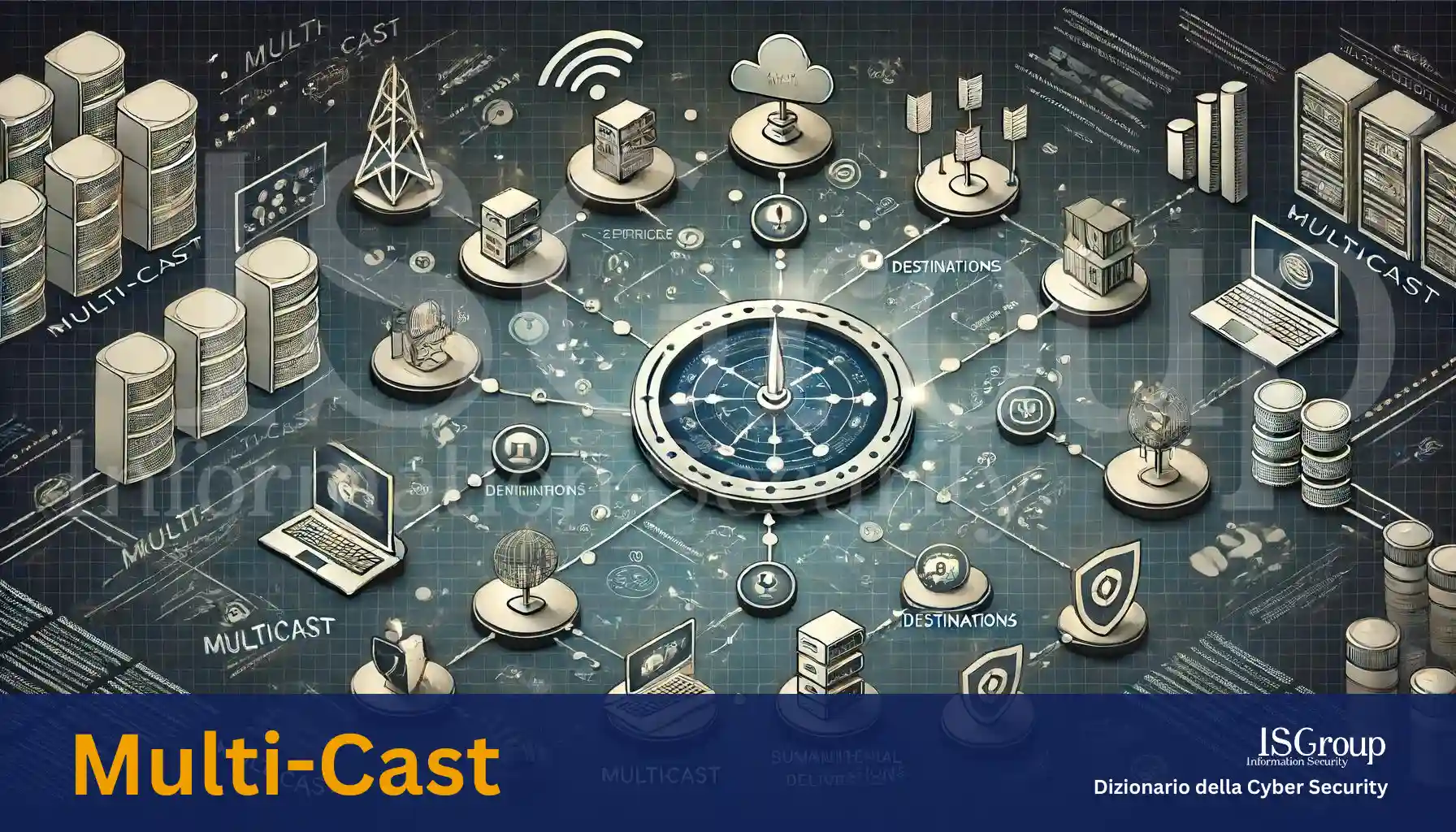
The term “Multi-Cast” refers to a data transmission technique on a network, where a single host (sender) simultaneously sends information to a predefined group of hosts (receivers). This communication mode is particularly efficient in contexts where the same content needs to be distributed to multiple recipients, reducing network load and optimizing resource usage.
How Does Multi-Cast Work?
In a multi-cast transmission, a single data packet is sent from the source host to a multi-cast address. Hosts that wish to receive this data register to listen to this specific multi-cast address. Thus, instead of sending separate packets to each recipient, the sender sends a single packet that is replicated by network routers toward all registered hosts.
Advantages of Multi-Cast
- Bandwidth Efficiency: Since data is sent only once and then replicated along the path, multi-cast significantly reduces the amount of network traffic compared to the unicast method, where data is sent separately to each recipient.
- Scalability: Multi-cast is highly scalable. Whether there are few or many recipients, the network load does not increase linearly with the number of recipients, making it ideal for applications that need to distribute content to a vast audience.
- Latency Reduction: With fewer packets to send, data can reach recipients more quickly, reducing overall latency.
Common Applications of Multi-Cast
Multi-cast is used in various fields, including:
- Video and Audio Streaming: For broadcasting live events, webinars, online courses, and internet television transmissions.
- Software and Update Distribution: For sending system updates or software to multiple devices simultaneously.
- Financial Communications: For broadcasting real-time financial information to traders and financial institutions.
- Videoconferencing and Online Gaming: To improve the quality and efficiency of real-time communications between multiple participants.
Conclusion
Multi-cast represents an efficient and scalable solution for transmitting data to a group of recipients, optimizing network resource usage and improving overall performance. Understanding and implementing multi-cast can lead to significant benefits in terms of efficiency and quality of service in many network scenarios.
Want to give your company the highest level of cyber security? ISGroup SRL is here to help with cyber security solutions tailored to your business.
Would you like us to take care of everything for you? Our Virtual CISO and vulnerability management services are a perfect fit for your organization.
Already know what you need? Explore our services:
- Vulnerability Assessment
- Network Penetration Testing
- Web Application Penetration Testing
- Mobile Application Security Testing
- Ethical Hacking
- Training
And much more. Protect your company with the best cybersecurity experts!